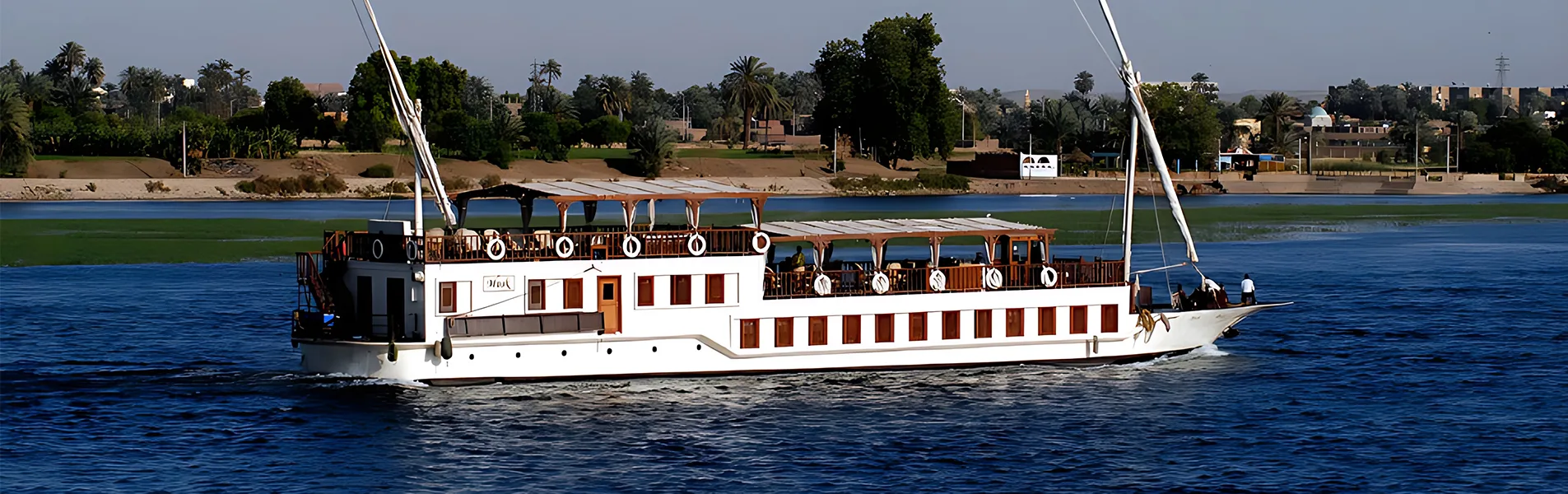
To enjoy a Dahabiya Nile cruise, choose a reputable operator, pack light breathable clothing, embrace slow-sailing days, enjoy onboard Egyptian cuisine, and join curated shore excursions to temples and villages. A Dahabiya offers personalized service, quiet sailing, and immersive Egypt Nile experiences.
As Tripidays’ travel experts, Egyptologists, and cruise specialists with decades on the river, we’ve crafted this guide from firsthand experience—years of sailing, guiding, and designing journeys that immerse travelers in the soul of Egypt. Expect warm storytelling, insider insights, and all the practical, professional advice you’d want from a trusted Egypt travel partner.
What is a Dahabiya Cruise?
A Dahabiya Nile cruise is a small, traditional sailing boat experience on the Nile offering a quiet, intimate journey with 6–12 cabins, personalized service, and access to remote villages and islands that large cruise ships can’t reach. Dahabiyas blend 19th-century elegance with modern comfort—spacious decks, teak interiors, private cabins, and slow wind-powered sailing. Travelers choose a Dahabiya for authentic cultural immersion, flexible itineraries, curated Egyptologist-guided tours, and a serene, boutique alternative to standard Nile cruises.
History & Design
The word “Dahabiya” comes from the Arabic dhahab, meaning “gold.” In the 1800s, these golden boats were chartered by aristocrats, Egyptologists, and writers exploring ancient sites. Imagine polished wood decks, crisp cotton sails, private cabins, and evenings lit by lantern glow—this is still the essence of modern Dahabiyas.
Today’s Dahabiyas blend historical charm with modern comfort:
- Handcrafted teak interiors
- Spacious sun decks with shaded lounges
- Large cabins with panoramic windows
- Private bathrooms
- Silent drift powered by wind and tugboat assistance when needed
The atmosphere is boutique, serene, and deeply personal.
Unique Experience vs. Regular Cruise
A Dahabiya is a world apart from the classic Egypt Nile cruise experience:
On a Dahabiya:
- Intimate groups (10–20 guests)
- Access to small villages and quiet islands
- Custom-paced slow-sail Egypt days
- Quiet, low-impact navigation
- Personalized service and Egyptologist attention
On Larger Cruise Ships:
- 100–150 guests
- Standardized itineraries
- Fixed schedules
- Hotel-style experience
Travelers who choose a Dahabiya are usually seeking:
authenticity, calmness, deep cultural immersion, and a slower rhythm—a luxury in itself.
Best Routes & Itineraries for 2026
Whether you dream of drifting through palm-fringed banks or exploring temples at your own pace, Dahabiyas provide flexible itineraries perfect for slow, sensory-rich travel. In 2026, the most loved routes remain the timeless ones.
Luxor → Aswan (Most Popular Route)
This direction is ideal for travelers who want a classic Nile journey with all the major highlights.
Typical Stops Include:
- Karnak & Luxor Temples
- Valley of the Kings and Hatshepsut Temple
- Esna, boarding point for most Dahabiyas
- El Kab, home to rock-cut tombs
- Edfu Temple of Horus
- Gebelein’s village markets
- El Hegz and Bisaw Island, for sunset moorings
- Kom Ombo Temple (crocodile mummies included!)
- Aswan’s Nubian villages
Why Travelers Love This Route
- Balanced mix of temples, nature, villages, and sailing time
- Exceptional photo opportunities
- Consistent winds for sailing
- More Dahabiyas operate in this direction
This route is ideal for travelers researching Dahabiya cruise tips and looking for the most “complete” Nile journey.
Aswan → Luxor (Reverse Journey)
Slightly less common but equally beautiful, this is a wonderful choice for those wanting a quieter or more flexible schedule.
Highlights:
- Early morning visits to Philae Temple
- Sail north through winds that favor faster drift
- Explore farms, pottery workshops, and small islets
- Avoid peak crowds at temples by visiting in reverse flow
Who This Route Suits:
- Photographers want softer morning light
- Travelers seeking fewer boats and quieter docks
- Repeat visitors looking for variety
Optional Abu Simbel Extension
While Dahabiyas do not sail to Abu Simbel, travelers often add this world wonder either before or after the cruise.
Why Add Abu Simbel:
- Ramses II’s masterpiece
- Magnificent sunrise over Lake Nasser
- The colossal statues are unforgettable
Most Dahabiya guests add this 1-day or overnight extension through Tripidays for seamless handling, permits, and Egyptologist guidance.
Onboard Tips
Knowing how to enjoy a Dahabiya Nile cruise goes beyond the itinerary. The magic lies in the little things—the slow mornings, warm Egyptian hospitality, and intimate onboard rituals.
Packing Essentials
Pack light but thoughtfully. Dahabiyas offer comfort, but space is more boutique-sized than larger ships.
Bring:
- Breathable cotton or linen outfits
- Light sweater for breezy nights
- Good walking shoes
- Hat, sunglasses, sunscreen
- Small day bag
- Portable charger
- Swimsuit (for stops with swimming options)
Leave Behind:
- Oversized luggage
- High heels
- Anything requiring frequent ironing
Pro Tip: Pack a lightweight scarf—it protects from sun, sand, and becomes your best friend at temples.
Personalized Services
The beauty of Dahabiya travel lies in the ultra-personalized service:
- Your Egyptologist knows your interests
- The chef prepares meals based on your preferences
- Crew members address you by name
- Daily plans adjust to guest comfort
Expect friendly chats, warm tea moments, and spontaneous cultural exchanges.
Onboard Dining Experiences
Food on a Dahabiya is a highlight—fresh, local, flavorful, and beautifully presented.
A Typical Day of Dahabiya Dining:
- Sunrise tea or coffee on deck
- Egyptian breakfast (fava beans, falafel, fresh bread)
- Onshore picnic lunches under shade trees
- Dinner under lanterns with Nile breezes
Cuisine often includes:
- Grilled chicken and fish
- Mahshi (stuffed vegetables)
- Tagines
- Fresh salads
- Homemade desserts
Most Dahabiyas easily accommodate dietary needs with advance notice.
This slow, sensory dining is a core part of how to enjoy Dahabiya Nile cruise experiences fully.
Recommended Excursions
A Dahabiya cruise is more than a sail—it’s a curated cultural immersion crafted by on-the-ground Egyptologists.
Temples & Museums
Onshore visits are unhurried and thoughtfully spaced.
Top Highlights:
- Edfu Temple (spectacular reliefs and falcon symbolism)
- Kom Ombo Temple (dedicated to Sobek & Horus)
- El Kab Tombs
- Gebelein’s hilltop ruins
- Luxor Museum (optionally before boarding)
- Philae Temple (Aswan’s crown jewel)
Your Egyptologist provides context you won’t find in guidebooks—rituals, myths, architectural details, and visual storytelling.
Local Villages
Dahabiyas uniquely stop at rural Nile communities that larger cruise ships cannot access.
Expect:
- Farming demonstrations
- Traditional pottery workshops
- Opportunities to taste local bread
- Conversations with villagers
- Walking through palm groves
- Visits to small family homes
These moments are among the most cherished memories for Dahabiya travelers—quiet, human, authentic.
Felucca Rides
Feluccas—Egypt’s traditional wooden sailboats—offer peaceful, wind-powered drifts around Aswan’s granite islands.
You might enjoy:
- Short felucca loops at sunset
- Bird-watching near Kitchener’s Island
- Slow, meditative sailing
Combined with the Dahabiya, this completes the slow sail Egypt experience.
Conclusion
- A Dahabiya Nile cruise is an intimate, traditional sailing experience with only 10–20 guests, offering a quiet, boutique alternative to large Nile cruise ships.
- Dahabiyas feature handcrafted teak interiors, panoramic cabins, private bathrooms, and spacious sun decks designed for slow, peaceful sailing.
- Travelers enjoy personalized service, including dedicated Egyptologists, customizable daily plans, and locally inspired onboard Egyptian cuisine.
- The most popular 2026 itinerary is Luxor → Aswan, with visits to Esna, Edfu, El Kab, Kom Ombo, Bisaw Island, Nubian villages, and riverside markets.
- The Aswan → Luxor route offers fewer crowds, softer photography light, and a quieter sailing atmosphere.
- Many travelers add an Abu Simbel extension before or after the cruise to visit Ramses II’s iconic temples on Lake Nasser.
- Dahabiya excursions include unhurried temple visits, rural village walks, pottery workshops, farming demonstrations, and peaceful felucca rides.
- To make the most of a Dahabiya cruise, pack light breathable clothing, good walking shoes, a hat, sunscreen, and a lightweight scarf.
- Dahabiyas are ideal for travelers seeking authentic culture, slow travel, quiet sailing, and deeper immersion into local Egyptian life along the Nile.