Petra is one of the world’s most breathtaking archaeological sites, carved into rose-red sandstone more than 2,000 years ago by the Nabataeans. Often called the “Rose City” because of its pink and red sandstone, Petra was once a major trade hub linking Arabia, Egypt, and the Mediterranean. Petra is famous for its rock-cut architecture, advanced water systems, and iconic monuments like Al-Khazneh (the Treasury), dramatically revealed through the narrow Siq canyon. Strategically located between the Red Sea and the Dead Sea, Petra is a UNESCO World Heritage Site and one of the New Seven Wonders of the World.
At Tripidays, we consider Petra the crown jewel of Jordan travel. Visiting Petra is not just about seeing famous landmarks like the Treasury or the Monastery; it’s about walking through ancient canyons, climbing historic trails, and experiencing one of the most remarkable cities ever created by human hands. This complete Petra travel guide covers everything you need to know, from history and attractions to expert tips on how to visit Petra the right way.
Petra City is located in southern Jordan, approximately 240 km south of Amman and 130 km north of Aqaba. The ancient city is set within the rugged mountains of the Sharah range, surrounded by dramatic desert landscapes and narrow sandstone canyons.
The modern town of Wadi Musa lies directly beside Petra and serves as the main base for visitors, offering hotels, restaurants, and visitor services. Most travelers reach Petra from Amman, Aqaba, or Wadi Rum, often as part of a guided Jordan tour planned by Tripidays.
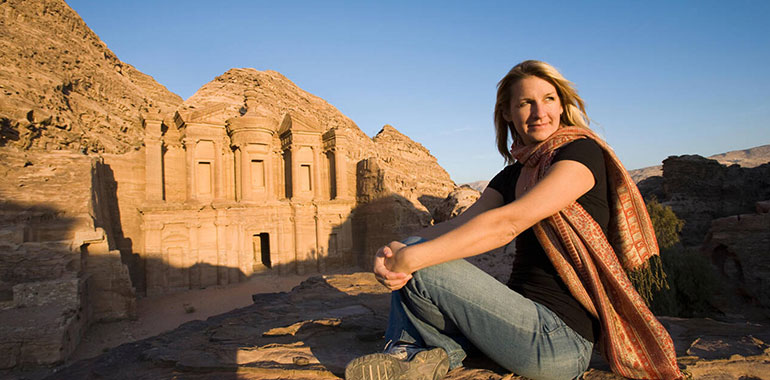
Petra was built by the Nabataean Arabs over 2,000 years ago. As skilled traders, the Nabataeans controlled vital caravan routes transporting incense, spices, and luxury goods. Petra’s hidden location and natural defenses made it the perfect capital city.
In 106 AD, Petra became part of the Roman Empire. Roman influence added theaters, paved roads, and monumental architecture. During the Byzantine era, Petra remained inhabited but slowly declined as trade routes changed.
Earthquakes and shifting commerce led to the abandonment of Petra. The city remained unknown to the Western world until 1812, when Swiss explorer Johann Ludwig Burckhardt rediscovered it.
Petra was designated a UNESCO World Heritage Site in 1985, recognizing its cultural importance, architectural brilliance, and historical value.
Petra’s monuments were carved directly into sandstone cliffs with astonishing precision, blending architecture with natural landscapes.
Petra’s sophisticated dams, channels, and cisterns allowed the city to store water and survive in a desert environment, an engineering marvel of the ancient world.
Petra flourished as a crossroads of trade connecting Asia, Africa, and Europe, which brought wealth and cultural diversity to the city.
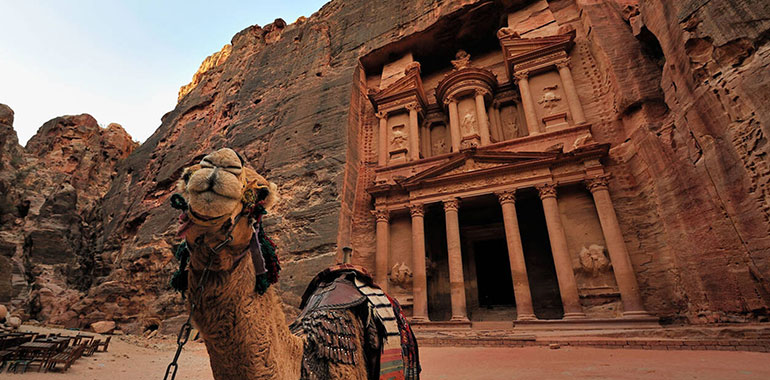
The Siq is a narrow canyon stretching over 1 kilometer, leading visitors dramatically toward Petra’s heart.
The Treasury is Petra’s most iconic monument, rising nearly 40 meters high and famous for its intricate façade.
A series of monumental Nabataean tombs carved into the cliffs.
Including the Urn Tomb, Silk Tomb, Corinthian Tomb, and Palace Tomb, offering panoramic views over Petra.
A massive theater carved into the mountainside with seating for over 6,000 people.
One of Petra’s most important religious structures and one of the few freestanding buildings.
Reached by climbing around 800 stone steps, the Monastery is one of Petra’s largest and most impressive monuments.
An elevated site used for Nabataean rituals, offering breathtaking views.
Exploring Petra on foot allows you to appreciate its scale, silence, and detail. Sunrise and sunset are especially popular as the changing light enhances Petra’s colors.
Popular trails include:
Best photo spots include the Treasury at sunrise and the Royal Tombs at sunset.
Local Bedouins add cultural richness, often welcoming visitors with tea and stories.
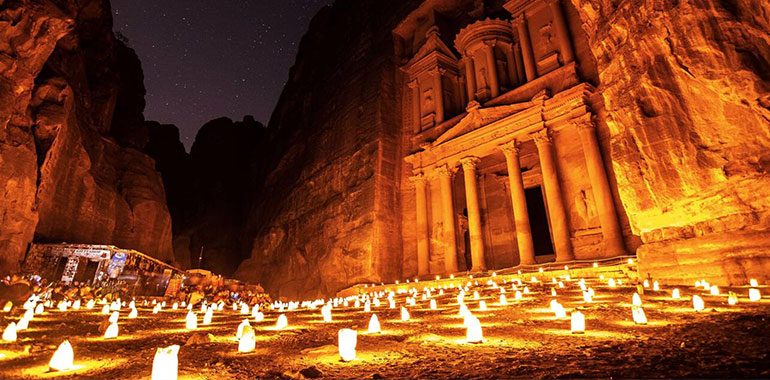
Petra by Night is a candle-lit walk through the Siq to the Treasury, creating a magical nighttime atmosphere.
Petra by Night Tickets and Schedule
At Tripidays, we recommend Petra by Night for the atmosphere rather than sightseeing. It’s a unique and memorable experience.
Tickets are available at the Petra Visitor Center or through official platforms.
March–May and September–November offer the best weather.
Early morning and late afternoon are ideal for cooler temperatures and photography.
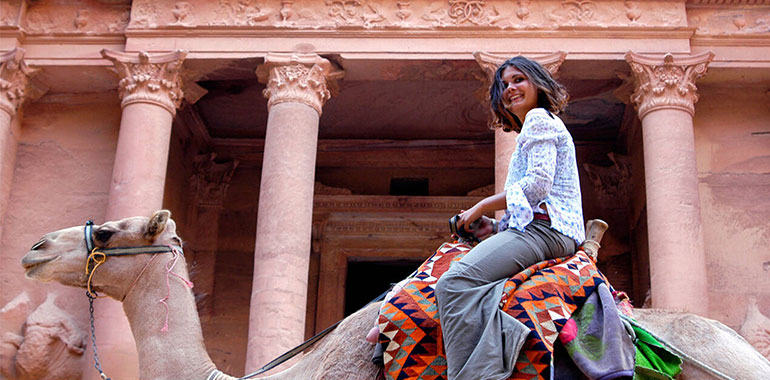
Best for highlights such as the Treasury, Royal Tombs, and Street of Facades.
Recommended by Tripidays for a relaxed pace and visiting the Monastery.
Ideal for hiking trails and deeper exploration.
A short and popular route often combined with Red Sea stays.
Frequently paired in multi-day Jordan itineraries.
Guided tours offer comfort, historical insight, and time efficiency.
Comfortable walking or hiking shoes are essential.
Wear breathable layers and dress modestly.
Water, sunscreen, a hat, snacks, and a camera.
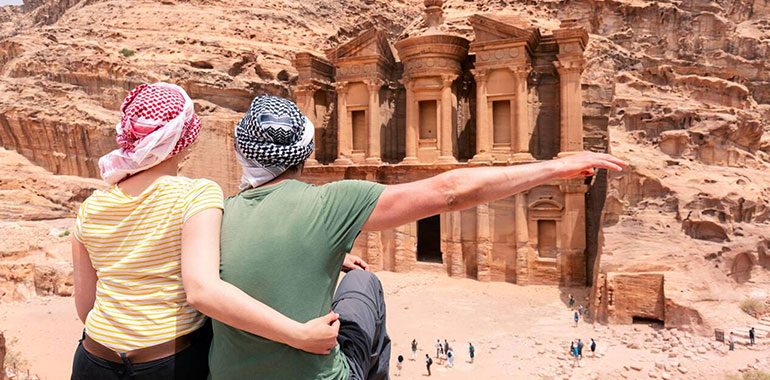
Yes, Petra is very safe for tourists.
Stay hydrated, follow marked trails, and avoid midday heat.
Do not climb monuments or remove artifacts.
Avoid unofficial guides and overpriced animal rides.
As a trusted Middle East travel agency, Tripidays designs Petra tours that balance history, comfort, and authentic local experiences. Most travelers combine Petra with Wadi Rum, the Dead Sea, and Amman for a complete Jordanian journey.


Tripidays Egypt Tours has been offering an exceptional range of Egypt tours, vacation packages, Nile cruises, day trips, and shore excursions tailored to meet the diverse interests of travelers worldwide for over 45 years.