

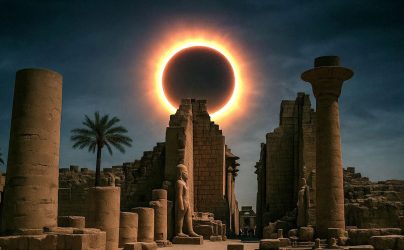
Starlight Festival Egypt 2026: Dates, Lineup & Travel Guide
September 24, 2026
Read more
about Starlight Festival Egypt 2026: Dates, Lineup & Travel Guide
















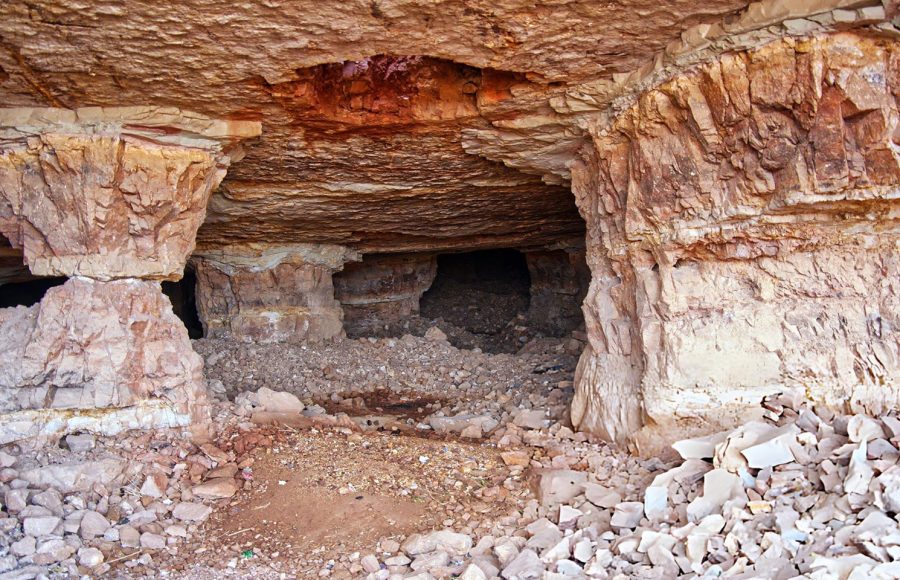
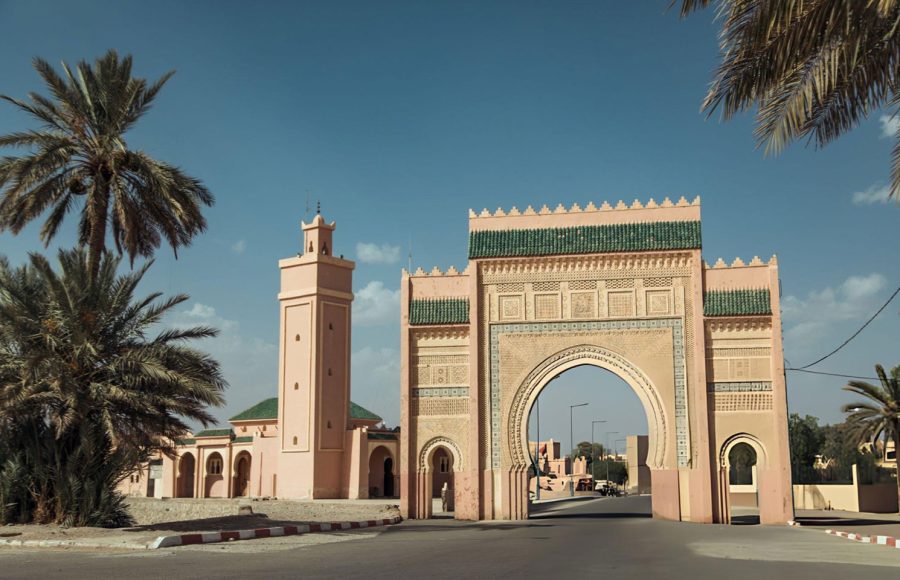
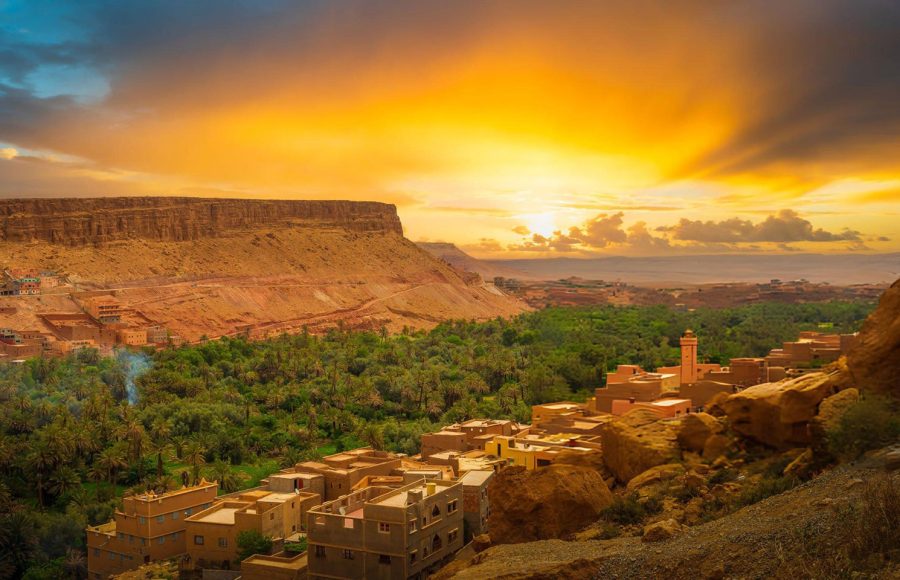
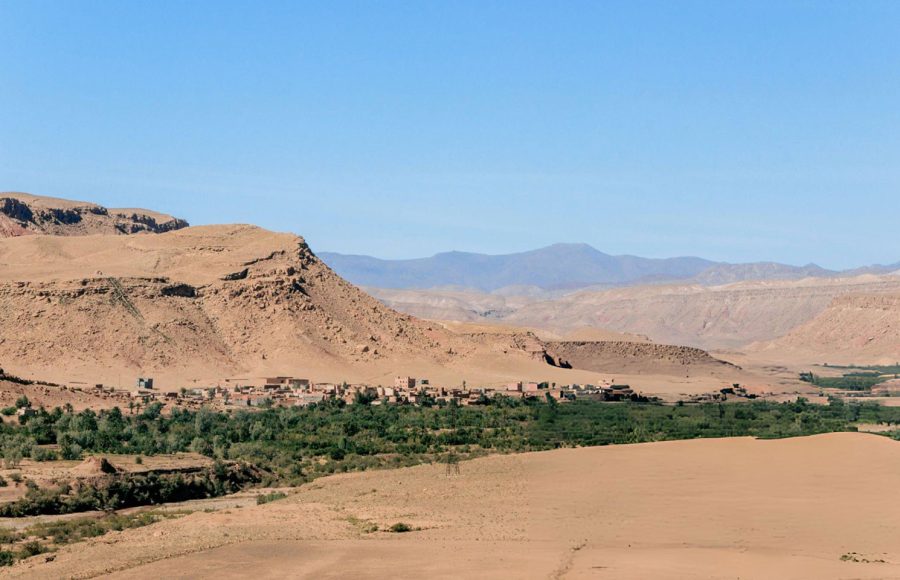



















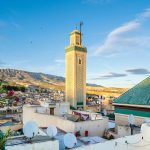
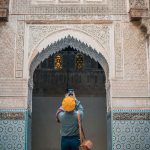
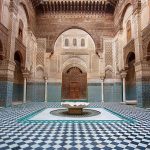


| Duration |
18 Days / 17 Nights |
|---|---|
| Tour Location |
Cairo / Giza / Hurghada / Luxor / Aswan / Alexandria / Casablanca / Chefchaouen / Fez / Merzouga / Ouarzazate / Marrakech |
| Tour Run | |
| Pickup |
Cairo Airport or Casablanca Airport |
This 18 day Egypt and Morocco tour is Tripidays’ most geographically comprehensive journey, combining Cairo, Giza, Alexandria, Hurghada, Luxor, Aswan, Casablanca, Rabat, Chefchaouen, Fez, the Merzouga Sahara, Dades Valley, Aït Ben Haddou, and Marrakech. Travelers comparing Egypt and Morocco Journeys can see how this route goes beyond the classic highlights with a 4 night Nile Cruise, Red Sea leisure, Alexandria’s Mediterranean heritage, Chefchaouen’s blue medina, Fez’s historic crafts, a Sahara camel ride and desert camp, and a High Atlas crossing. Tripidays connects these regions through domestic flights, private transportation, and guided sightseeing, creating a comprehensive two-country journey across Egypt and Morocco.
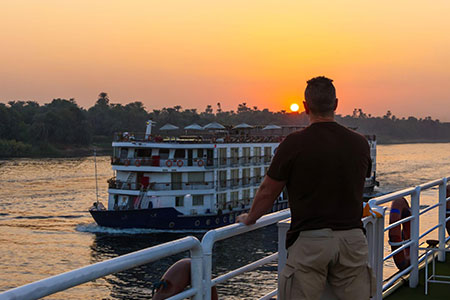
Day 1: Arrive in Cairo, meet your Tripidays representative, transfer to your hotel, and enjoy a Nile dinner cruise. Day 2: Explore the Giza Pyramids, Valley Temple, Great Sphinx, and Grand Egyptian Museum, then fly to Hurghada. Day 3: Enjoy a relaxed Red Sea day with optional snorkeling. Day 4: Travel to Luxor, visit Karnak Temple and Luxor Temple, and board your Nile cruise. Day 5: Discover the Valley of the Kings, Hatshepsut Temple, and Colossi of Memnon. Day 6: Visit Edfu and Kom Ombo Temples while sailing toward Aswan. Day 7: Explore the Aswan High Dam, Unfinished Obelisk, and Philae Temple, completing the Nile portion of your Egypt adventure.
Only on this route
This is the most geographically comprehensive Egypt and Morocco itinerary in the collection, connecting two countries and multiple distinct travel regions from Egypt’s ancient monuments, Mediterranean coast, Red Sea and Nile Valley to Morocco’s Atlantic cities, Rif and Atlas Mountains, Sahara, Chefchaouen, Fez, Merzouga and Marrakech.
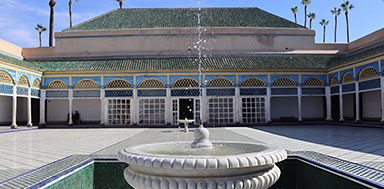
Arc I · Giza to Aswan
From Cairo’s pyramids and Hurghada’s shores to temples along the Nile
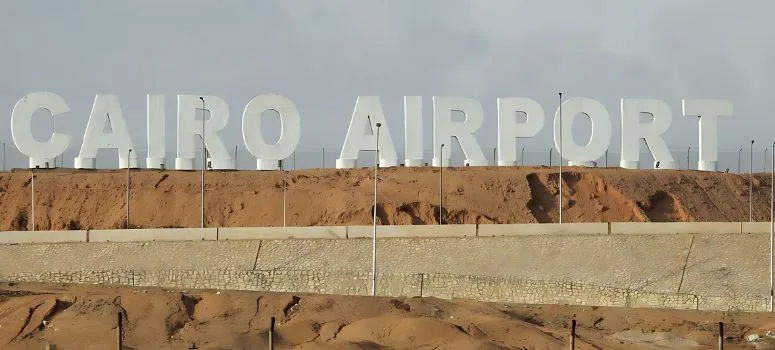
Arrive in Cairo and meet your Tripidays representative at Cairo International Airport for assistance and a private transfer to your hotel. After settling in, begin your 18 day Egypt and Morocco with Chefchaouen, Fez & Marrakech tour with an evening Nile dinner cruise, where Cairo's illuminated skyline becomes your first introduction to Egypt.

As evening arrives, board a Nile dinner cruise and watch Cairo unfold along the river. Enjoy dinner while the city's lights reflect across the water, accompanied by live entertainment that brings a lively Egyptian atmosphere to your first night.
Dinner
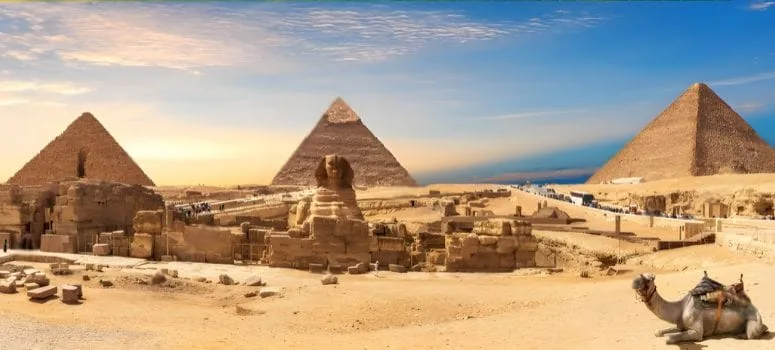
After breakfast, begin your Egyptian adventure at the Giza Plateau, where the Pyramids and Great Sphinx bring ancient Egypt to life. Continue to the Grand Egyptian Museum, then fly from Cairo to Hurghada for your first evening beside the Red Sea.

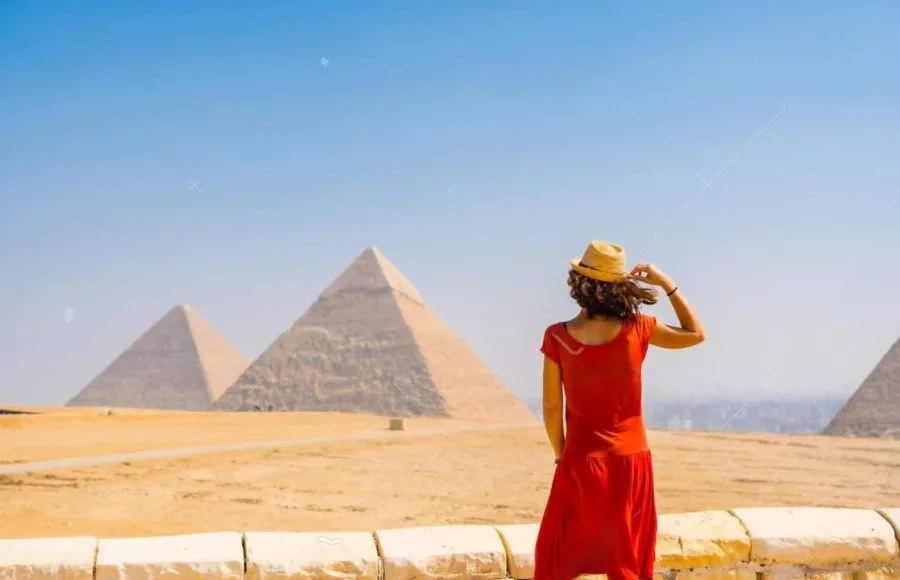
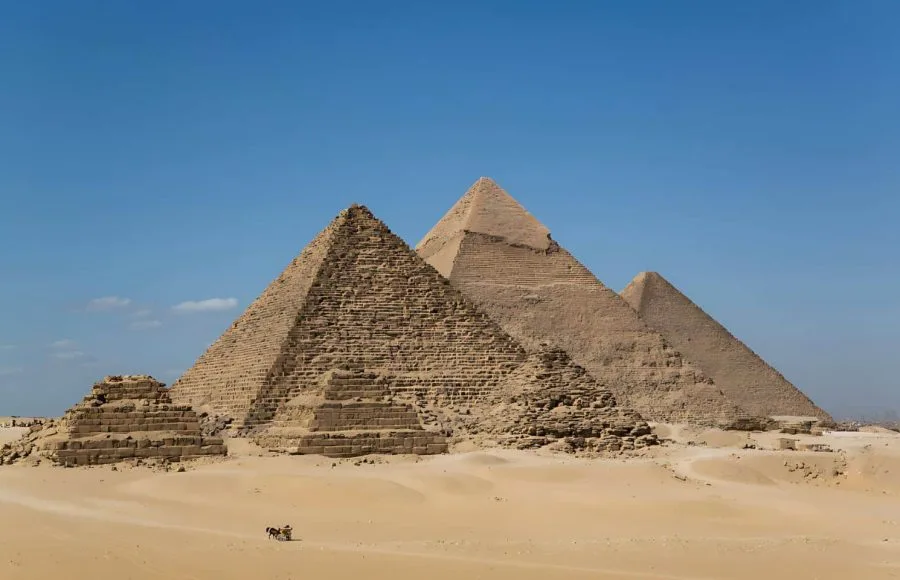
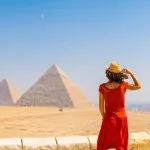
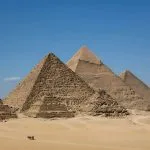
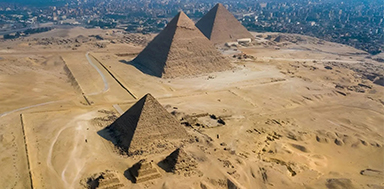
Begin at the Giza Pyramids, where Khufu, Khafre, and Menkaure rise above the desert plateau. Standing before these monumental structures feels very different from seeing them in photographs, as the scale of the ancient complex becomes immediately apparent.
Near the Great Sphinx, explore the Valley Temple of Khafre, a remarkably preserved structure built from massive limestone and granite blocks. The temple formed an important part of Khafre's funerary complex and offers another perspective on the rituals associated with ancient Egyptian royal burials.
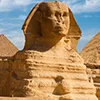
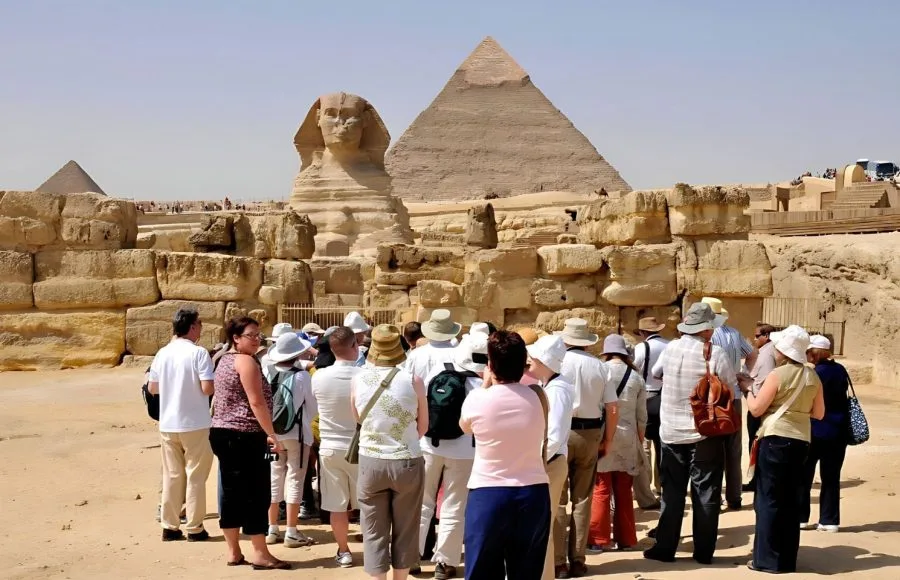
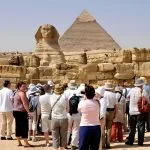
Continue to the Great Sphinx, the monumental limestone figure with the body of a lion and the head of a king. Positioned beside the pyramids, the Sphinx remains one of Egypt's most recognizable symbols and one of the most memorable sights of your Cairo experience.
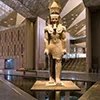
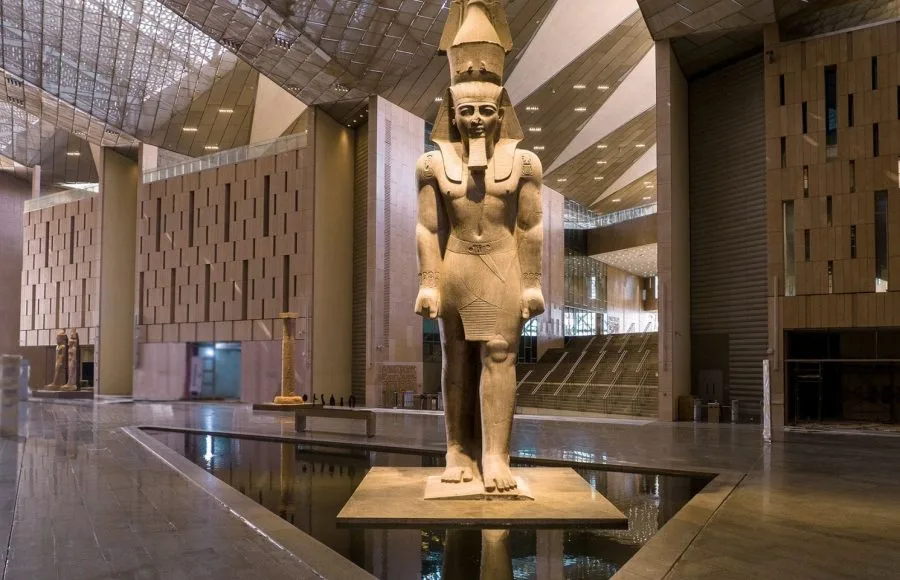
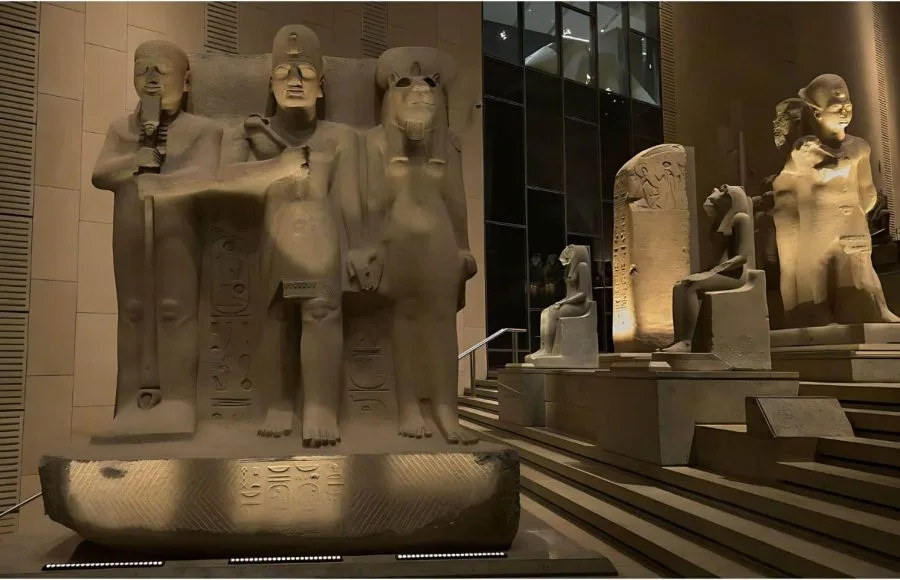
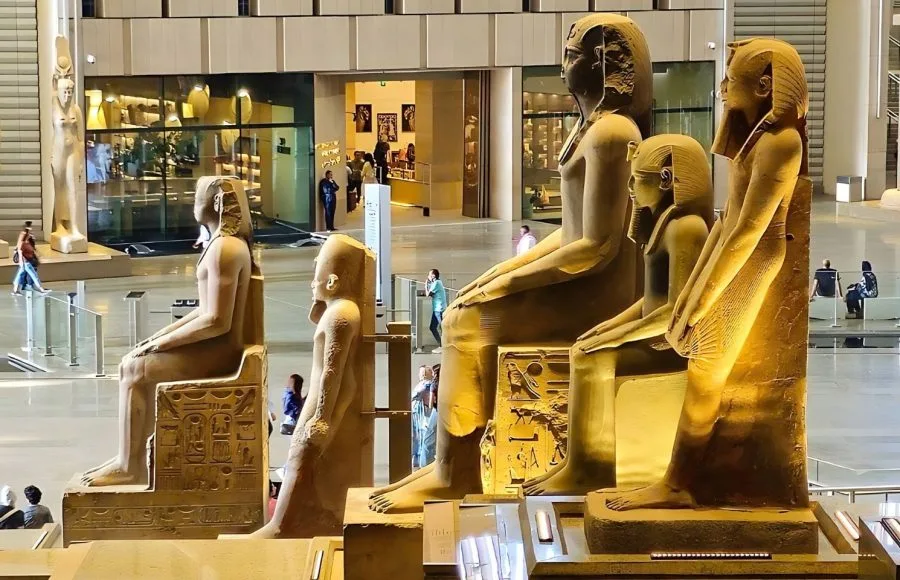
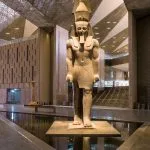
Continue to the Grand Egyptian Museum, where Egypt's archaeological heritage is presented on a monumental scale beside the Giza Plateau. After seeing the pyramids themselves, the museum helps connect the monuments with the objects, beliefs, rulers, and people behind thousands of years of Egyptian history.
Breakfast, Lunch, Dinner

After breakfast, enjoy a relaxed day in Hurghada, giving you time to experience Egypt's Red Sea coast at your own pace. You can spend the day by the sea or at the hotel pool, or choose an optional snorkeling excursion to discover the coral reefs and marine life beneath the clear waters.

Take a break from sightseeing and enjoy the slower rhythm of Hurghada. Spend time relaxing at your hotel, by the Red Sea, or exploring the resort area at your own pace.

If you choose the optional excursion, spend part of the day aboard a Red Sea boat before snorkeling in the clear waters. The combination of open sea, coral gardens, and colorful marine life creates a refreshing contrast to the archaeological experiences earlier in your 18 day Egypt & Morocco with Nile cruise and Hurghada tour.
Breakfast, Lunch, Dinner

After breakfast, leave the Red Sea behind and travel to Luxor, where the ancient world takes center stage once again. Explore Karnak and Luxor Temple before boarding your Nile cruise and beginning your journey south toward Aswan.
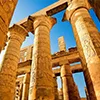
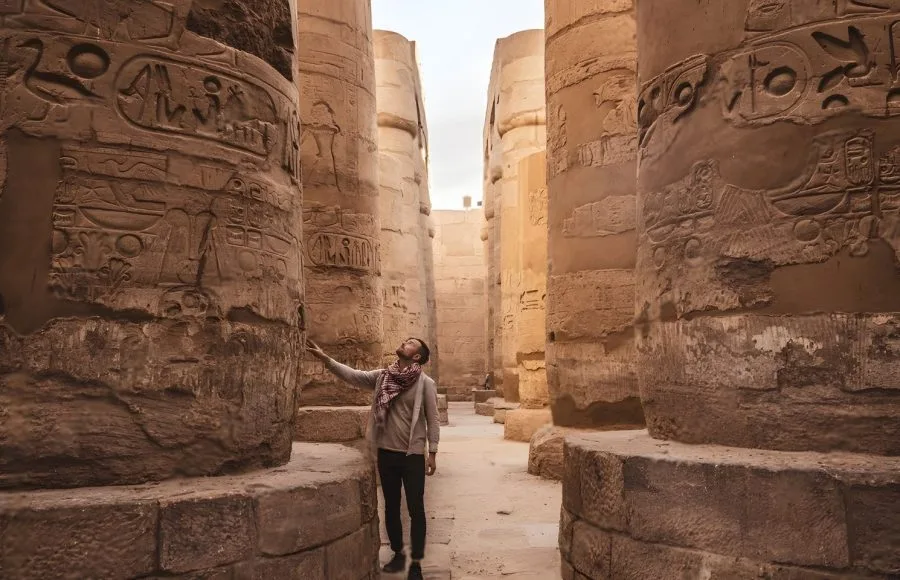
Begin your Luxor sightseeing at Karnak Temple, one of ancient Egypt's most impressive religious complexes. Walk through monumental gateways and the vast Hypostyle Hall while your Egyptologist explains how generations of pharaohs expanded the sacred complex over centuries.
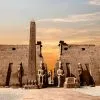
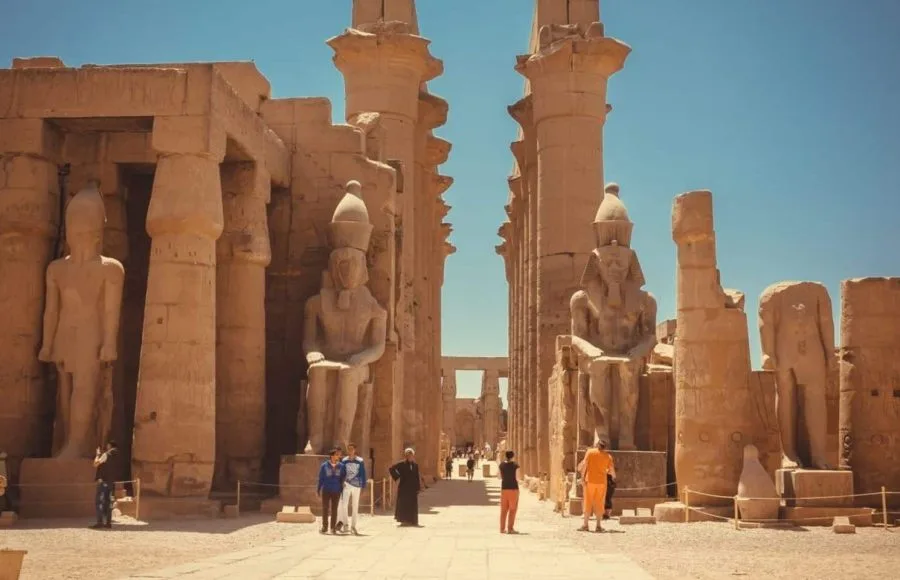
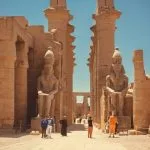
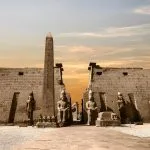
Continue to Luxor Temple, located in the heart of modern Luxor. Its monumental columns, statues, and ancient sanctuary reveal a different aspect of Thebes and its connection with royal ceremonies and the rejuvenation of kingship.
Breakfast, Lunch, Dinner

After breakfast onboard, cross to Luxor's West Bank to explore the royal tombs and monumental temples of the Theban Necropolis. Return to your cruise and continue sailing along the Nile as ancient landscapes pass slowly beyond the riverbanks.
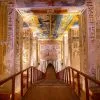
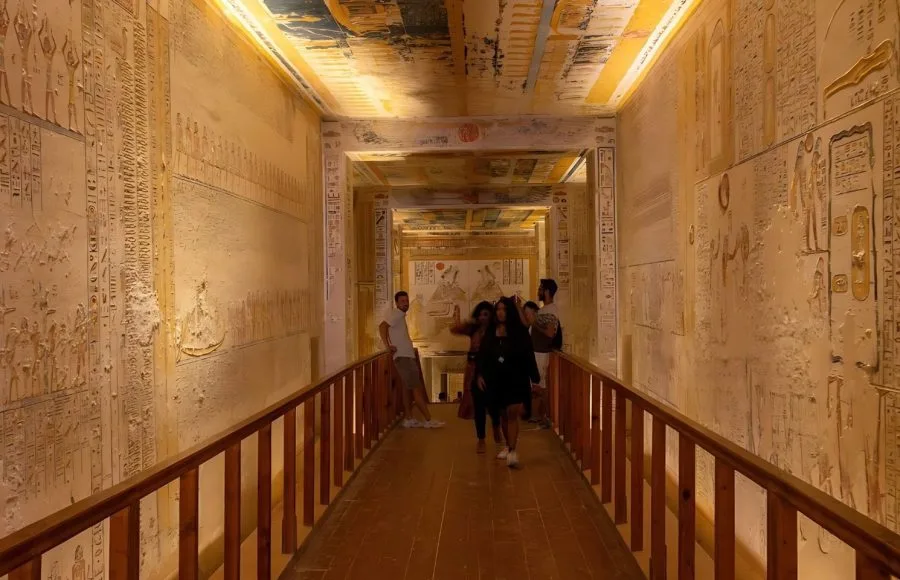
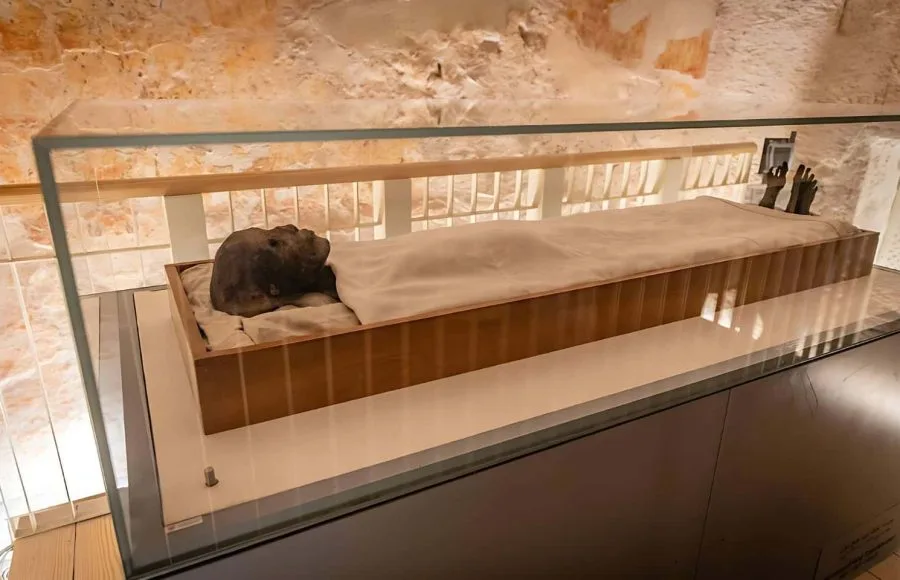
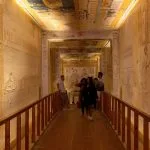
Enter the Valley of the Kings, where New Kingdom pharaohs were buried in tombs carved into the desert cliffs. Unlike the visible pyramids of Giza, these royal tombs were hidden within the mountains, creating a more intimate glimpse into ancient Egyptian funerary beliefs.
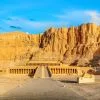
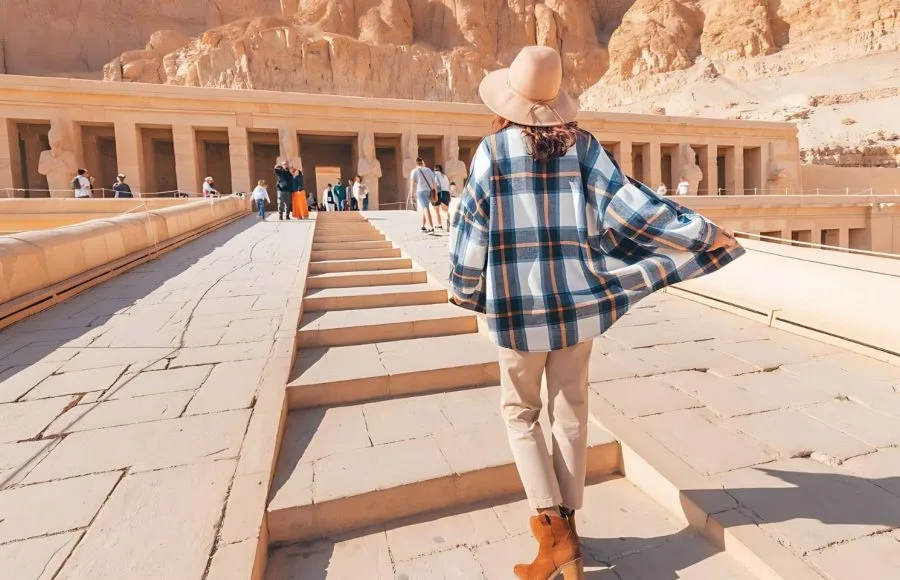
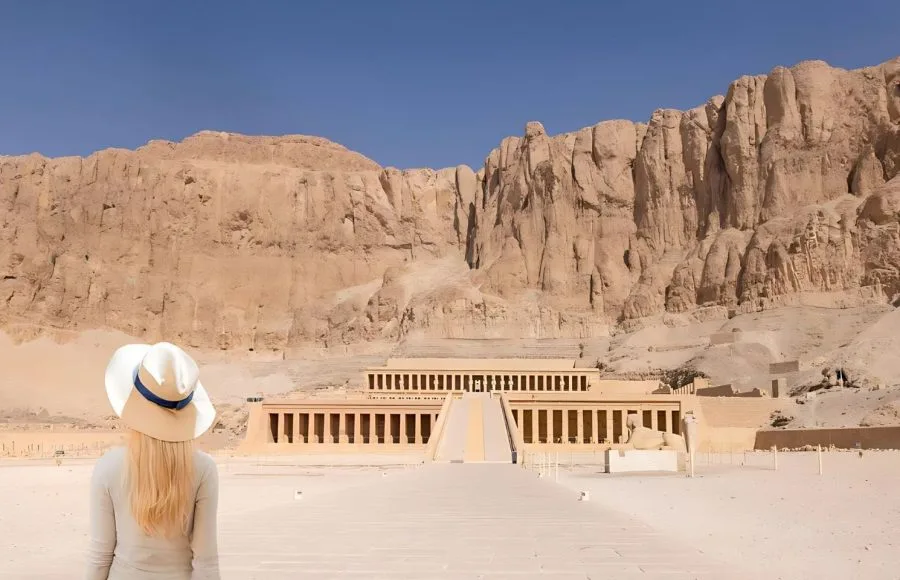
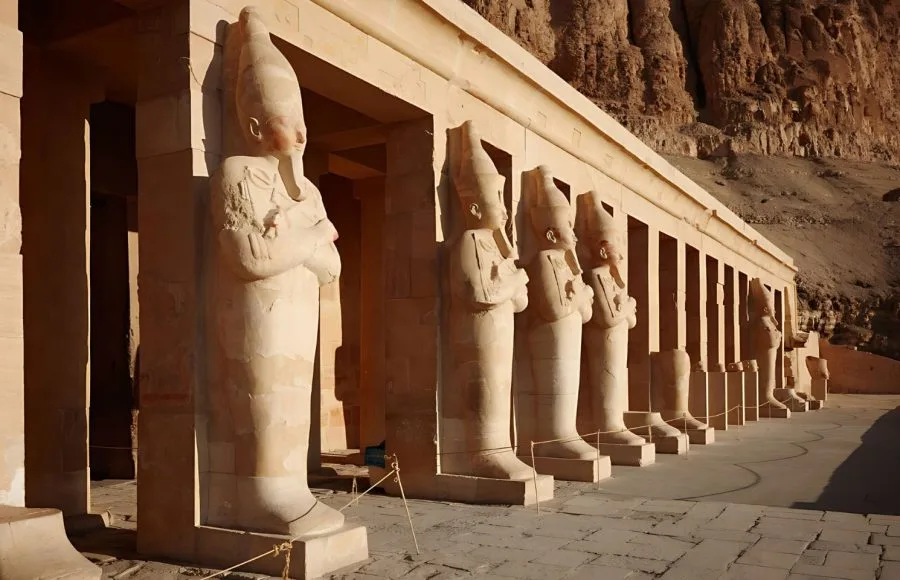
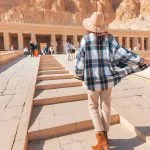
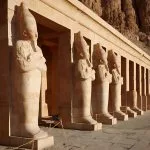
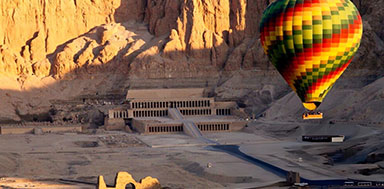
Continue to the Temple of Hatshepsut at Deir el-Bahari, dramatically positioned beneath the limestone cliffs. Its broad terraces and colonnades create one of Luxor's most recognizable architectural settings and tell the story of one of ancient Egypt's most prominent female rulers.
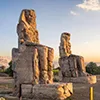
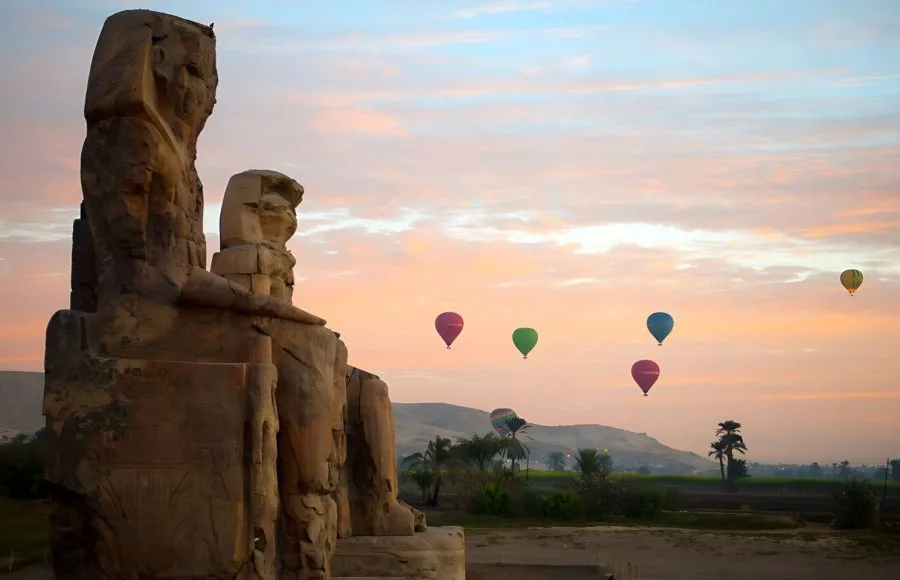
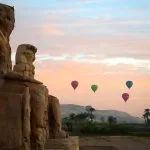
Pause at the Colossi of Memnon, two enormous seated statues of Pharaoh Amenhotep III. Once positioned before his vast mortuary temple, the statues now stand as enduring landmarks overlooking Luxor's West Bank.
Breakfast, Lunch, Dinner

Wake to the rhythm of the Nile and continue south toward two remarkable temples. Explore the remarkably preserved Temple of Horus at Edfu and the unusual double sanctuary of Kom Ombo before continuing toward Aswan.
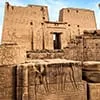
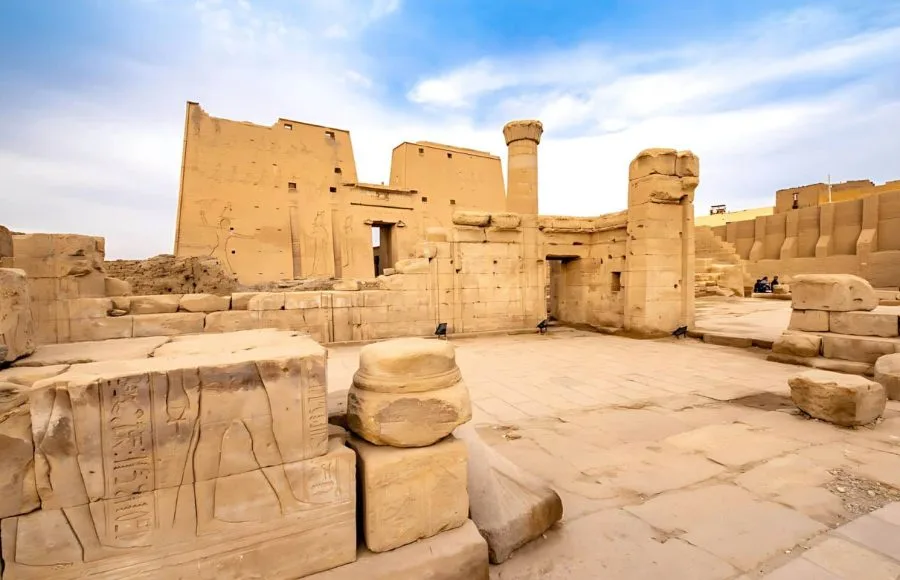
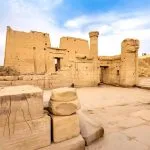
Visit Edfu Temple, one of the best-preserved ancient temples in Egypt. Dedicated to the falcon-headed god Horus, the temple features monumental pylons, courtyards, columns, and reliefs that provide a vivid picture of ancient Egyptian temple architecture and religious traditions.
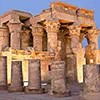
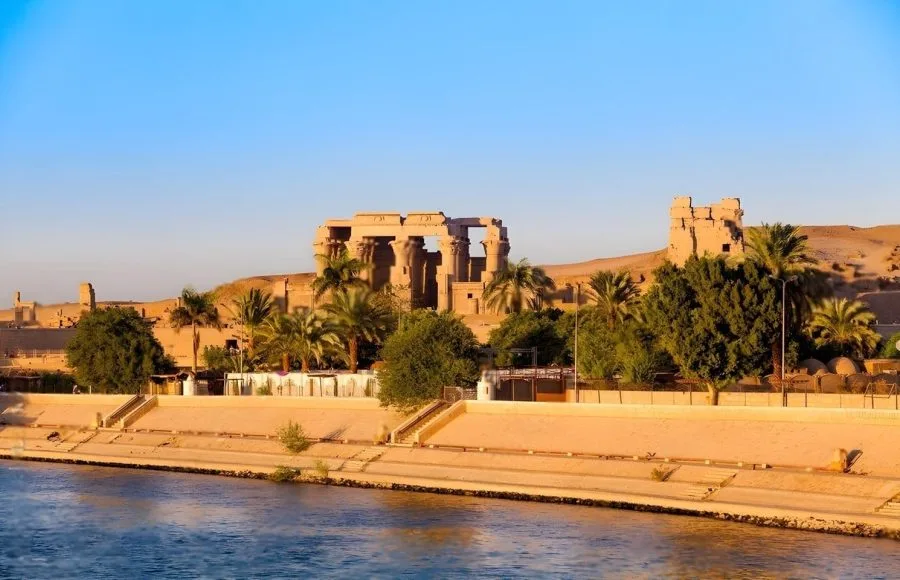
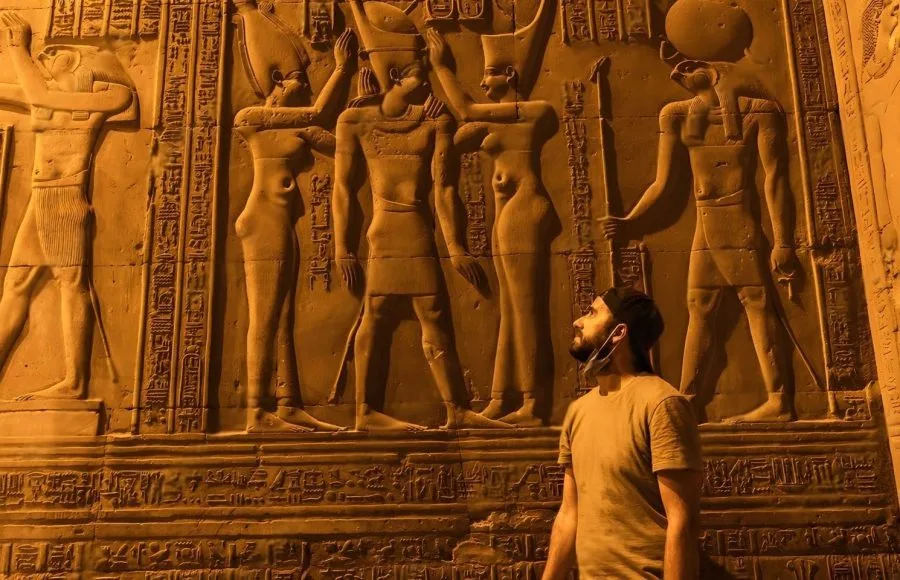
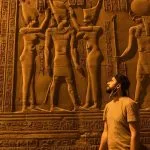
Later, visit Kom Ombo Temple, an unusual double temple dedicated to Sobek, the crocodile god, and Horus the Elder. Its symmetrical design reflects the temple's dual dedication, while the surviving reliefs provide fascinating details about ancient Egyptian religion and daily life.
Breakfast, Lunch, Dinner

After breakfast, discover Aswan's distinctive combination of ancient monuments and modern engineering. Visit the High Dam and Unfinished Obelisk before taking a boat across the Nile to the beautiful Philae Temple, then enjoy your final evening in Upper Egypt.
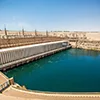
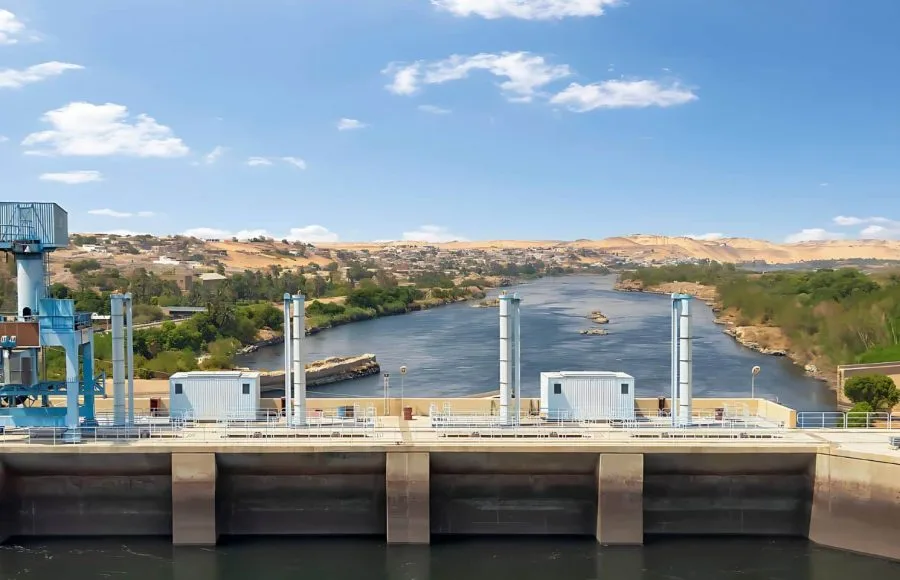
Begin at the Aswan High Dam, one of modern Egypt's most significant engineering projects. The dam transformed the Nile's seasonal flooding, created Lake Nasser, and played an important role in Egypt's modern development.
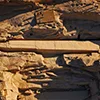
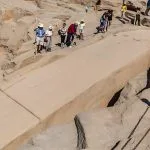
Continue to the ancient granite quarries to see the Unfinished Obelisk. Still connected to the bedrock where craftsmen began carving it, the monument provides a rare opportunity to understand how ancient stoneworkers shaped enormous granite monuments.
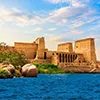
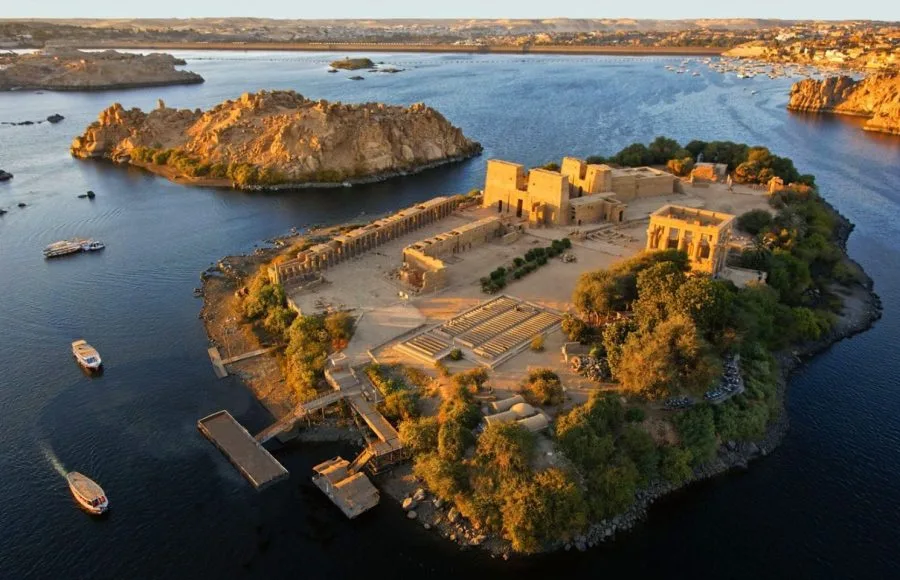
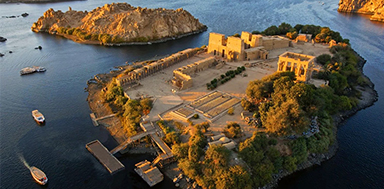
Take a short boat ride across the Nile to Philae Temple, dedicated primarily to the goddess Isis. Surrounded by water on Agilkia Island, the temple's columns, reliefs, and island setting create one of the most atmospheric experiences of an Egypt, Morocco, Nile cruise & Hurghada itinerary.
Breakfast, Lunch, Dinner
Arc II · Cairo to Chefchaouen
Explore Islamic Cairo and Alexandria before Morocco’s Atlantic cities and blue medina

After breakfast, disembark from your Nile cruise and fly from Aswan to Cairo. Once you arrive, explore some of the city's most remarkable Islamic landmarks, from the monumental Sultan Hassan and Al-Rifai Mosques to Salah El-Din Citadel and Mohamed Ali Mosque, before walking through Al-Muizz Street and ending your day at Khan el-Khalili.

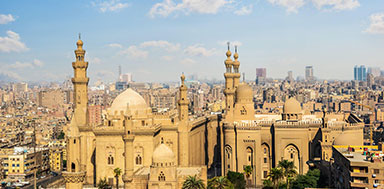
Begin your Islamic Cairo experience at the impressive Sultan Hassan Mosque, one of Cairo's greatest examples of Mamluk architecture. Its enormous walls, soaring entrance, vast courtyard, and elegant architectural details create an immediate sense of scale and history.

Just across from Sultan Hassan stands the Al-Rifai Mosque, creating one of the most striking architectural pairings in Cairo. Although built centuries later, the mosque was designed in a style that complements the neighboring Mamluk monument.
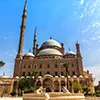
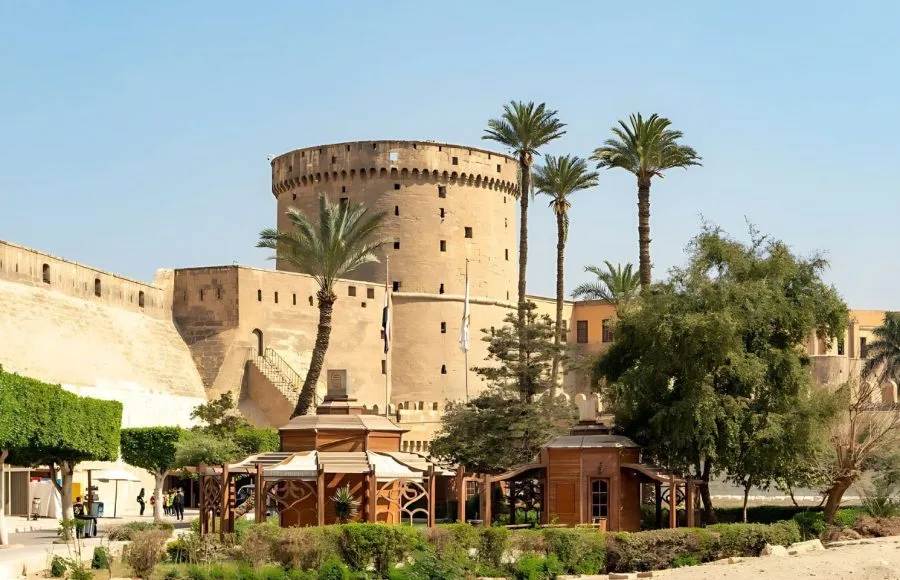
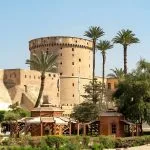
Continue uphill to the Salah El-Din Citadel, one of Cairo's most important medieval fortifications. Built by Salah El-Din in the 12th century, the citadel occupies a strategic position overlooking the historic city.
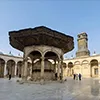
Inside the Citadel, visit the magnificent Mohamed Ali Mosque, also known as the Alabaster Mosque. Its enormous central dome, elegant minarets, and Ottoman-inspired design make it one of Cairo's most recognizable landmarks.
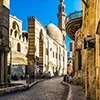
Descend from the Citadel area and continue toward Al-Muizz Street, one of the most important historic streets in Islamic Cairo.
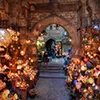
End the day at Khan el-Khalili, Cairo's famous historic bazaar. Wander through its narrow lanes lined with shops selling traditional crafts, jewelry, spices, souvenirs, and other Egyptian goods.
Breakfast, Lunch
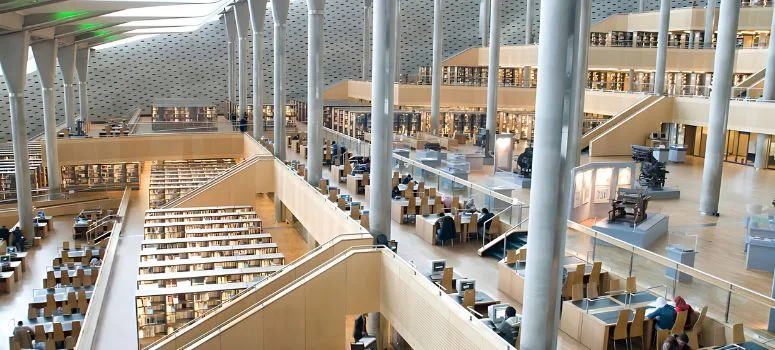
After breakfast, travel north to Alexandria on the Mediterranean coast. Discover the city's Greco-Roman heritage, historic waterfront, Qaitbay Citadel, and modern Bibliotheca Alexandrina before returning to Cairo.
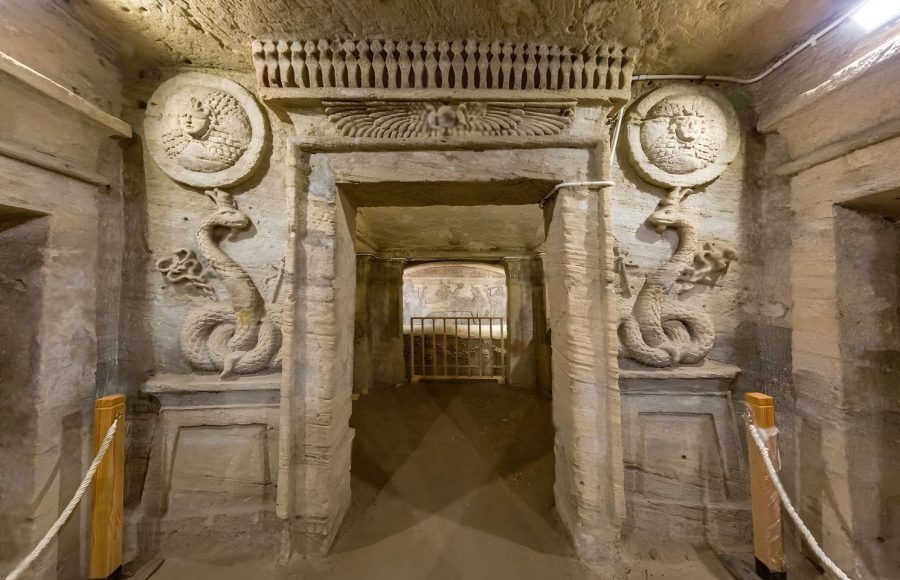
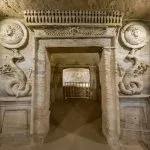
Explore the Catacombs of Kom El Shoqafa, an underground Roman-era necropolis whose architecture reflects a fascinating blend of Egyptian, Greek, and Roman influences.
Continue to Pompey's Pillar, a towering red granite column that remains one of Alexandria's most recognizable ancient landmarks.
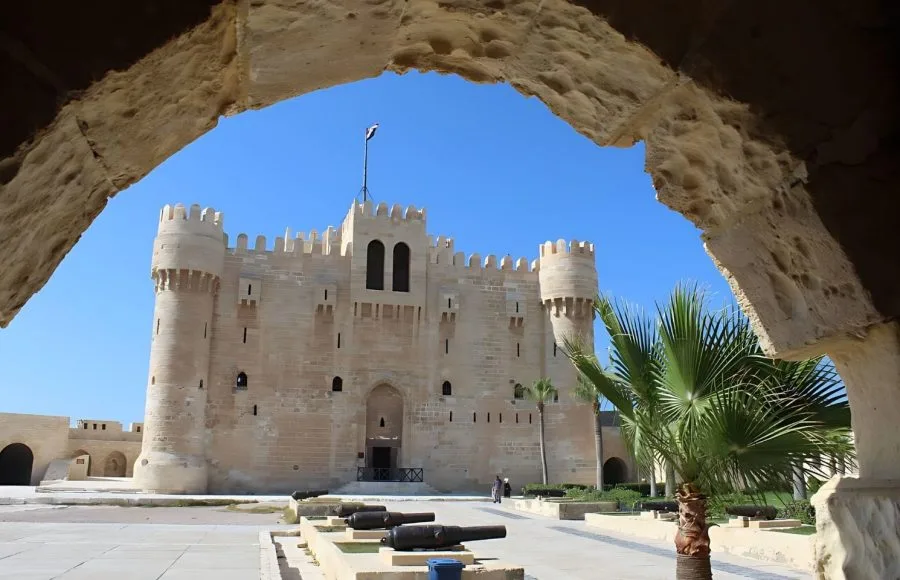
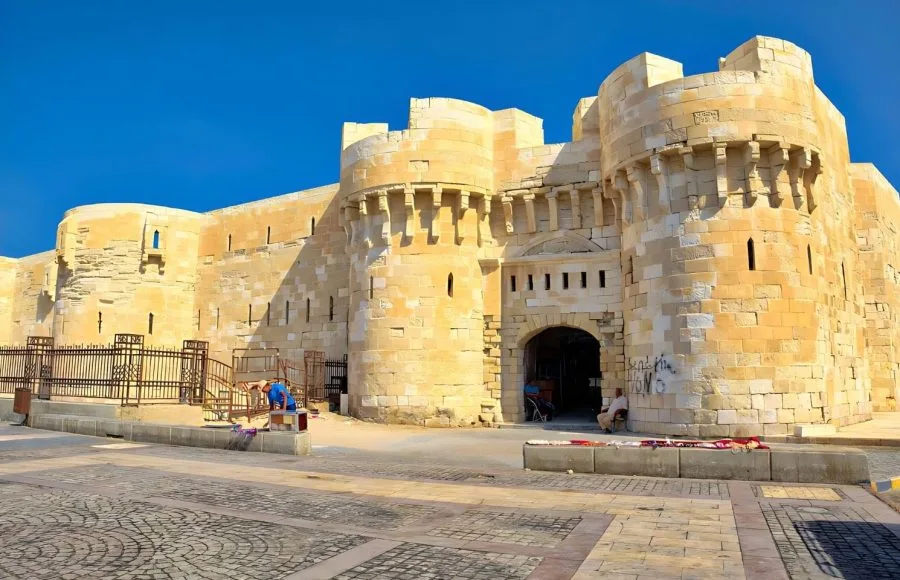
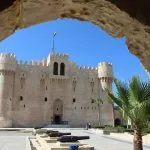
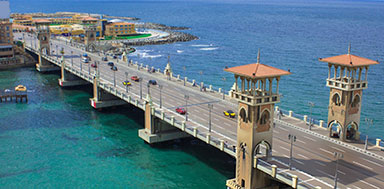
Visit the Qaitbay Citadel, positioned on Alexandria's Mediterranean waterfront. Built in the 15th century on the site traditionally associated with the ancient Lighthouse of Alexandria, the fortress offers impressive views across the sea.
Continue to the Bibliotheca Alexandrina, the modern library and cultural complex inspired by the legacy of Alexandria's ancient Library. Its distinctive architecture and cultural institutions provide a striking contrast with the city's archaeological sites.
Breakfast, Lunch
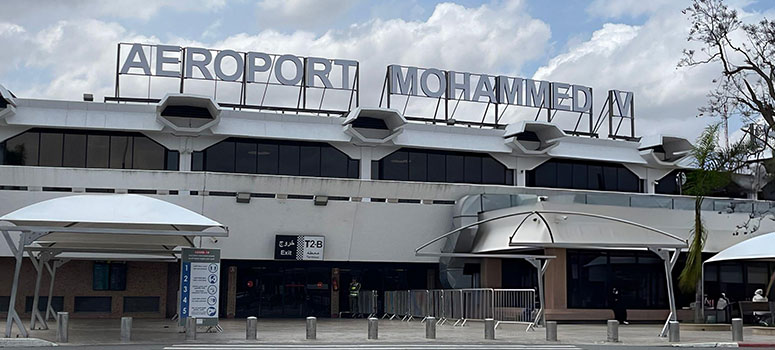
After breakfast, transfer to Cairo International Airport for your flight to Morocco. Upon arrival in Casablanca, meet your local representative and transfer to your hotel, marking the beginning of the Moroccan chapter of your journey. If this is your first journey through Morocco, our Morocco travel guide for planning your journey can help you understand the country's regions, transportation, seasons, and major destinations before exploring further.
Breakfast
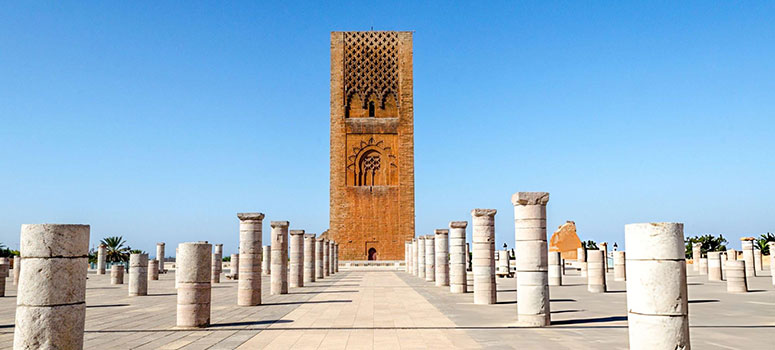
After breakfast, discover Casablanca's Atlantic landmarks before continuing to Morocco's capital, Rabat. Explore Hassan II Mosque and Casablanca's coastal character, then visit Hassan Tower, the Mausoleum of Mohammed V, the Kasbah of the Udayas, and the Royal Palace area.
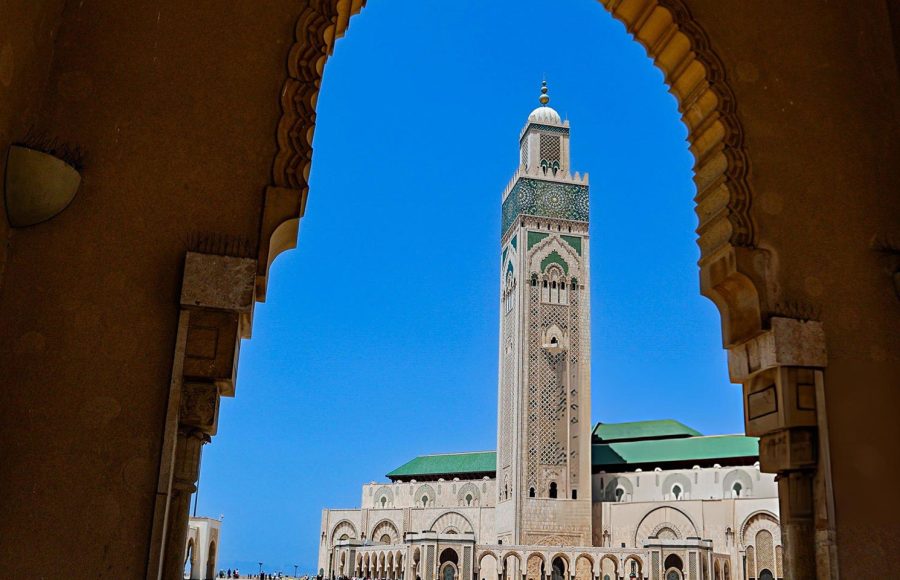
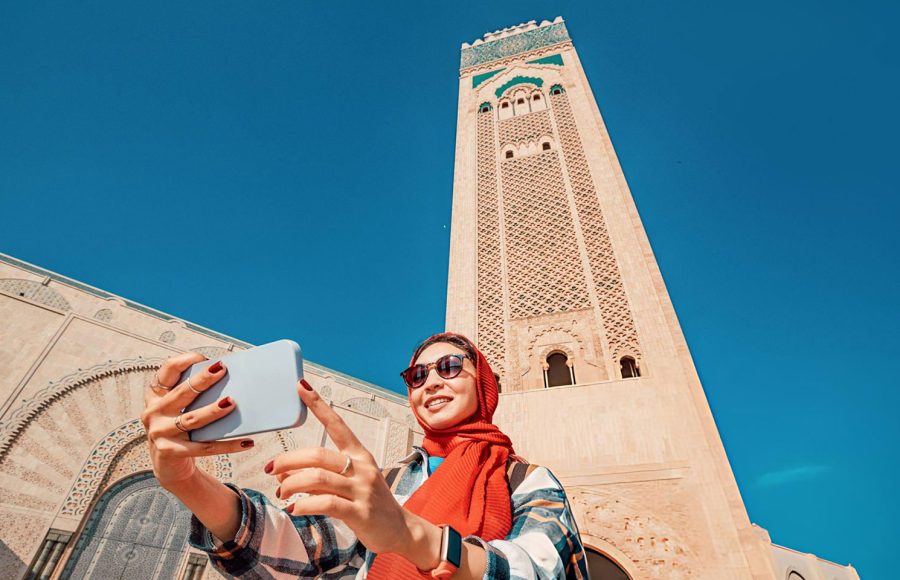
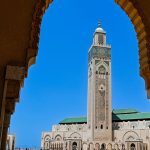
Begin at the spectacular Hassan II Mosque, dramatically positioned beside the Atlantic Ocean. Its monumental scale, detailed Moroccan craftsmanship, and oceanfront setting make it one of Casablanca's defining landmarks.
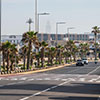
Continue along the Casablanca Corniche, where the modern city meets the Atlantic. The waterfront, cafés, promenades, and surrounding neighborhoods reveal a contemporary side of Morocco that contrasts naturally with the ancient landscapes of Egypt.
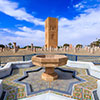
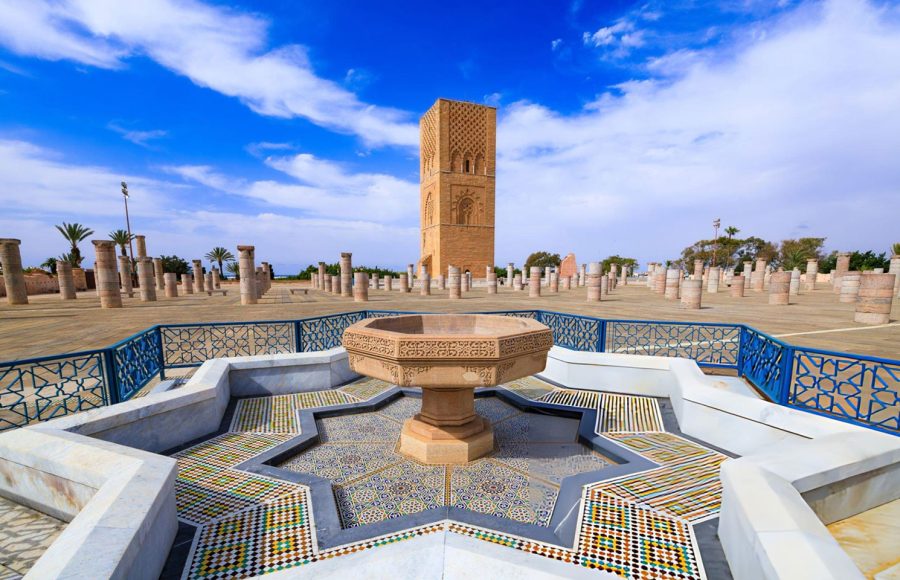
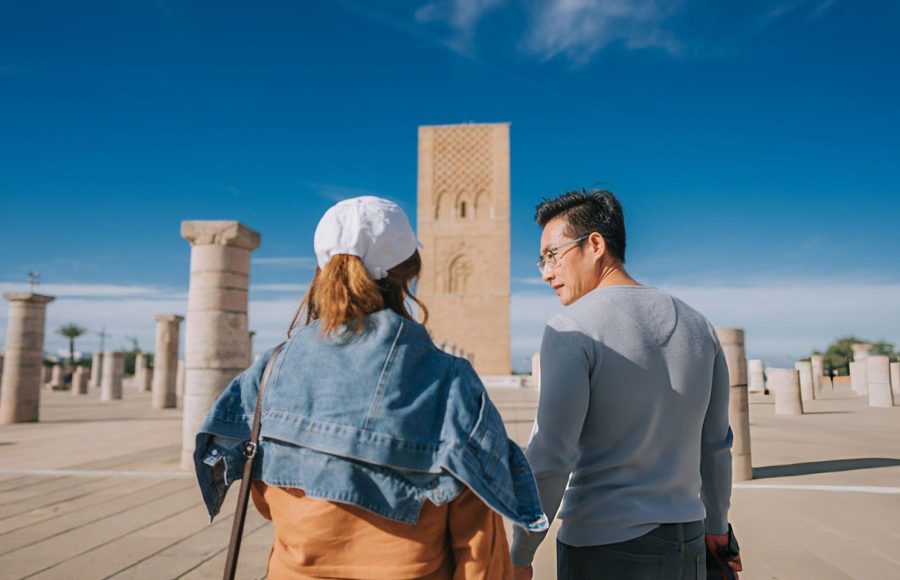
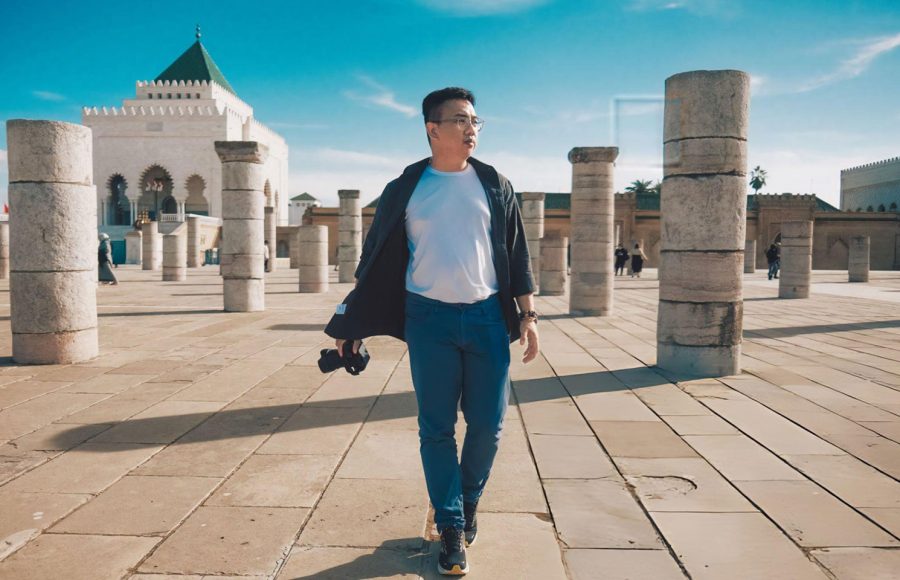
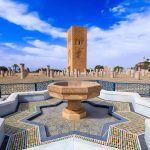
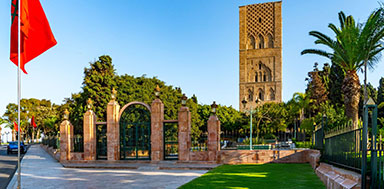
Visit Hassan Tower, the famous unfinished minaret that stands among the remains of an ambitious 12th-century mosque project. Its surrounding columns and monumental scale offer a fascinating glimpse into Rabat's medieval history.
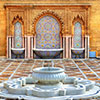
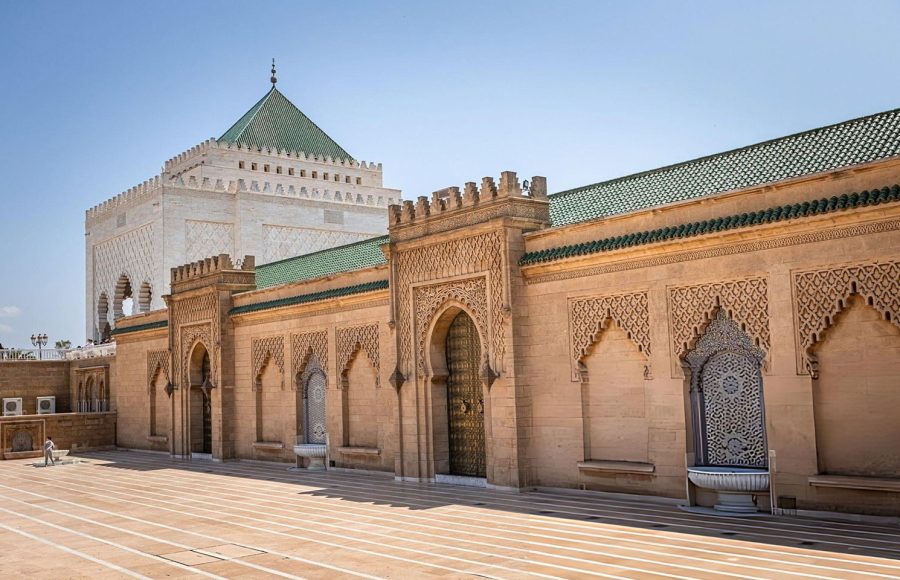
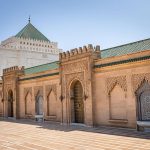
Nearby, visit the Mausoleum of Mohammed V, recognized for its elegant white exterior and detailed Moroccan craftsmanship. The monument provides an important connection to Morocco's modern royal history.
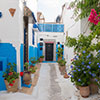
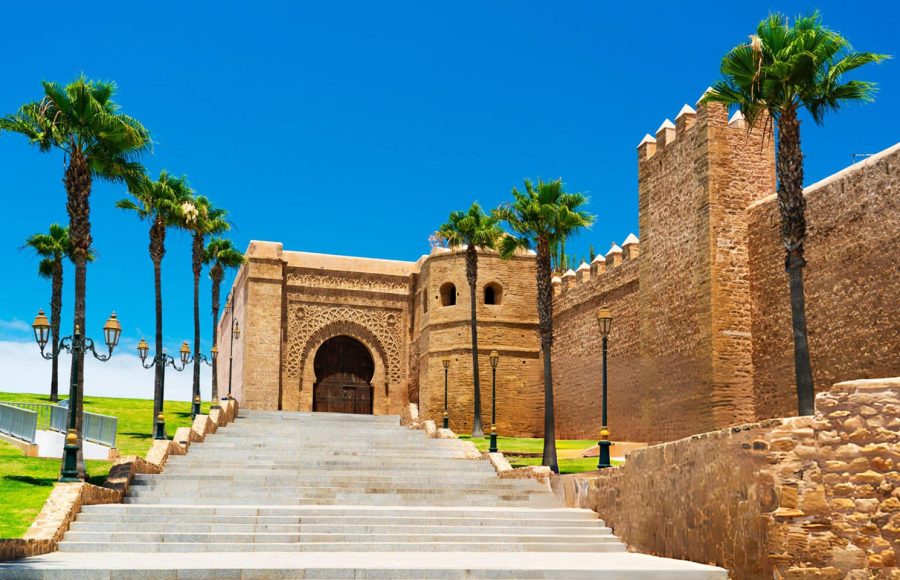
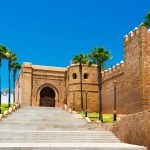
Continue to the Kasbah of the Udayas, a historic fortified neighborhood overlooking the Bou Regreg River and Atlantic Ocean. Walk through its narrow lanes and discover a quieter, more intimate side of Rabat.
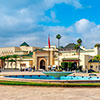
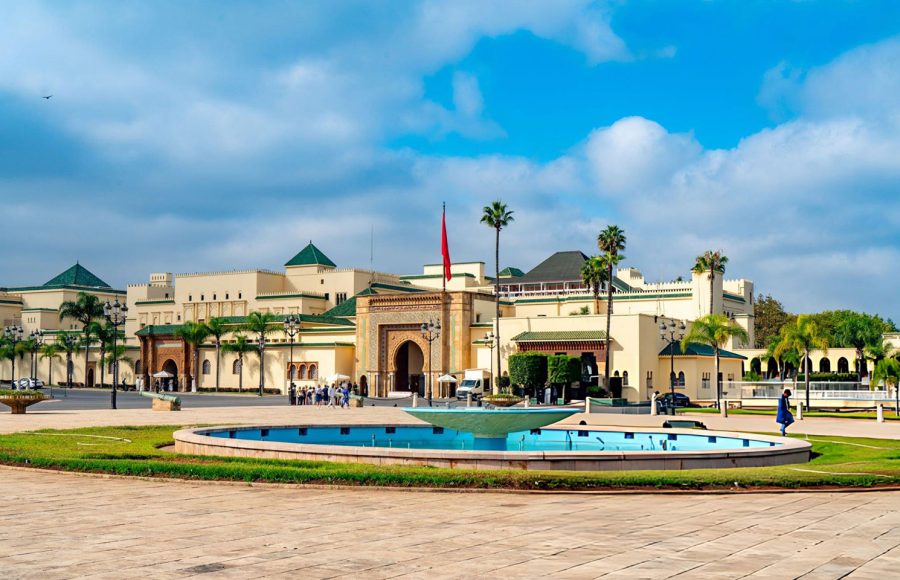
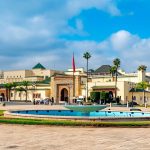
Conclude your Rabat sightseeing near the Royal Palace, also known as Dar al-Makhzen. The complex remains a working royal residence, so visitors generally view the exterior and surrounding ceremonial areas.
Breakfast, Lunch
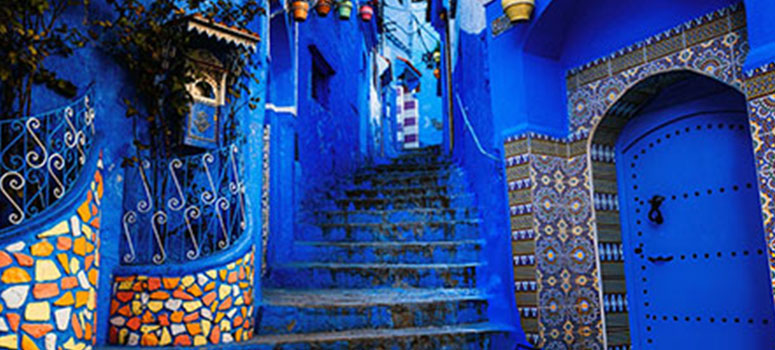
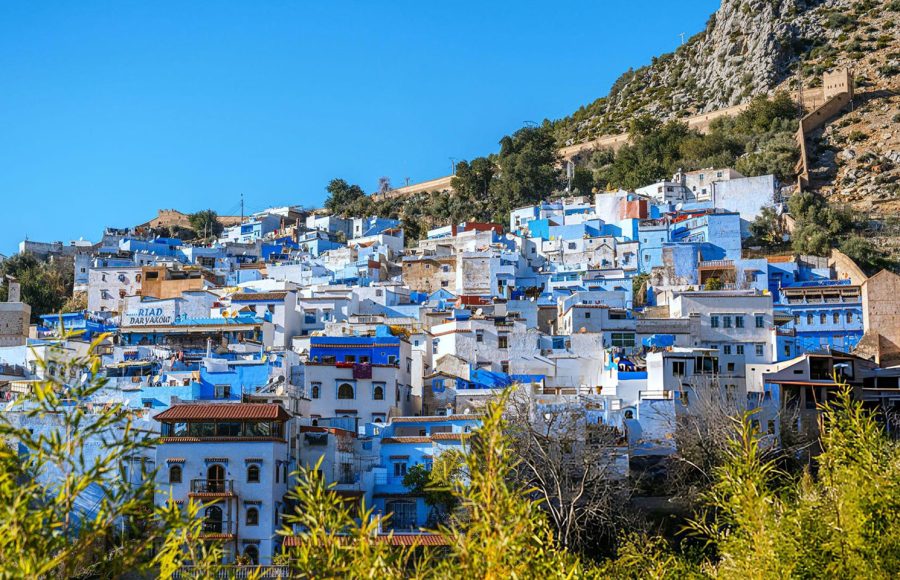
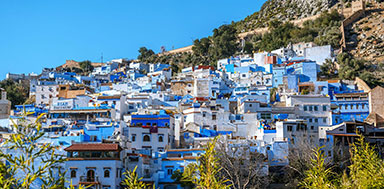
After breakfast, travel into the Rif Mountains toward Chefchaouen, where blue-painted lanes create one of Morocco's most distinctive cityscapes. Explore the medina and Outa el Hammam Square before continuing toward Fez.
Explore the blue-painted streets of Chefchaouen, where stairways, arched doorways, small squares, and white-and-blue buildings create a remarkably photogenic setting. Understanding Morocco's culture and customs can also help you navigate everyday interactions respectfully as you explore the country's historic neighborhoods.
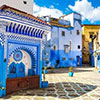
Continue to Outa el Hammam Square, the social heart of the old town. Traditional cafés and restaurants surround the square, while the Kasbah provides a historic focal point against the blue-painted streets. Chefchaouen is only one part of Morocco's diverse landscape, and travelers considering other regions can explore Morocco's best places to visit to see how the Rif Mountains, imperial cities, Atlantic coast, Atlas Mountains, and desert regions differ.
Breakfast, Lunch
Arc III · Fez to Merzouga
Discover Fez’s ancient medina, cross the Atlas, and camp beneath Sahara skies
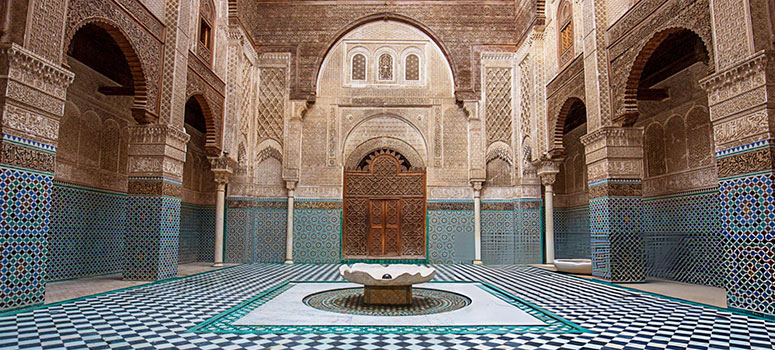
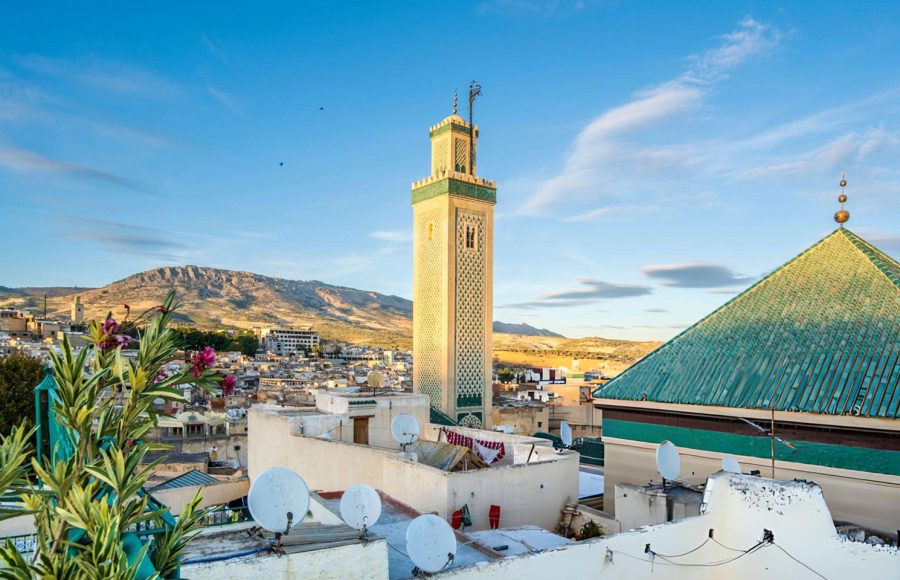
After breakfast, spend the day discovering Fez, one of Morocco's great historic cities. Explore its ancient medina, traditional religious architecture, leather workshops, and artisan quarters before returning to your riad for the evening.
Begin your Fez sightseeing near Al-Qarawiyyin University, founded in the 9th century and historically recognized as one of the world's oldest continuously operating centers of higher learning.
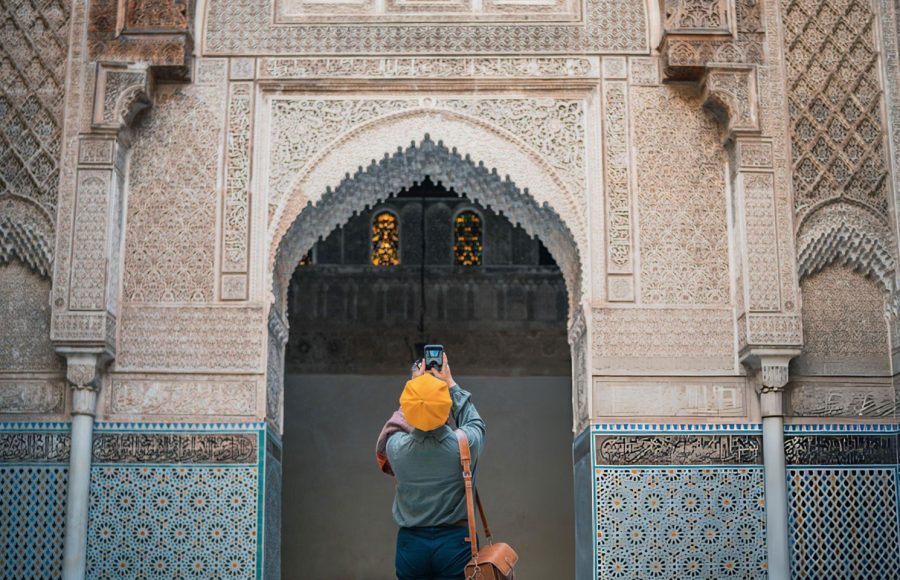
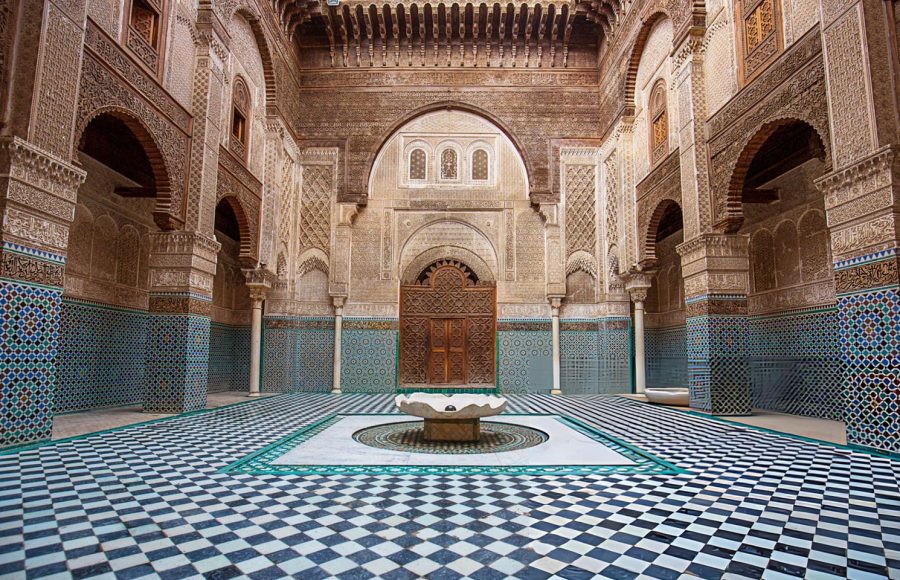
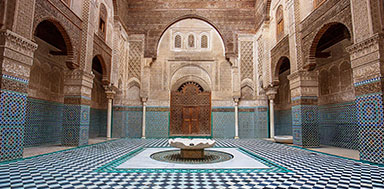
Continue to the Bou Inania Madrasa, a masterpiece of Marinid architecture. Look closely at the carved cedar, zellij tilework, stucco decoration, and geometric patterns that demonstrate the precision of traditional Moroccan craftsmanship.
Visit the famous Chouara Tanneries, where leatherworking remains closely connected to Fez's traditional artisan culture. From the surrounding viewing terraces, colorful dyeing vats create one of the city's most recognizable scenes.
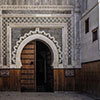
Continue to the Nejjarine Fountain, decorated with intricate zellij tiles and carved cedar. The surrounding historic buildings evoke Fez's former role as an important stop along North African trade routes.
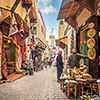
Enter Fes el-Bali, the ancient walled medina where narrow lanes lead between workshops, homes, markets, mosques, and historic buildings. The car-free environment makes walking through this part of Fez feel like stepping into another era.
Breakfast, Lunch
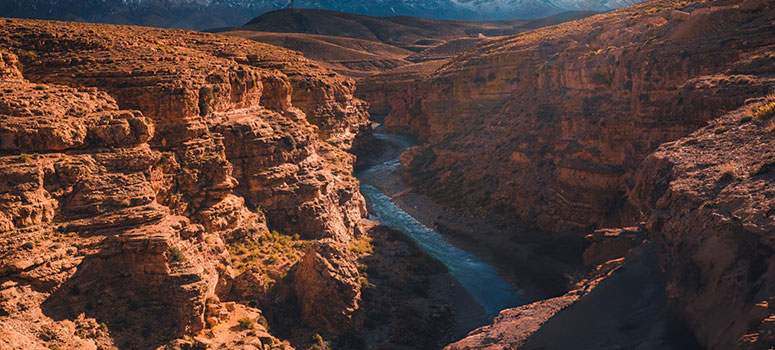
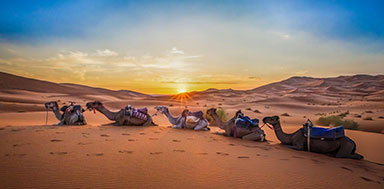
After breakfast, leave Fez and cross the Middle Atlas toward the Sahara. Travel through Ifrane, cedar forests, Midelt, the Ziz Valley, Erfoud, and Rissani before arriving in Merzouga for a camel ride across the golden dunes at sunset. Travelers looking for a shorter route that still combines Egypt with Morocco's desert can also consider a more compact Egypt and Morocco journey ending with a Merzouga Sahara experience.
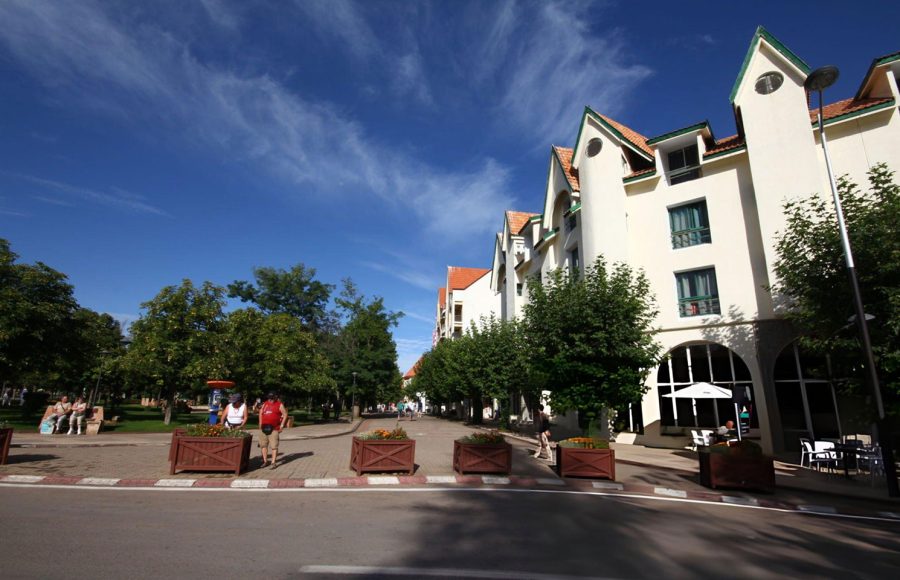
Leave Fez and travel toward Ifrane, a mountain town known for its distinctive alpine-style architecture and cooler climate. Continue through the Middle Atlas Mountains, where forests and highland scenery create a dramatic contrast with the desert landscapes ahead.
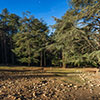
Travel through the cedar forests around Azrou, where you may encounter Morocco's native Barbary macaques. The forested mountains provide a striking change of scenery before the road gradually descends toward the drier landscapes of the southeast.
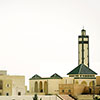
Continue to Midelt, surrounded by rugged mountain scenery. This mountain town sits along the route toward the Sahara and provides a natural stopping point before the landscape begins to transform.
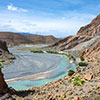
Cross toward the Ziz Valley, where a ribbon of green vegetation cuts through an otherwise arid landscape. From the viewpoints above the valley, you can see how the river supports palm groves and settlements in the desert environment.
Breakfast, Dinner
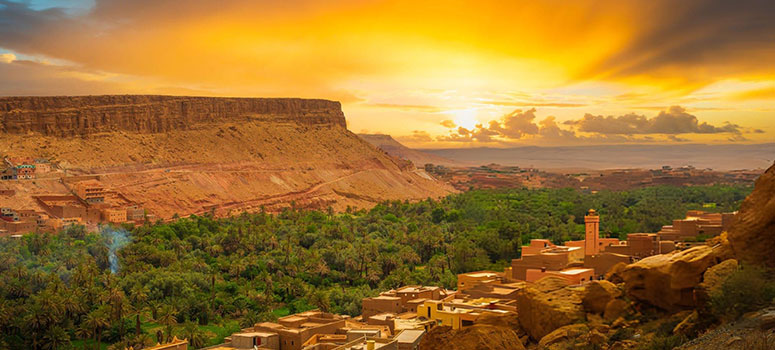
Wake early for the Sahara sunrise before continuing west through Morocco's desert towns and mountain landscapes. Visit Rissani and Todra Gorge before reaching the Dades Valley, where dramatic rock formations and kasbah-lined scenery provide the setting for your overnight stay. If you want to understand what a Moroccan desert journey involves before traveling, our Morocco Sahara Desert guide explains the different desert experiences, what the journey is like, and what to expect in the dunes.
Leave Merzouga and travel through Rissani, a historic town that developed around the ancient caravan routes linking Morocco with the Sahara and sub-Saharan Africa.

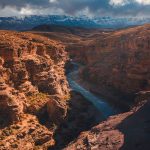
Continue toward Todra Gorge, where enormous limestone walls rise on either side of the narrow valley. Walk through part of the gorge and take in the scale of the surrounding cliffs before continuing through the High Atlas landscapes.
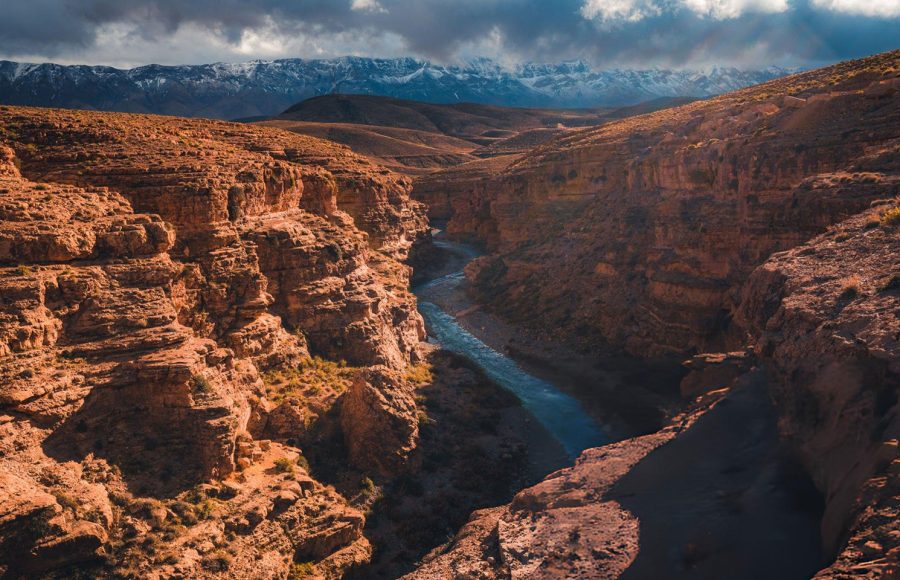
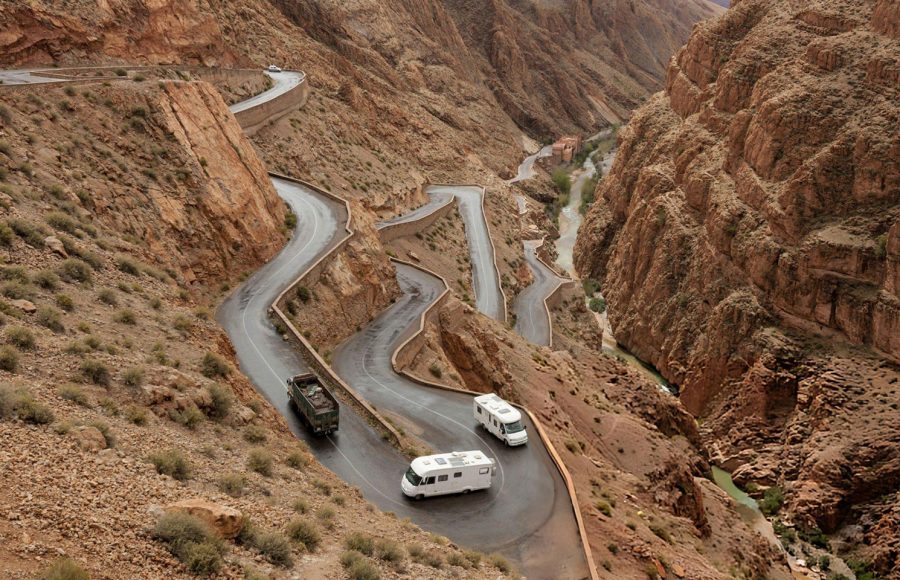
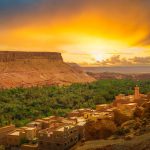
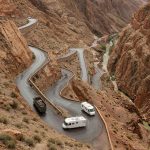
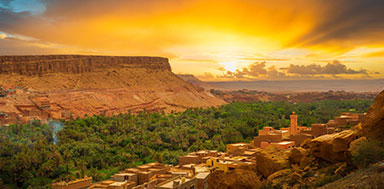
Travel onward to the Dades Valley, famous for its rugged rock formations, green oases, and fortified kasbahs. The landscape becomes particularly dramatic around the winding roads and unusual rock formations often associated with the Valley of a Thousand Kasbahs.
Breakfast, Lunch
Arc IV · Dades to Marrakech
Cross Aït Ben Haddou and the High Atlas before Marrakech’s lively medina
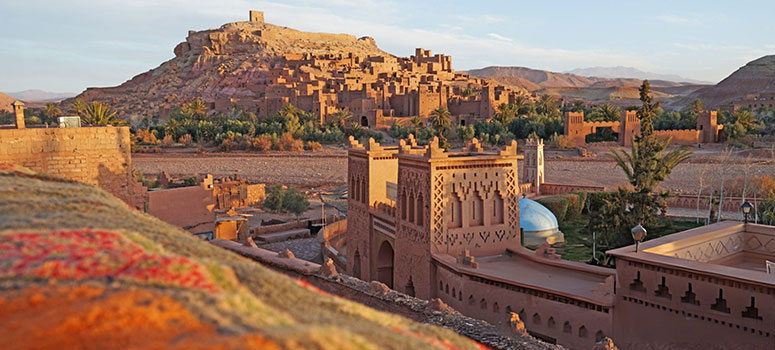
After breakfast, follow Morocco's famous Road of a Thousand Kasbahs toward Ouarzazate and Aït Ben Haddou. Continue across the High Atlas Mountains and Tizi n'Tichka Pass before arriving in Marrakech.
Leave the Dades Valley and follow the scenic route toward Ouarzazate, passing fortified villages, palm-filled valleys, and dramatic desert landscapes along the way.
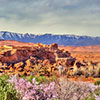
Pass through the Rose Valley, where local communities produce rose-based products. The valley provides another example of how agriculture and traditional industries adapt to Morocco's dry mountain environment.
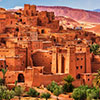
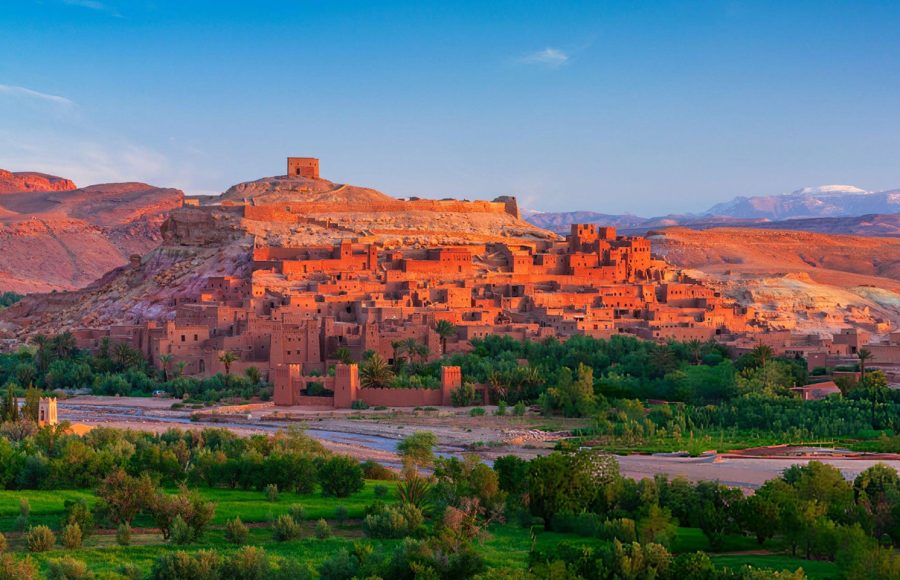
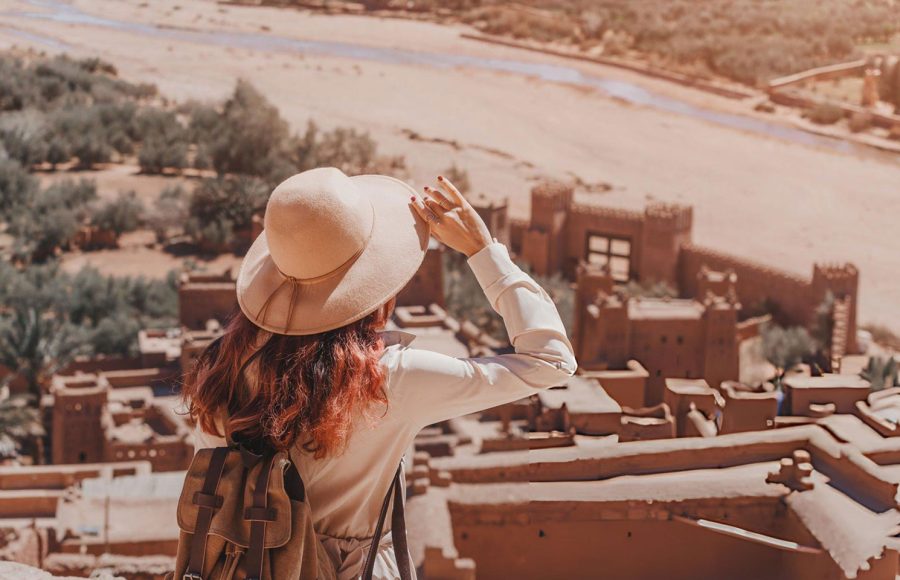
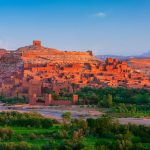
Visit Aït Ben Haddou, a UNESCO-listed fortified ksar built from traditional earthen architecture. Walk through its narrow passages and climb toward the higher viewpoints for panoramic views across the surrounding landscape. The site once stood along important caravan routes between the Sahara and Marrakech and remains one of southern Morocco's most recognizable historic settlements.
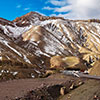
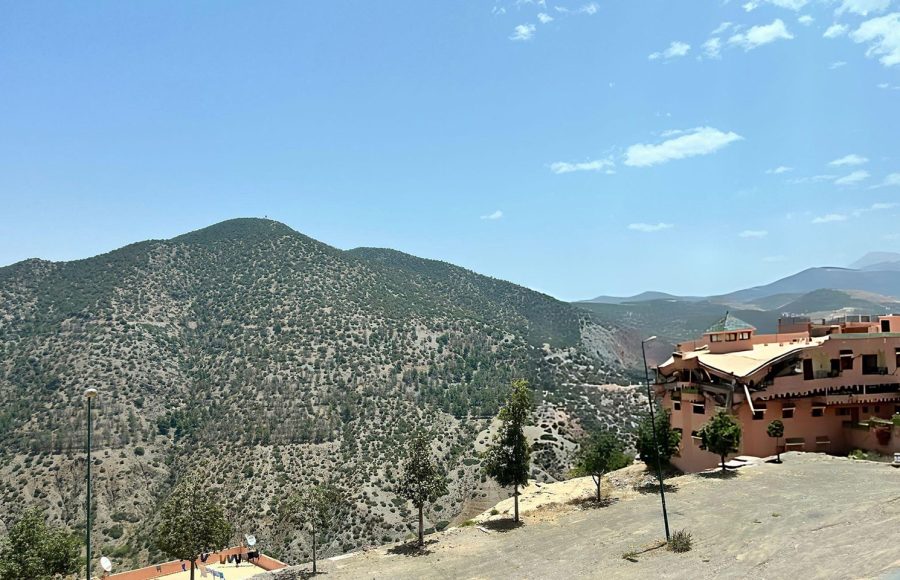
Continue toward Marrakech across the High Atlas Mountains, crossing the Tizi n'Tichka Pass. The winding mountain road reveals changing landscapes as the dry southern side gives way to greener valleys approaching Marrakech.
Breakfast, Lunch
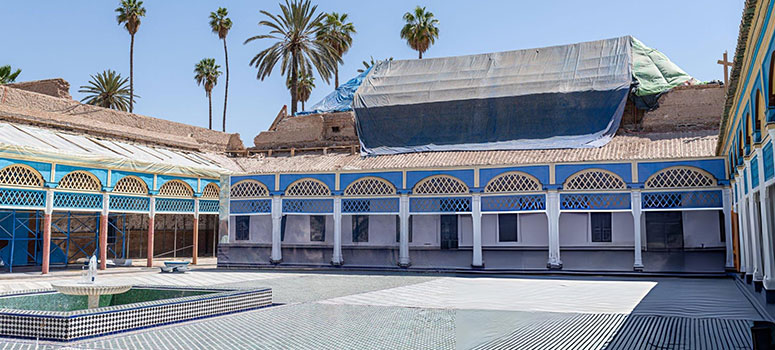
After breakfast, discover the final major chapter of your journey in Marrakech. Visit Bahia Palace, Koutoubia Mosque, the historic Medina and souks before experiencing Jemaa el-Fna as the city comes alive toward evening.
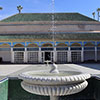
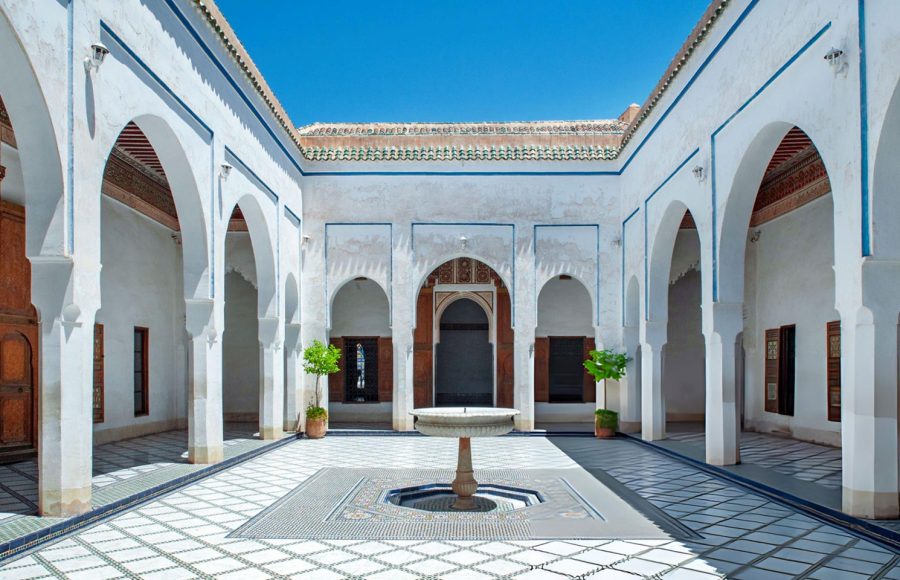
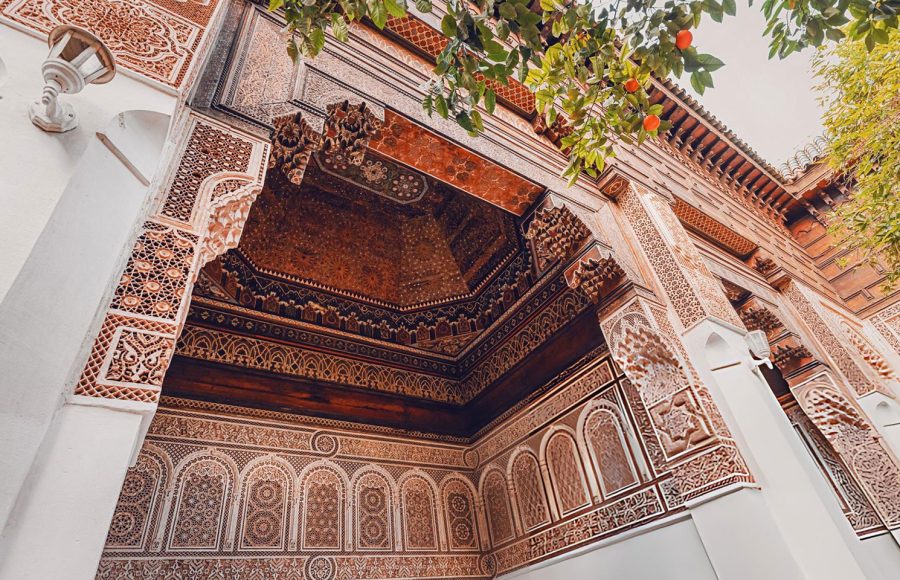
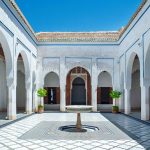
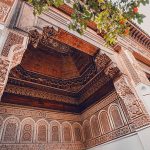
Begin at Bahia Palace, where courtyards, gardens, carved cedar, colorful zellij tiles, and detailed stucco decoration reveal the sophistication of Moroccan palace architecture.
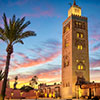
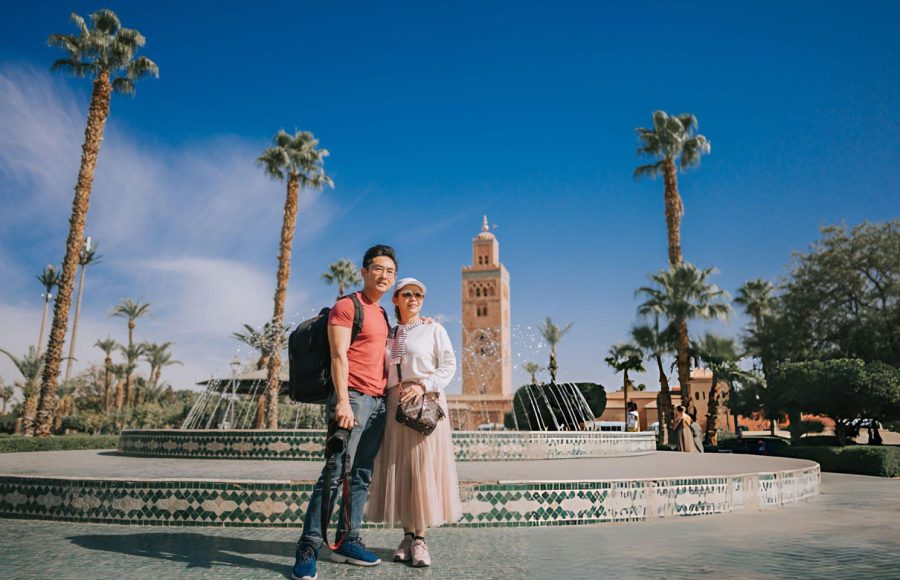
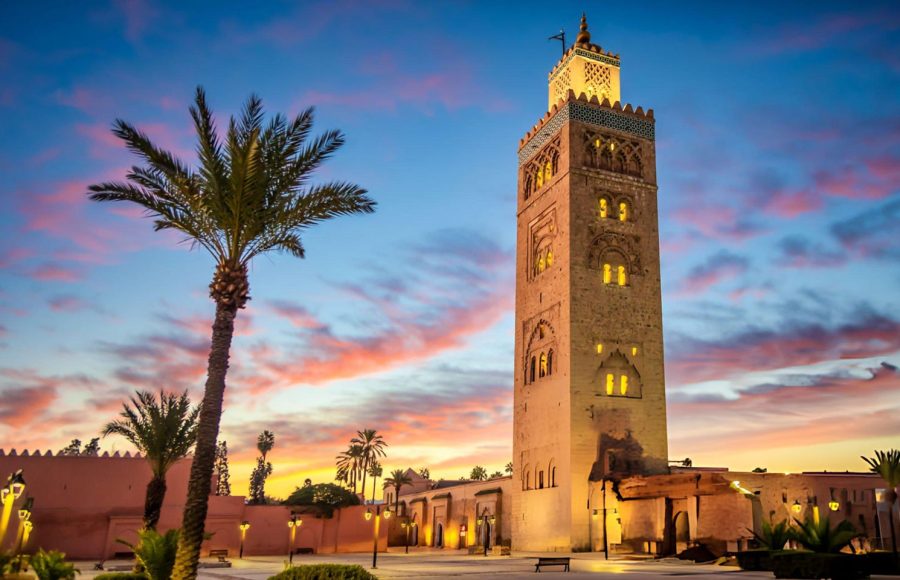
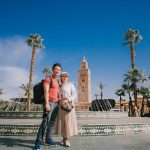
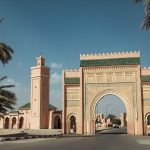
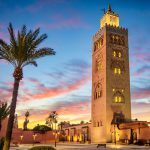
Continue to the Koutoubia Mosque, whose distinctive minaret dominates the Marrakech skyline. While the mosque itself is reserved for Muslim worshippers, its exterior and surrounding gardens provide an excellent opportunity to appreciate the monument's architecture.
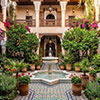
Visit the peaceful Menara Gardens, where olive groves surround a large reflective basin with the Atlas Mountains visible in the distance. After the busy atmosphere of the Medina, the gardens offer a quieter final afternoon in Marrakech.
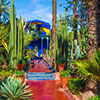
Continue to the Majorelle Garden, known for its distinctive blue architecture, exotic plants, fountains, and artistic atmosphere. The garden provides a colorful contrast to Marrakech's ochre-colored buildings.
Enter the Marrakech Medina, where narrow lanes lead through traditional workshops and markets. Explore the souks filled with textiles, leather goods, lanterns, spices, metalwork, and other Moroccan crafts.
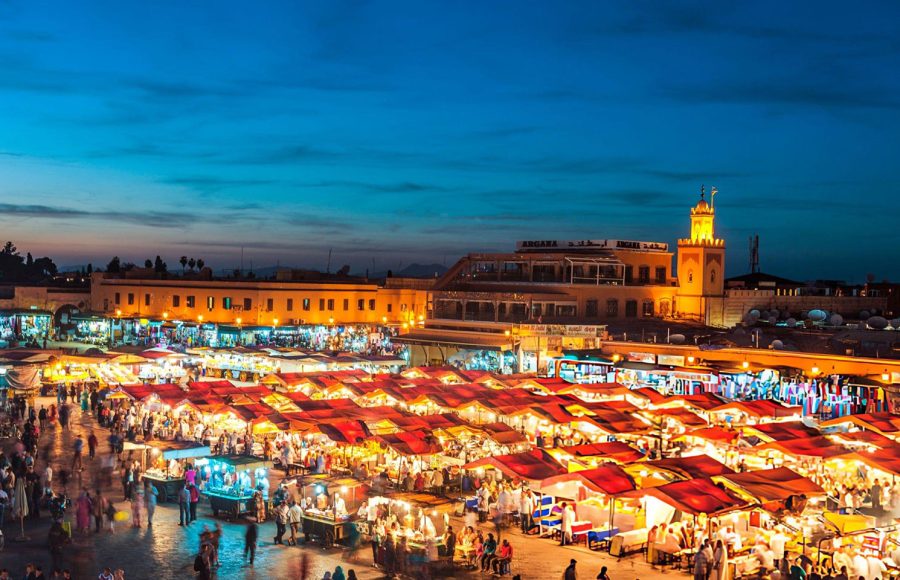
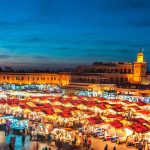
End your sightseeing at Jemaa el-Fna, the famous central square of Marrakech. As daylight fades, the atmosphere changes as food stalls, performers, musicians, storytellers, and local visitors fill the square.
Breakfast, Lunch
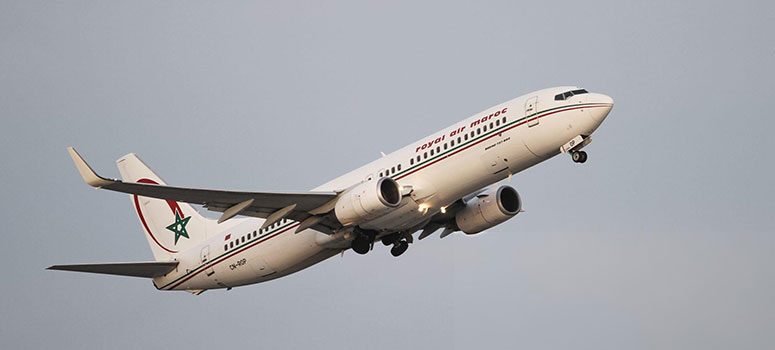
After breakfast, check out from your hotel and transfer by private vehicle to Marrakech Menara Airport for your departure flight. Your 18 day Egypt and Morocco tour comes to an end after a journey spanning the pyramids of Giza, Alexandria, the Nile Valley, Hurghada, Morocco's imperial cities, Chefchaouen, Fez, the Sahara, the High Atlas, and Marrakech. For travelers who want to combine Egypt's Nile Cruise and Hurghada with Morocco's Atlas landscapes, Aït Ben Haddou, and the Sahara while traveling on a shorter schedule, an Egypt and Morocco itinerary combining Hurghada with the Sahara offers a more compact alternative.
Breakfast
* You can let us know if you'd like to customize your tour itinerary to meet your needs. We value your input and aim to accommodate your requirements.
No. The international flight from Cairo to Casablanca is not included in the tour package. This gives you flexibility to choose the airline, departure time, and fare that best suit your international travel plans. Tripidays coordinates the land arrangements and airport transfers around the scheduled flight details.
Egypt and Morocco have separate entry requirements, so travelers should check the current visa rules for their nationality before departure. Visa requirements can change, and eligibility may depend on your passport and travel circumstances. Tripidays can assist with the Egypt arrival process, while travelers should confirm Morocco's current entry requirements with the appropriate Moroccan authorities before traveling.
Yes, but it is designed for travelers who want to see a wide range of destinations in one journey rather than a slow-paced single-country vacation. The itinerary combines major archaeological sites, cities, a Nile cruise, the Red Sea, mountain landscapes, historic medinas, and the Sahara, so some days involve longer road journeys and multiple sightseeing stops.
The Morocco section includes several longer overland journeys, particularly between Fez, Merzouga, the Dades Valley, Ouarzazate, Aït Ben Haddou, and Marrakech. These drives are part of the experience because they take you through the Middle Atlas, Ziz Valley, Sahara landscapes, High Atlas Mountains, and traditional settlements that are difficult to experience by air.
Pack lightweight clothing for daytime, comfortable closed-toe shoes, sunglasses, sunscreen, and a hat for the desert. Temperatures can change considerably between daytime and nighttime, so a light jacket or warm layer is useful for the evening at the desert camp.
A small overnight bag can also be practical for the Sahara experience, while larger luggage can remain with the vehicle according to the local arrangements.





16 Days / 15 Nights
Cairo Airport or Casablanca Airport
Cairo / Hurghada / Luxor / Aswan / Casablanca / Chefchaouen / Fez / Merzouga / Marrakech
15 Days / 14 Nights
Cairo Airport or Marrakech Airport
Cairo / Aswan / Kom Ombo / Edfu / Luxor / Hurghada / Marrakech / Merzouga
12 Days / 11 Nights
Cairo Airport or Casablanca Airport
Cairo / Aswan / Abu Simbel / Luxor / Casablanca / Meknes / Fez / Marrakech
All things you should know before visiting Egypt & Beyond
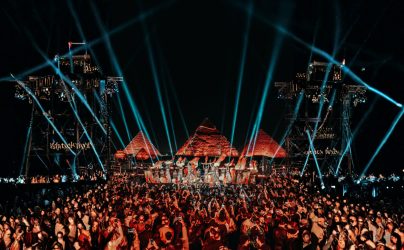


Tripidays Egypt Tours has been offering an exceptional range of Egypt tours, vacation packages, Nile cruises, day trips, and shore excursions tailored to meet the diverse interests of travelers worldwide for over 45 years.