The Abu Simbel Temple’s history is one of the most fascinating stories in ancient Egypt. Located in southern Egypt, near the border with Sudan, the temple of Abu Simbel was built over 3,000 years ago during the reign of Pharaoh Ramses II. This massive rock cut structure is not only a masterpiece of engineering but also a powerful symbol of Egypt’s religious beliefs, royal power, and cultural identity.
Today, the temples at Abu Simbel stand as a UNESCO World Heritage Site, attracting thousands of tourists every year. From the great temple of Ramses II at Abu Simbel to the smaller but equally beautiful temple of Queen Nefertari, these monuments offer a unique window into the past and continue to impress visitors with their architectural beauty and historical significance.
The Abu Simbel Temple Story
The Story Behind Abu Simbel Temple begins with Ramses II, one of Egypt’s most powerful and celebrated pharaohs. Around 1264 BC, he ordered the construction of two grand temples carved directly into the sandstone cliffs of Nubia. The great temple of Abu Simbel was dedicated to the gods Amun-Ra, Ra-Horakhty, and Ptah, as well as Ramses himself. Nearby, he also built a smaller temple for his beloved queen Nefertari, dedicated to the goddess Hathor.
This bold move was not only a spiritual act but also a political one. The temples were built in Nubia to show Egyptian strength and influence in the region. If you’re planning a short cultural escape, our 5 Day Cairo, Luxor, and Abu Simbel offers a perfect itinerary to explore Egypt’s most iconic temples in one journey.
Abu Simbel Temple Historical Significance
The Abu Simbel Temple’s historical significance comes from its powerful mix of religion, architecture, and politics. Built by Ramses II, the temple was a bold message to Egypt’s neighbors, showing the strength of his rule and the greatness of the gods.
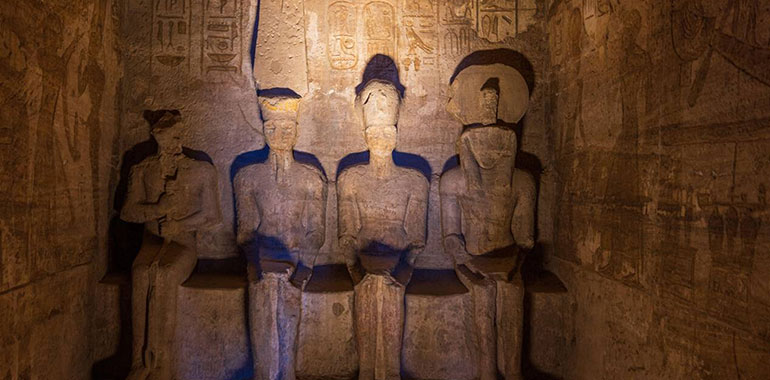
The temple is most famous for its perfect solar alignment. Twice each year, on February 22 and October 22, sunlight travels deep into the sanctuary and lights up three of the four statues, leaving only the statue of Ptah, the god of darkness, in shadow. This magical moment is known as the Abu Simbel Sun Festival and attracts visitors from all over the world.
The original Abu Simbel Temple Location was in ancient Nubia, near Egypt’s southern border. But when the Aswan High Dam was built in the 1960s, rising waters from Lake Nasser threatened to flood it. In a massive UNESCO led rescue, the entire complex was carefully moved to higher ground, saving one of Egypt’s greatest treasures.
Temple Abu Simbel Construction and Architecture
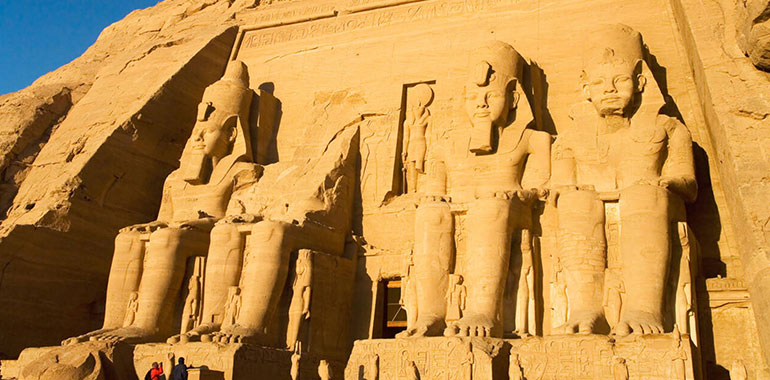
The construction of the temple at Abu Simbel was an incredible achievement for its time. Carved into a solid rock cliff, the great temple stands at 30 meters high and 35 meters long, guarded by four colossal statues of Ramses II, each around 20 meters tall.
The architects of the great temple of Abu Simbel carefully designed the interior to include a series of halls, chambers, and detailed carvings. One of the most impressive scenes inside shows Ramses II in his famous Battle of Kadesh, a key military campaign that highlights his leadership and power.
The architectural features of the Ramses II temple at Abu Simbel include:
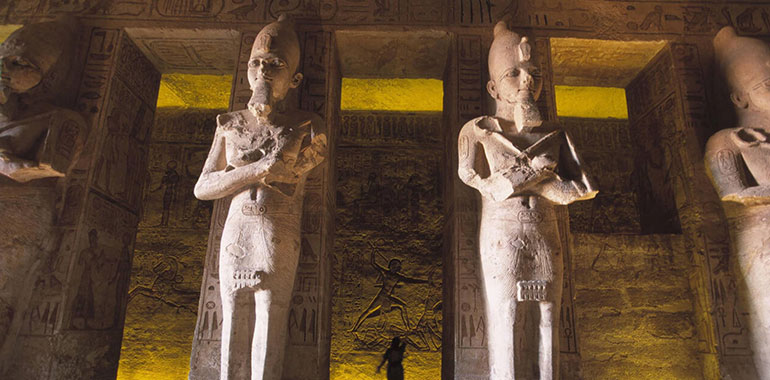
- Hypostyle halls supported by Osiris-shaped pillars
- Battle and ritual scenes
- A sanctuary with seated statues of four gods
- Precision solar alignment
The architect for Abu Simbel Temple remains unknown, but the design reflects the height of the temple of Abu Simbel architecture during the New Kingdom period.
Within the Majestic Temple of Abu Simbel
Inside the great temple of Abu Simbel, travelers will discover walls covered with beautiful carvings. These images tell the story of Ramses II, the Abu Simbel Temple, and his achievements. As you move deeper, you’ll enter the sanctuary, where statues of Ramses II and the gods sit side by side.
The Abu Simbel Temple interior gives visitors an up close look at the culture of Abu Simbel temples, including their religious rituals, temple art, and the power of the pharaoh.
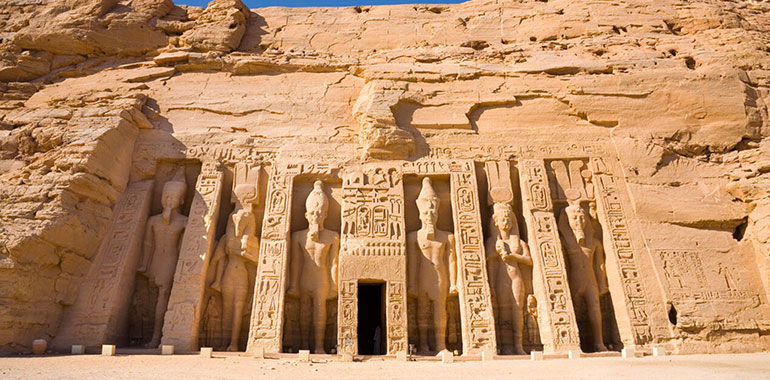
Next to the main temple is the stunning Temple of Nefertari at Abu Simbel, also known as the Small Temple at Abu Simbel or the Temple of Hathor and Nefertari. This temple was dedicated to Queen Nefertari and the goddess Hathor. It is one of the few temples in ancient Egypt built for a queen and is a rare example of female royal power.
The Temple of Queen Nefertari at Abu Simbel features six statues on its façade, four of Ramses and two of Nefertari, all standing at around 10 meters tall. Inside, carvings show Nefertari playing music, making offerings, and being honored as a goddess. This makes it a cultural treasure for those interested in the role of women in ancient Egyptian history.
For travelers seeking a full cultural immersion, our 13 Day Luxury Cairo, Nile Cruise, Abu Simbel Lake Nasser & Alexandria tour offers an unforgettable journey through Egypt’s most majestic landmarks, from temples and cruises to coastal treasures.
The Modern Rescue of Abu Simbel
In the 1960s, the Abu Simbel temples of Ramesses II faced a major threat from the rising waters of the Nile caused by the construction of the Aswan High Dam. To save these historic sites, UNESCO launched a massive international campaign. The temples were dismantled, moved, and reassembled 65 meters higher on an artificial hill at a new location.
This rescue operation is one of the greatest achievements in archaeological preservation and adds another layer of importance to why the Abu Simbel temple is important today. It was not only saved from destruction but was also given a new life to inspire generations of travelers.
What Makes Abu Simbel a Must Visit Destination?
If you’re wondering why the Abu Simbel Temple is important, the answer is clear. It’s more than just a monument; it’s a story carved in stone. The temple tells us about ancient Egyptian religion, power, architecture, love, and survival. Whether you’re an adventure seeker, history lover, or cultural explorer, this temple will leave you in awe.
From the Sun Temple of Ramses II to the graceful Temple of Nefertari, every inch of Abu Simbel reflects timeless beauty and ancient wisdom. You can reach the temple by road or enjoy a quick and scenic journey with our Abu Simbel Tour from Aswan by Plane, perfect for travelers short on time but eager to witness this site in Egypt.
Final Thoughts on the History of Abu Simbel Temple
Exploring the Abu Simbel temple’s history is like walking through time. This iconic destination is not just about stunning views and massive statues. It’s a journey into Egypt’s royal past, a place where culture, architecture, and history come together in perfect harmony.
Book with Tripidays Egypt Tour today and witness the unforgettable legacy of Ramses II and Queen Nefertari. Let the temple of Abu Simbel history be the highlight of your Egyptian adventure.