

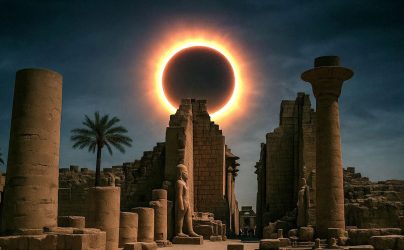
Starlight Festival Egypt 2026: Dates, Lineup & Travel Guide
September 24, 2026
Read more
about Starlight Festival Egypt 2026: Dates, Lineup & Travel Guide































| Duration |
11 Days / 10 Nights |
|---|---|
| Tour Location |
Cairo / Bahariya Oasis / White Desert / Dakhla Oasis / Kharga Oasis / Luxor |
| Tour Type |
Daily Tour |
| Pickup |
Cairo Airport |
Travel deep into the 11 day Egypt desert oasis adventure tour by Tripidays, which covers Cairo, the Western Sahara's three remote oases, Bahariya, Dakhla, and Kharga, and pharaonic Luxor in a single continuous journey. It is the only 11 day Egypt tour venturing deep into the Western Desert, with three nights of desert camping under Sahara stars and the White and Black Desert geological formations that 99% of Egypt tourists never see.
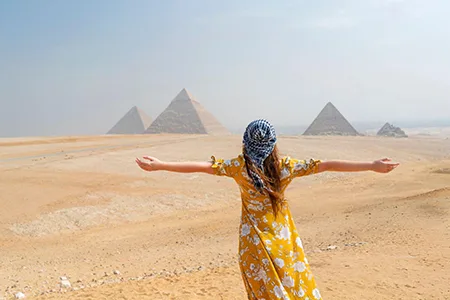
Your journey begins in Cairo, where a warm welcome awaits from a Tripidays representative who will escort you to your hotel. In the evening, enjoy a magical dinner cruise along the Nile, surrounded by Cairo’s glittering skyline, the perfect start to your Egyptian escape. The next day, dive into the city’s remarkable history. Visit the Great Pyramids of Giza, one of the Seven Wonders of the Ancient World, explore the vast collections of the Grand Egyptian Museum, and admire the timeless Great Sphinx that has guarded the desert for over 4,500 years. On day 3, the adventure unfolds into the vast wilderness of Egypt’s Western Sahara Desert with our authentic Egypt Oasis Trips. Crystal Mountain, the Valley of Agabat, and the chalk-white formations of the White Desert on nights one and two under the open sky. Day 5 moves south to Dakhla Oasis, its palm groves, hot springs, and the ancient Islamic village of Al-Qasr. Day 6 continues to Kharga, the largest of Egypt's Western oases, where the Roman-era Temple of Hibis and the early Christian Bagawat Necropolis stand at the desert's edge.
Only on this route
Most classic Egypt tours cut the Western Desert the long distances make it harder to fit into a standard route. This tour spends Days 3–6 crossing Bahariya, the White Desert, Dakhla, and Kharga by 4x4.
Arc I · Cairo to Bahariya
Pyramids and museum history give way to open desert landscapes

Your Tripidays representative meets you at Cairo International Airport and transfers you by private air-conditioned vehicle to your hotel. After settling in, the evening starts on the Nile with a dinner cruise, Egyptian dishes, city lights reflected on the water, and the skyline of Cairo marking the start of eleven days unlike any standard Egypt itinerary.

You'll board as Cairo's skyline begins to glow and the river catches the last of the evening light. The cruise covers roughly 2 hours on the water, with live folkloric music and a set menu of Egyptian dishes, a low-key start before the desert demands your full attention. Travelers comparing different ways to structure this timeframe can also explore all 11-day Egypt tours before committing to a route that prioritizes remote desert landscapes and open-air camping.
Dinner
Your guide picks you up after breakfast for a full day on the Giza Plateau and inside the world's newest major archaeological museum. The scale of what you encounter here sets the context for everything pharaonic that follows later in Luxor.

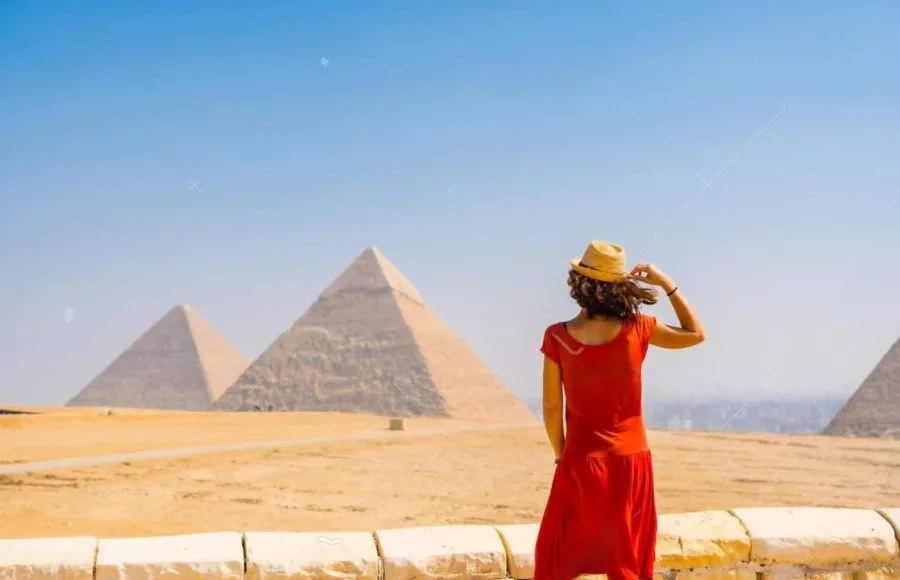
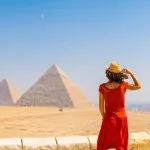
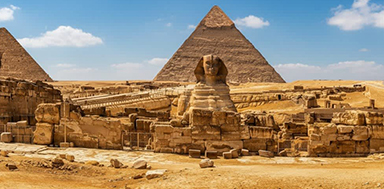
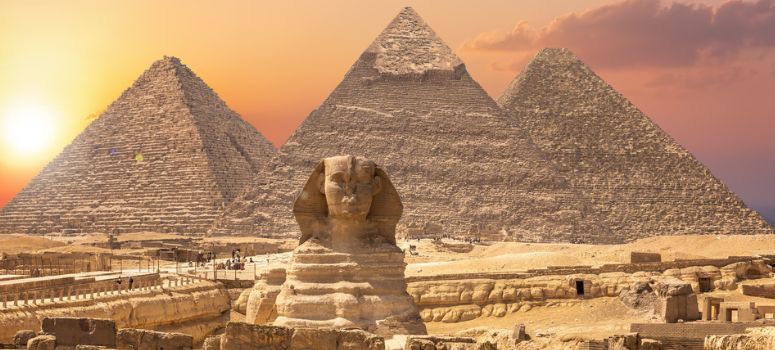
Stand at the base of the Great Pyramid of Khufu, and you'll understand immediately why no photograph prepares you for it. The structure covers 13 acres and rises 138 metres, built from 2.3 million stone blocks. Your guide will position you at the angle where all three pyramids align, a sight that took 70 years and three consecutive pharaohs to make possible.

Continue to the Valley Temple of Khafre, where ancient rituals prepared pharaohs for the afterlife. The temple’s limestone and granite design showcases the mastery of ancient Egyptian architecture.

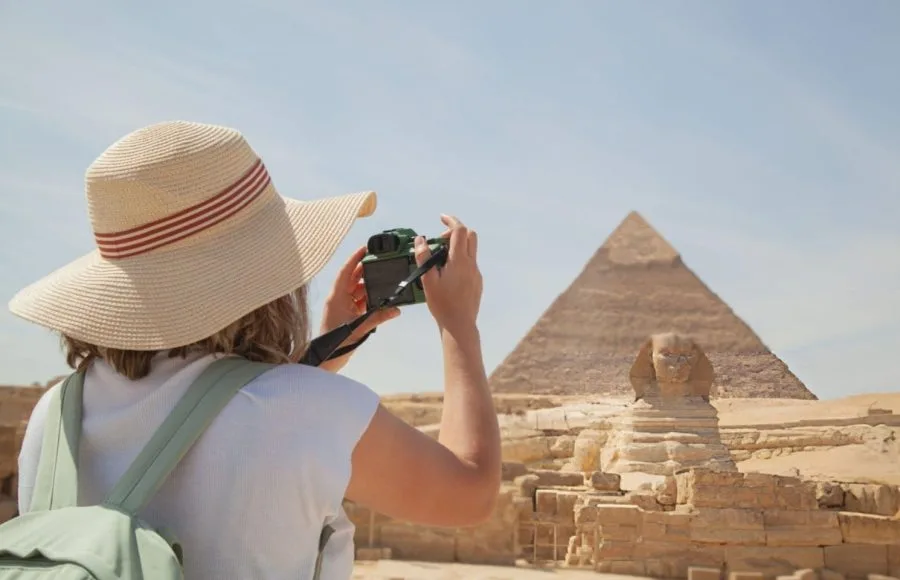
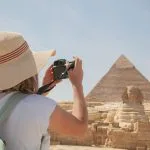
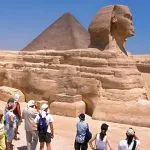
Visit the Great Sphinx, the guardian of the Giza Plateau. This colossal statue with a lion’s body and human head embodies mystery and strength, watching over the pyramids for millennia.
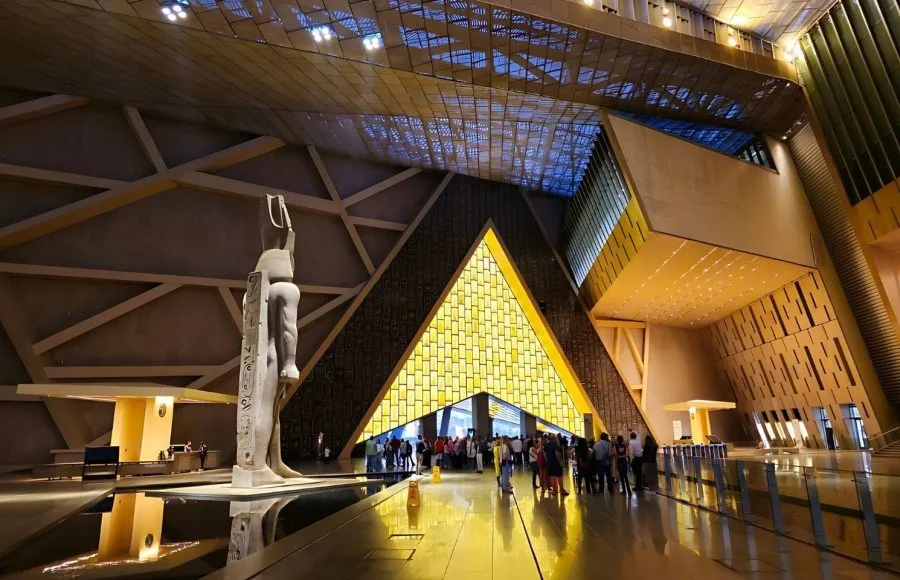
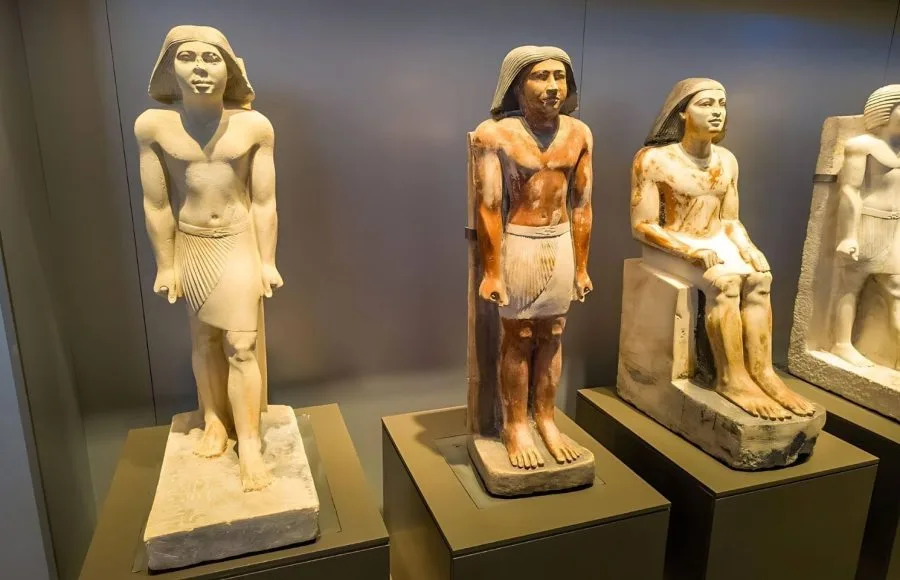
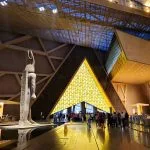
Conclude your day at the Grand Egyptian Museum, where more than 100,000 artifacts, including the treasures of Tutankhamun, tell the story of Egypt’s glorious past.
Breakfast, Lunch
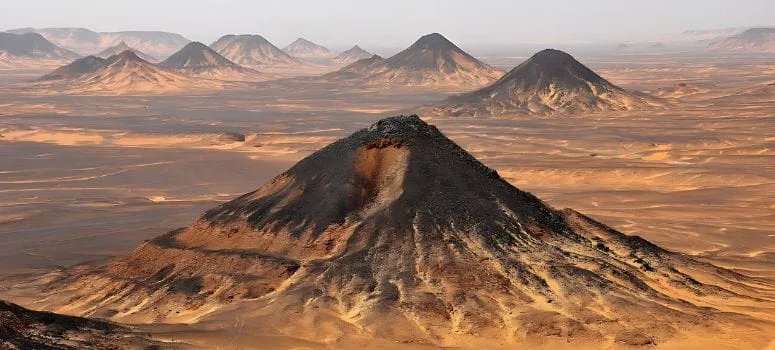
After breakfast, your guide transfers you by 4x4 vehicle for the 370-kilometre drive southwest from Cairo into the Giza Province desert, the first of four desert days. By the time you reach Bahariya Oasis, the landscape has already shifted from city to open sand plateau. Camp is set under the open sky in the White Desert tonight. Travelers wanting to skip the Western Desert entirely and instead explore Egypt's ancient cities by flight without the desert often choose our Four-City Tour, but this route heads in the opposite direction, deeper into landscapes few visitors ever experience.
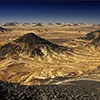
You'll stop where the ground turns from sand to a carpet of black dolerite fragments, volcanic eruptions millions of years ago left cone-shaped hills rising from the plateau floor, and close up, the stones catch the light differently than any other desert surface in Egypt. It is disorienting in the best possible way: the colour, the silence, the scale.
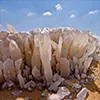
Your guide pulls over at what looks, from the road, like an unremarkable ridge. Step closer, and the quartz crystal formations catch sunlight and fracture it. The mountain is studded with calcite and barite crystals across its surface, and the effect mid-morning is unlike anything else on the desert route.
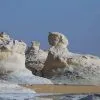
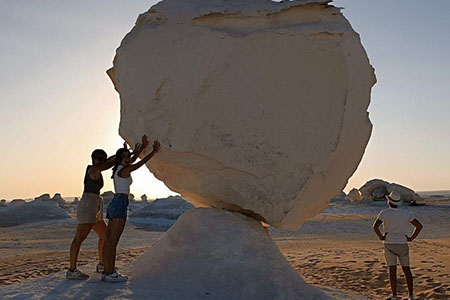
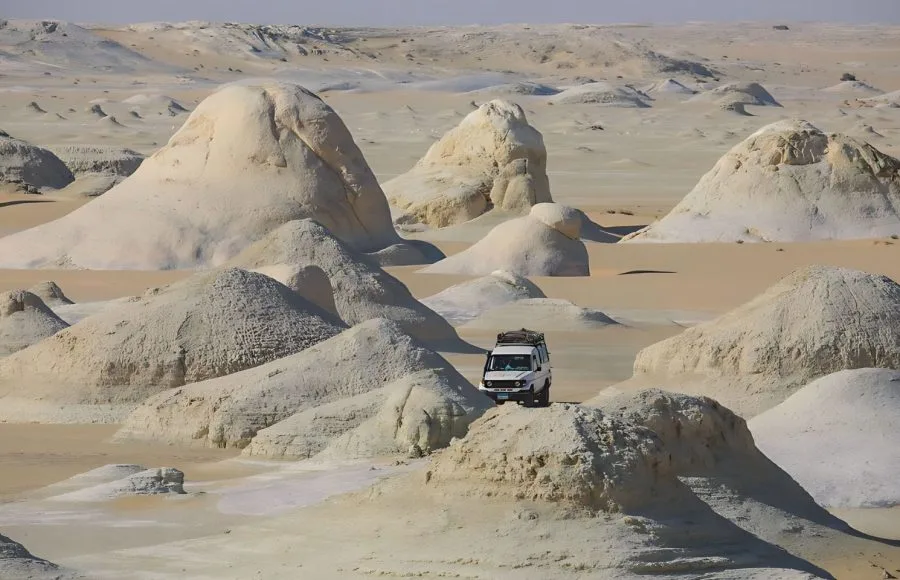
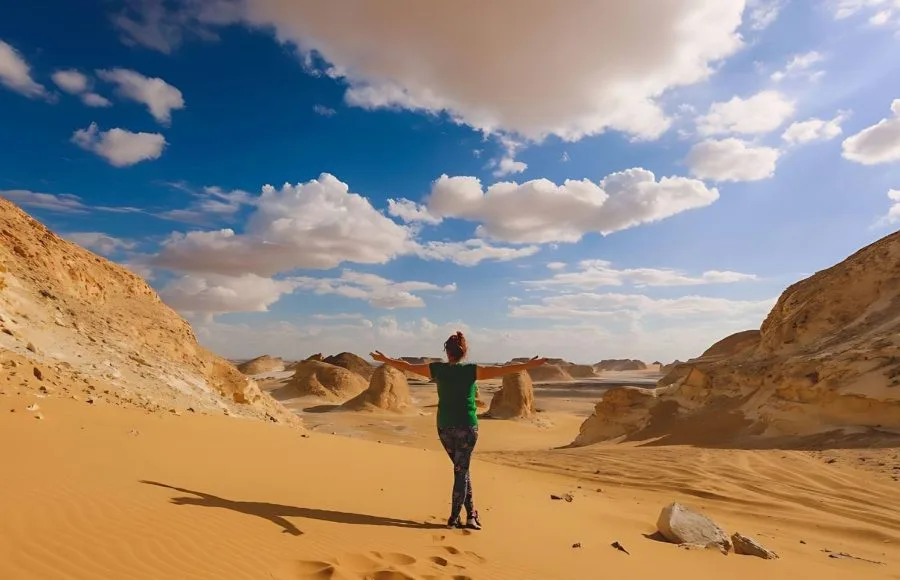
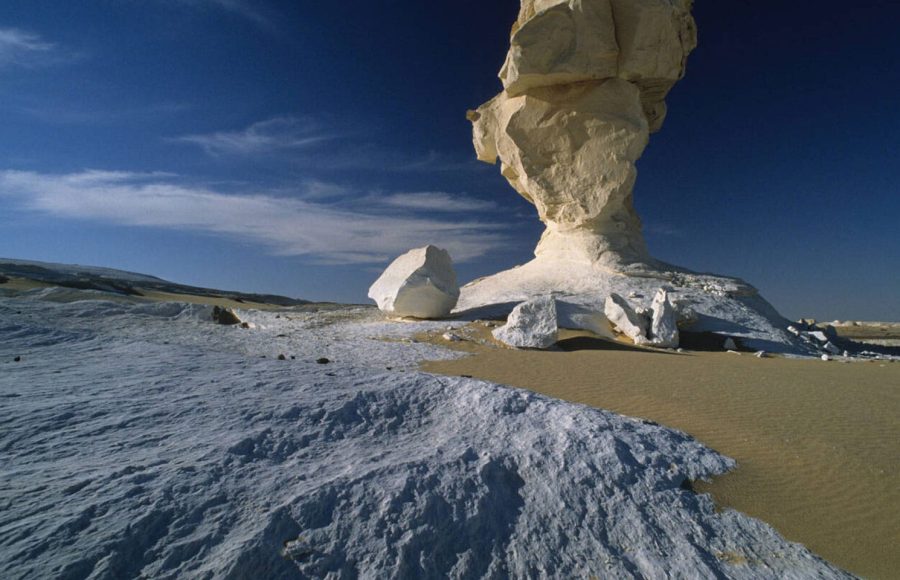
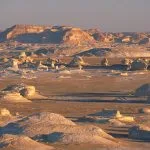
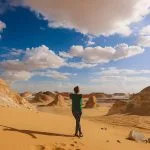
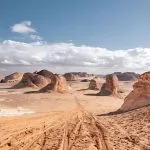
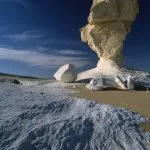
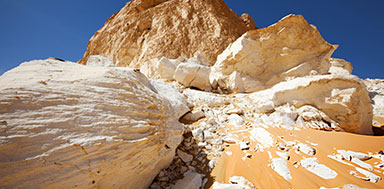
You'll arrive as the afternoon light turns the chalk formations gold, then amber, then white again at dusk. The White Desert Protected Area covers 3,010 square kilometres of wind-eroded chalk rock mushroom shapes, arches, and columns rising from flat sand, and your camp sits inside it, with no artificial light source for kilometres in any direction.
Breakfast, Lunch, Dinner
Arc II · White Desert to Kharga
Chalk formations lead south through Dakhla and Kharga oases
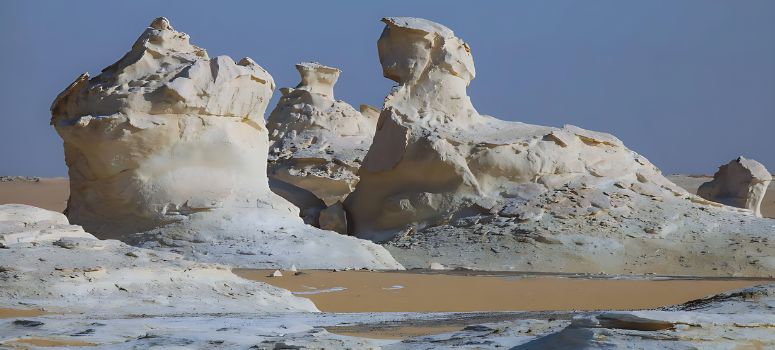
The full desert day. Your guide covers the deeper formations of the White Desert and the Valley of Agabat by 4x4, then the camp moves to a second position for Night 2 under the Sahara sky. This is the day most travelers describe as the one that reorients everything they thought they knew about Egypt.
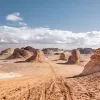
You'll drive into the valley as the morning is still cool and the chalk formations cast long shadows across the sand floor. The valley holds some of the most concentrated sculpted rock formations in the Western Desert: columns, rounded boulders, and flat-topped monoliths grouped close enough that you walk between them rather than around them.

Your guide will point out the named formations, the Mushroom, the Chicken, the Rabbit, but the ones that stop you are the anonymous ones: chalk towers four and five metres tall, worn smooth on one side by prevailing winds over 30 million years of erosion. Walk out a hundred metres from the vehicles, and the silence is overwhelming.
Breakfast, Lunch

The route continues south from Farafra toward Dakhla, 310 kilometres deeper into the New Valley. The landscape shifts from chalk white to red-brown sandstone escarpments as you move south. Dakhla is the most self-contained of Egypt's oases, a working agricultural town with palm groves, hot springs, and a medieval Islamic quarter that most Egypt tour groups never reach.

You'll arrive in the late afternoon with time to walk the oasis gardens before dark. Dakhla sits in a natural depression 311 metres below the surrounding plateau. The spring-fed fields produce rice, wheat, and dates in a landscape that makes the surrounding desert feel genuinely surreal by contrast.
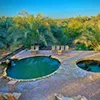
Your guide brings you to one of the thermal springs at the desert's edge, where water emerges at around 43°C from deep aquifers that have been in place since the Pleistocene. After two days of desert driving, the springs are worth building time around.
Breakfast, Lunch

The final desert day moves east from Dakhla to Kharga, the largest and most archaeologically significant of Egypt's Western oases. The 200-kilometre drive takes you through open desert before the Kharga depression opens below the plateau edge. Tonight is the fourth and final desert camp.

Step back in time with a visit to Kharga Oasis, a site steeped in history. Once a key stop on the ancient Darb el Arbain trade route linking Sudan and Egypt, Kharga later thrived as a Roman center. The Temple of Hibis, built between 588 and 569 BCE during Persian rule, showcases its rich past. Nearby, early Christian sites, such as the 4th-century Bagawat Necropolis, highlight the region's rich religious history. Alongside its rich heritage, Kharga offers natural wonders, including spring water, making it a peaceful and historic escape.
Breakfast, Lunch
Arc III · Kharga to Luxor
Desert plateau meets Karnak, royal tombs, and West Bank temples

The drive from Kharga east toward Luxor crosses the desert plateau before dropping into the Nile Valley. The contrast between the open desert and the green river corridor arrives suddenly and registers physically. Your guide takes you directly to Karnak before the afternoon heat peaks, then to Luxor Temple at dusk.

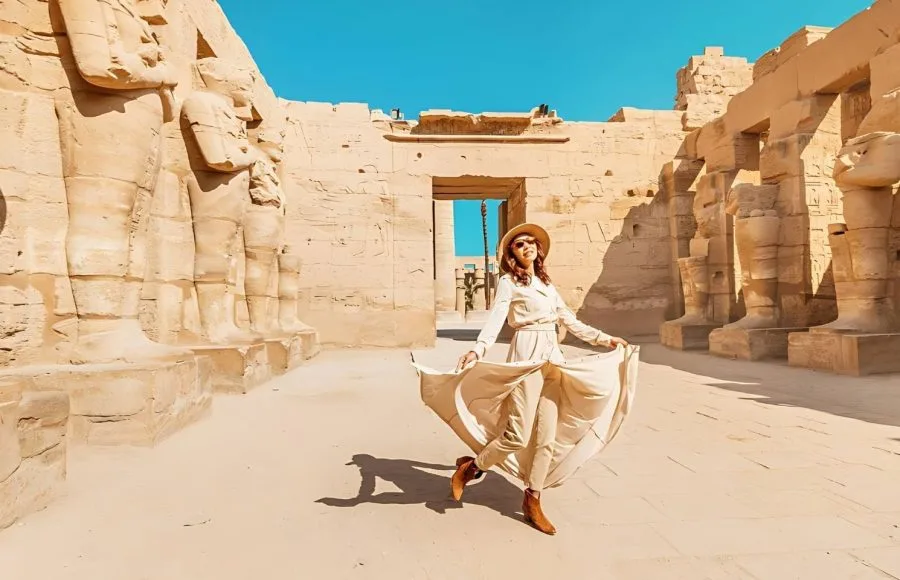
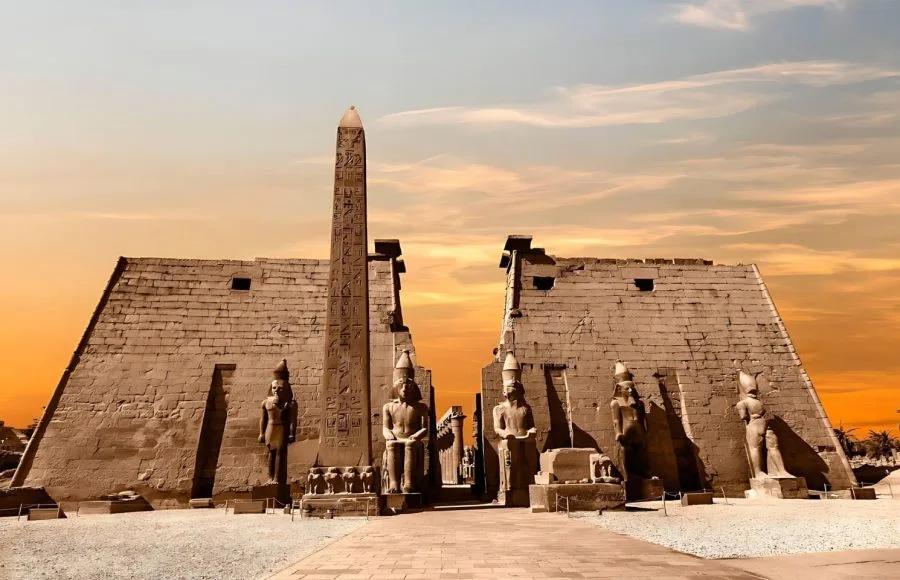
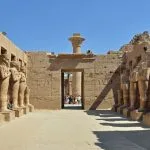
Explore the magnificent Karnak Temple, one of the world’s largest religious complexes. Its towering columns and detailed hieroglyphs showcase Egypt’s devotion to the god Amun-Ra. For travelers focused purely on temples, royal tombs, and uninterrupted archaeology, our Egypt's full temple and monument experience follows a deeper monument-focused route across the country's greatest pharaonic sites.

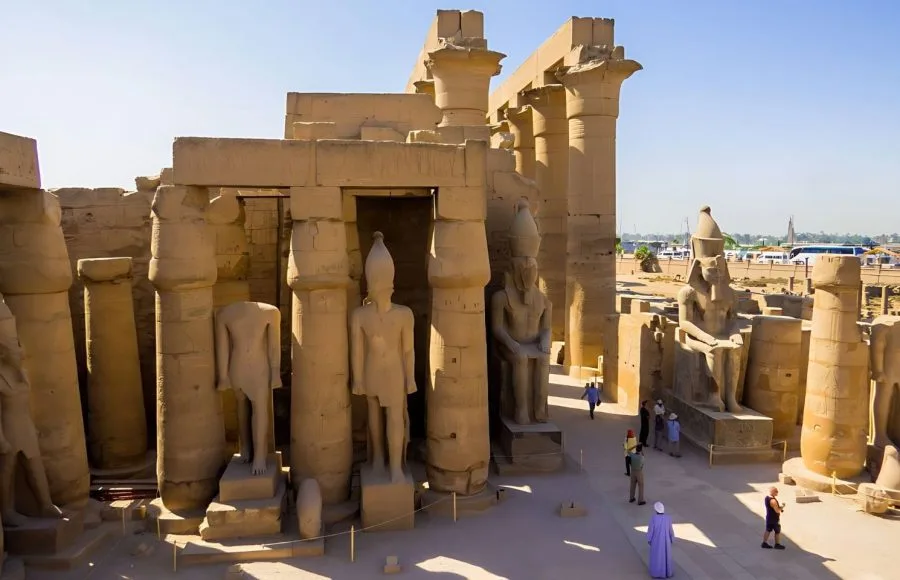
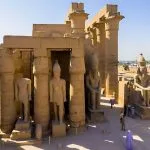
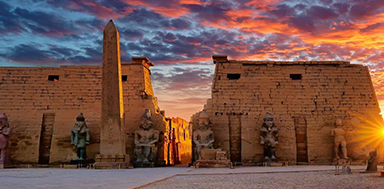
Continue to Luxor Temple, a masterpiece built by Amenhotep III and Ramses II. At sunset, the golden light transforms its stone columns into a breathtaking scene.
Breakfast, Lunch

The West Bank is where pharaonic Egypt put its dead across the Nile from the living city, in a desert valley chosen because its peak naturally forms a pyramid shape above the hidden tombs below. Your guide crosses early to reach the Valley of the Kings before the main tour groups arrive.

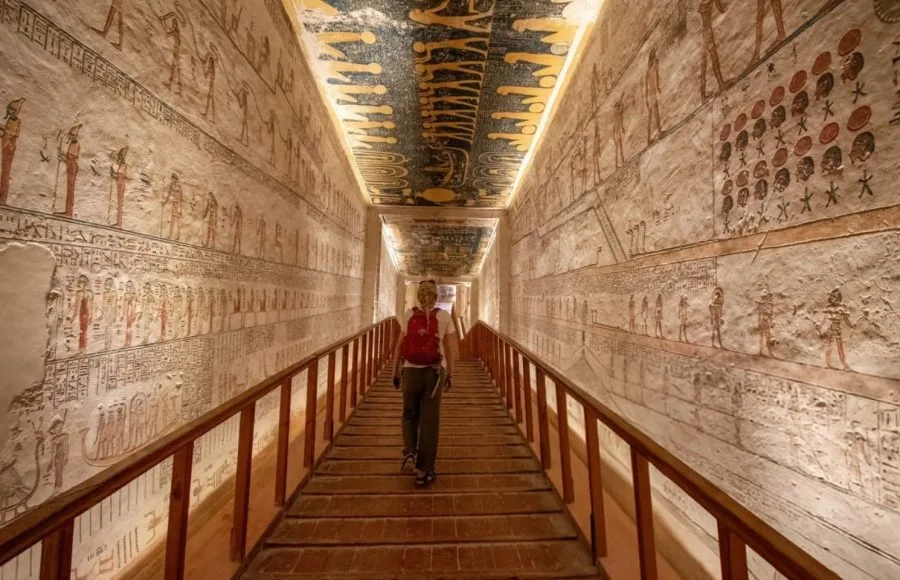
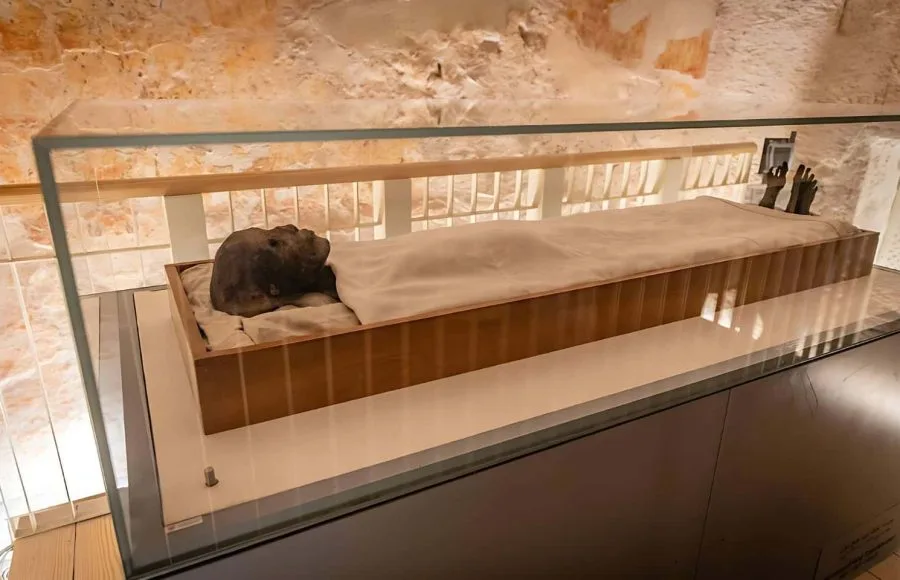
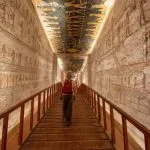
You'll descend into three royal tombs, each one a different reign, a different aesthetic, and a different depth of painted surface. The tomb of Ramesses VI reaches 83 metres into the hillside and ends in a ceiling painted with the full text of the Book of the Sky, the entire cosmological journey of the sun rendered across a vaulted ceiling in a space cut entirely by hand.

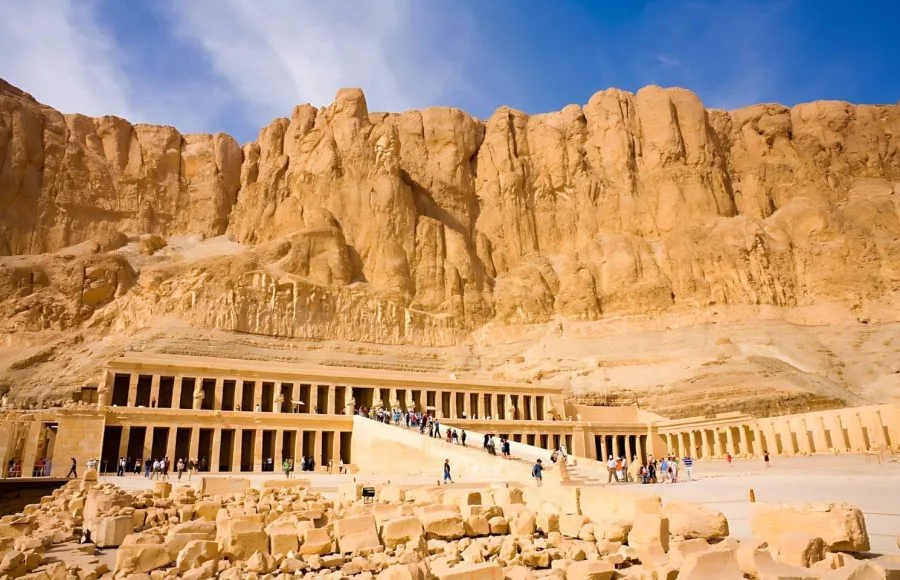
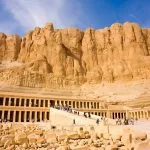
Visit the impressive Temple of Queen Hatshepsut, Egypt’s first great female pharaoh. Its terraces and carvings celebrate her powerful reign.

You'll stop at the two seated quartzite statues of Amenhotep III on the road back, each one 18 metres tall and carved from a single block of stone transported from quarries near Cairo, 700 kilometres away. They are all that remains above ground of what was once the largest mortuary temple in Egypt.
Breakfast, Lunch
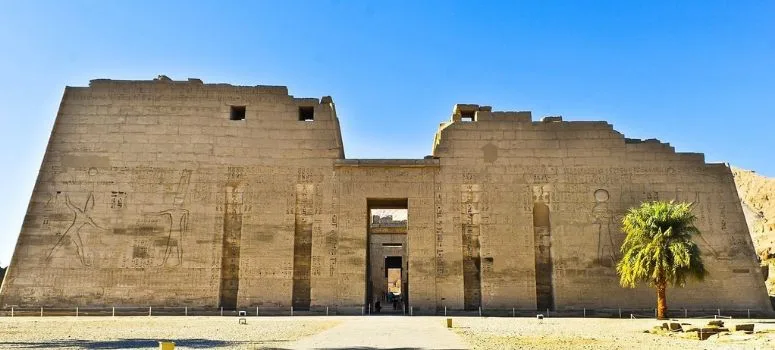
An early start on the West Bank for the two sites that most Luxor itineraries skip entirely. An optional hot air balloon ride at dawn is available before the sightseeing begins. Book this in advance. After Medinet Habu and Deir El Medina, your guide transfers you to Luxor Airport for the domestic flight to Cairo. Hotel in Cairo tonight.
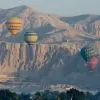
You'll lift off before sunrise from the West Bank and drift above the Valley of the Kings, the Colossi of Memnon, and the Nile as the light builds from east to west. Flights cover roughly 45 minutes to one hour and land in the agricultural fields south of the temples. The elevation gives you a spatial understanding of how the West Bank is laid out that no ground-level visit can replicate.

You'll enter the mortuary temple of Ramesses III through a Syrian-style fortified gate, the only one of its kind in Egypt, and into a complex whose painted reliefs cover 7,000 square metres of wall surface, still holding colour after 3,100 years. Your guide points out the naval battle scenes on the north wall: the first recorded depiction of a sea battle in history, carved by a pharaoh who actually fought and won it.
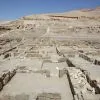
You'll walk through the village where the craftsmen who built and decorated the Valley of the Kings tombs actually lived, a planned settlement of about 70 houses occupied continuously for 450 years. The tomb of Sennefer and the tomb of Inherkha within the village contain some of the most vivid painted scenes in all of Egyptian funerary art, done by men who spent their working lives underground perfecting exactly this.
Breakfast, Lunch
Arc IV · Old Cairo to Departure
Coptic landmarks and Khan El Khalili close the journey

A morning in the oldest inhabited quarter of Cairo, where the city's Christian and Jewish history is embedded in narrow lanes and ancient stone buildings that predate the Islamic city entirely. Your departure transfer is arranged from here. Those interested in following Egypt's sacred history in greater depth often continue with Egypt's most unique faith-based pilgrimage tour, tracing the Holy Family route through churches, monasteries, and biblical sites across the country.

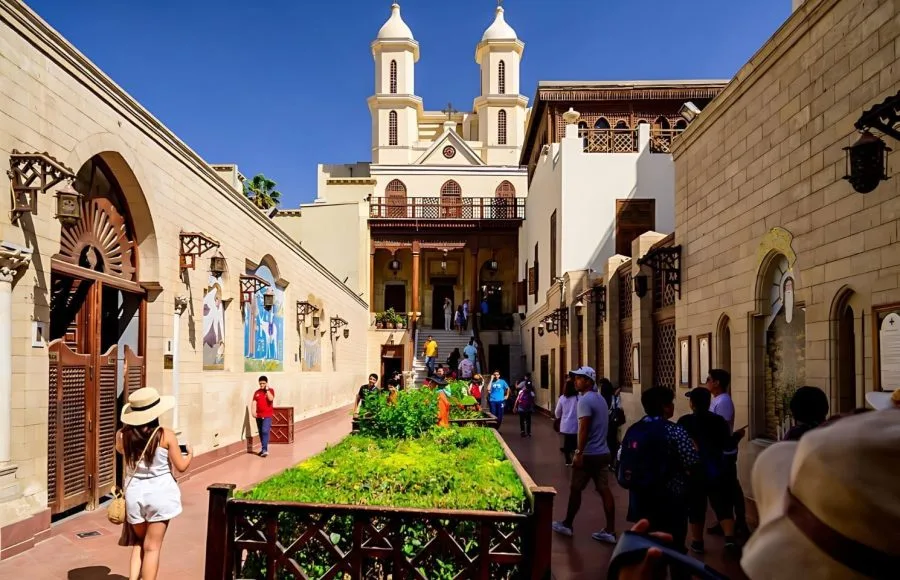
You'll climb the external staircase to a church built above the gatehouse of a Roman fortress, the nave suspended on the ancient walls below, which is where the name comes from. Dating to the 3rd century AD, it is one of the oldest churches in Egypt, and the ivory and ebony inlaid iconostasis inside is among the finest examples of Coptic woodwork surviving anywhere.

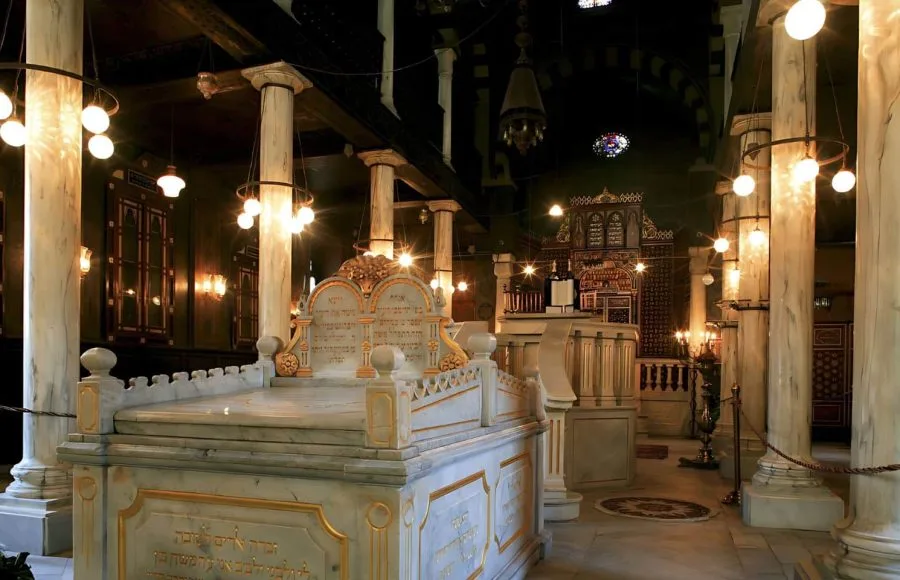
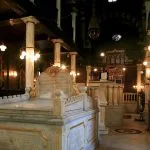
Your guide brings you into a 9th-century synagogue built on the site where, according to tradition, the infant Moses was found among the reeds. The building was a Coptic church before it was purchased and converted. The interior was restored in the 1980s and holds decorative elements spanning Islamic, Byzantine, and Coptic craft traditions in a single room.
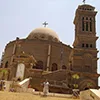
You'll walk the covered lanes between the churches, past the Church of St Sergius and Bacchus, built over the crypt where the Holy Family is said to have sheltered, and through the Roman towers that form the entrance to the ancient fortress of Babylon. The density of religious history per square metre here is without parallel in Cairo.

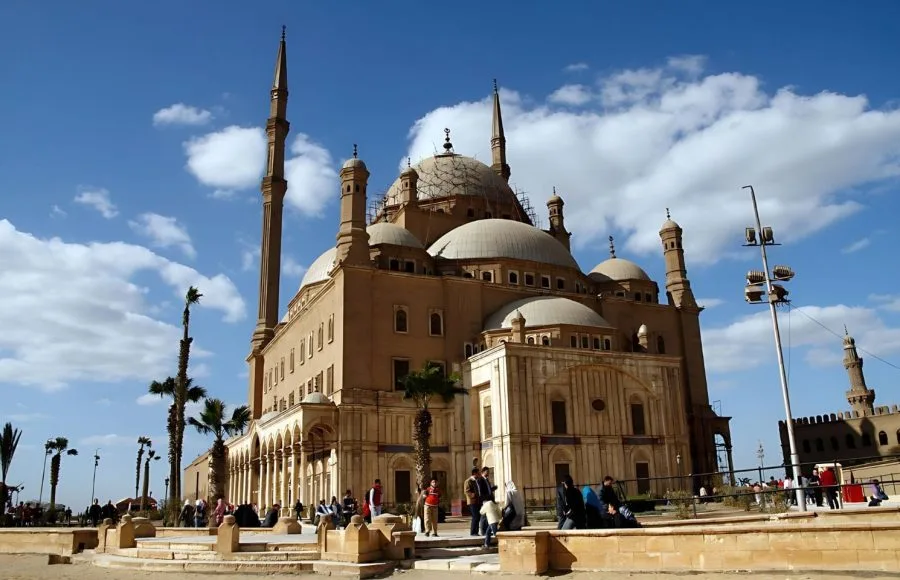
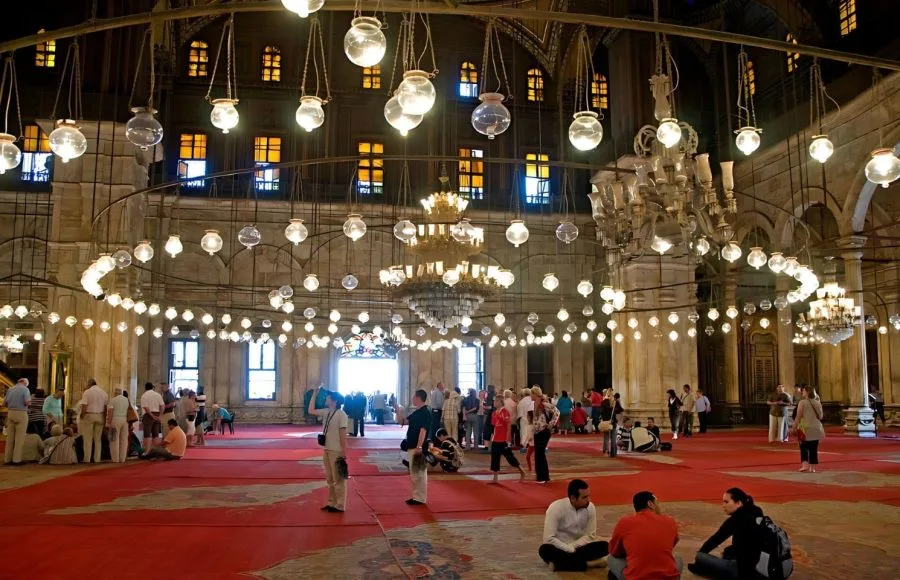
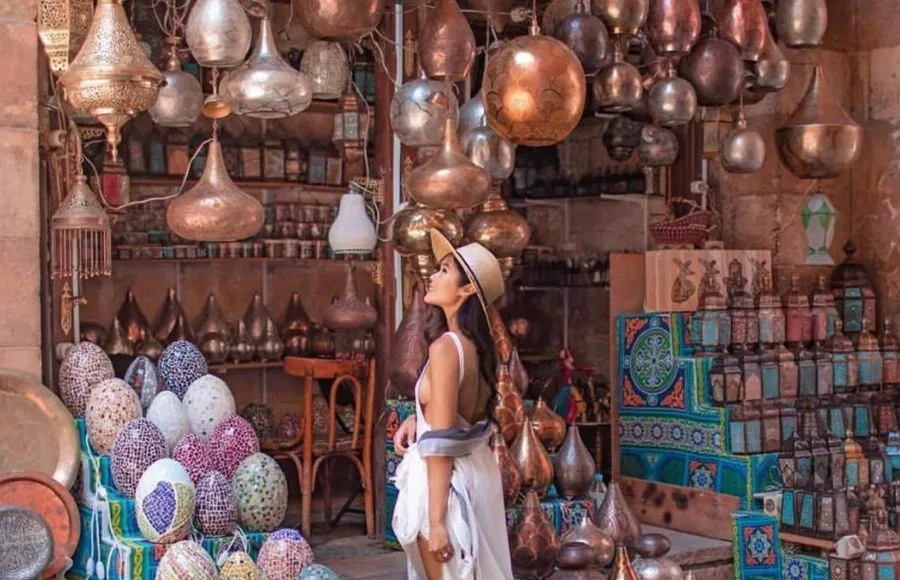
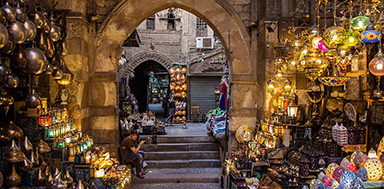
You'll enter the market through the medieval gate near the Al-Hussein Mosque, where the bazaar has operated continuously since 1382. The inner lanes hold goldsmiths, spice sellers, and papyrus workshops in the same physical spaces they have occupied for six centuries. The tourist-facing stalls are on the outer ring; your guide takes you into the working sections behind them.
Breakfast, Lunch

Your Tripidays representative transfers you to Cairo International Airport for your onward flight. No sightseeing today, just the transfer.

A Tripidays Egypt Tours representative will transfer you comfortably to Cairo Airport. Leave Egypt with unforgettable memories of your Western Sahara Desert Tour, a journey through golden dunes, sacred temples, and timeless oases.
Breakfast
* You can let us know if you'd like to customize your tour itinerary to meet your needs. We value your input and aim to accommodate your requirements.
This tour includes 4 nights in a Cairo hotel, 2 nights in a Luxor hotel, 3 nights of desert camping in the Western Desert, a domestic flight from Luxor to Cairo, a private Egyptologist guide throughout, a specialist desert guide and 4x4 for the oasis days, all entrance fees, the Nile dinner cruise on Day 1, and all airport transfers.
This is the only 11-day itinerary that covers three named Western Desert oases, Bahariya, Dakhla, and Kharga, with three nights of open desert camping, alongside the full pharaonic Luxor circuit. No other 11-day package combines the White and Black Desert formations with Karnak, the Valley of the Kings, Medinet Habu, and Deir el-Medina in one journey.
The best time for this tour is between October and April, when the weather is cool and comfortable for desert exploration. During these months, you can enjoy hiking, sightseeing, and camping in pleasant temperatures both day and night.
The White Desert Protected Area covers 3,010 square kilometres of wind-eroded chalk rock formations in the Farafra depression, with mushroom shapes, columns, and arches rising from flat sand, formed over 30 million years of erosion. This tour spends two nights camped inside the protected area, which is the only way to experience the desert at night and at dawn when the light transforms the chalk formations entirely.
It’s recommended to bring:
Your Tripidays guide will also provide daily advice on the weather and preparation.





11 Days / 10 Nights
Cairo Airport
Cairo / Maadi / Wadi El Natroun / Alexandria / El Matariya / Zeitoun / Mostorod / Samanoud / Sakha / Tel Basta / Tanis / Ismailia / Sinai
8 Days / 7 Nights
Cairo Airport or Your Hotel
Cairo / Luxor / Edfu / Kom Ombo / Aswan / Abu Simbel
12 Days / 11 Nights
Cairo Airport
Cairo / Luxor / Aswan / Alexandria / Bahariya Oasis / White Desert / Black Desert
All things you should know before visiting Egypt & Beyond
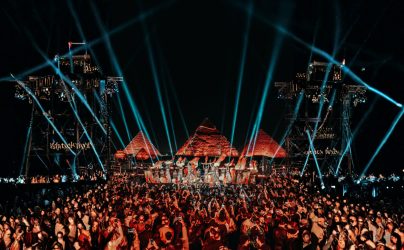


Tripidays Egypt Tours has been offering an exceptional range of Egypt tours, vacation packages, Nile cruises, day trips, and shore excursions tailored to meet the diverse interests of travelers worldwide for over 45 years.