Ephesus is one of the world’s best-preserved ancient cities and one of Turkey’s most remarkable historical destinations. Located near the modern town of Selçuk on the country’s Aegean coast, this UNESCO World Heritage Site was once a thriving center of trade, culture, and religion during the Greek and Roman periods. Today, its remarkably preserved streets, temples, theaters, and libraries offer visitors an extraordinary journey through more than two thousand years of history.
Millions of travelers visit Ephesus each year to walk along its marble roads, admire iconic monuments such as the Library of Celsus and the Great Theatre, and discover the legacy of one of the ancient world’s greatest cities. Beyond its archaeological treasures, the surrounding region offers peaceful countryside, traditional villages, and an authentic glimpse into western Turkey.
Whether you’re continuing your journey after Antalya or exploring Turkey’s rich archaeological heritage, Ephesus is an essential destination for history lovers. This Ephesus travel guide covers the site’s top attractions, travel tips, and practical information to help you plan your visit, while our Turkey Top Destinations guide introduces even more incredible places to discover. At Tripidays, we often recommend Ephesus to travelers who want to experience one of the Mediterranean’s finest archaeological treasures.
| Fact | Information |
| Country | Turkey |
| Region | Aegean Region |
| Nearest Town | Selçuk |
| Famous For | Ancient Roman city and archaeological site |
| Language | Turkish |
| Currency | Turkish Lira (TRY) |
| Time Zone | TRT (UTC+3) |
| UNESCO Status | UNESCO World Heritage Site |
Ephesus is located near the town of Selçuk in Turkey’s Aegean Region, approximately 80 kilometers south of İzmir. Its convenient location makes it one of the country’s most accessible historical destinations, attracting visitors from across the world.
The site can be reached by road, rail, or domestic flights via İzmir Adnan Menderes Airport, followed by a short drive or train journey to Selçuk. Many travelers also include Ephesus as part of a broader itinerary through western Turkey.
Ephesus offers one of the most impressive archaeological experiences in the world. Once a flourishing Roman metropolis, the city preserves magnificent streets, temples, public squares, and monumental buildings that reveal the daily life of one of antiquity’s greatest civilizations.
Beyond its historical importance, Ephesus holds cultural and religious significance, attracting visitors interested in early Christianity, Roman architecture, and UNESCO World Heritage sites. Its remarkable preservation allows travelers to experience an ancient city in a way that few destinations can match.
Unlike many archaeological sites where only scattered ruins remain, Ephesus preserves an entire urban landscape that visitors can explore on foot. Walking its marble streets past grand monuments, public buildings, and ancient homes provides a rare opportunity to experience the scale and sophistication of a Roman city almost as it existed two millennia ago.
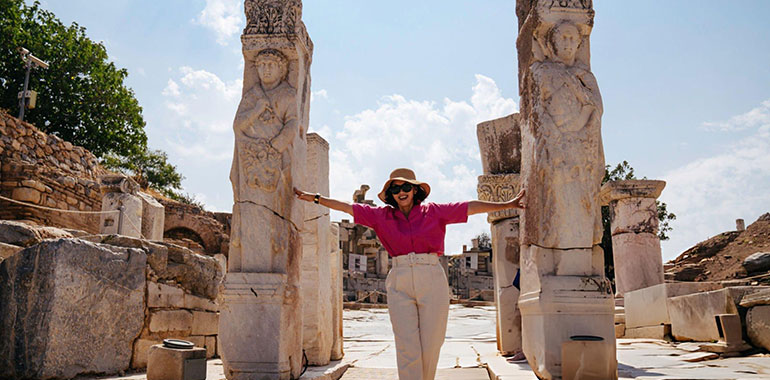
Ephesus is home to some of the finest surviving monuments of the ancient world. Together, these landmarks reveal the city’s importance as a political, commercial, and cultural center during the Roman Empire while introducing visitors to the rich heritage of western Turkey.
The Library of Celsus is Ephesus’ most iconic landmark and one of the finest examples of Roman architecture. Its beautifully restored façade has become a symbol of the ancient city, reflecting the importance of knowledge and learning in Roman society.
Carved into the hillside, the Great Theatre could accommodate around 25,000 spectators, making it one of the largest theaters in the ancient world. It hosted dramatic performances, public gatherings, and gladiatorial events, while also playing a significant role in the history of early Christianity.
Marble Street was one of Ephesus’ principal roads, linking many of the city’s most important public buildings. Walking along its original stone pavement offers visitors a genuine sense of daily life during the Roman era.
Dedicated to Emperor Hadrian, this elegant temple is admired for its richly decorated façade and intricate carvings. It remains one of the best-preserved monuments within the archaeological site.
Often called the “houses of the wealthy,” the Terrace Houses reveal the luxurious lifestyle of Ephesus’ elite citizens. Their preserved mosaics, frescoes, and sophisticated architecture provide valuable insight into domestic life during the Roman Empire.
Although only a few remains survive today, the Temple of Artemis was once one of the Seven Wonders of the Ancient World. Its historical significance continues to make it an essential part of any visit to Ephesus.
A visit to Ephesus is about more than exploring ancient ruins. Walk along the original marble streets, admire the intricate details of Roman architecture, and imagine daily life in one of antiquity’s greatest cities. Visiting early in the morning allows you to enjoy the archaeological site before the largest crowds arrive, while guided tours provide valuable insight into the city’s remarkable history.
Beyond the main ruins, explore the nearby town of Selçuk, sample traditional Aegean cuisine at local restaurants, or browse small artisan shops selling handmade crafts and regional products. Together, these experiences offer a deeper appreciation of the culture and heritage that continue to shape this historic region.
Ephesus can be visited throughout the year, but spring (April to June) and autumn (September to October) offer the most comfortable weather for exploring the open-air archaeological site. Mild temperatures make walking among the ancient streets and monuments far more enjoyable than during the hottest summer months.
Summer is the busiest season and can be very warm, especially during the afternoon, while winter offers fewer visitors and a quieter atmosphere. If you’re planning a multi-destination journey, our Best Time to Visit Turkey guide can help you choose the ideal season for your trip.
Ephesus is easily reached from İzmir, one of western Turkey’s main transportation hubs. Most visitors arrive through İzmir Adnan Menderes Airport before continuing by train, bus, rental car, or private transfer to the nearby town of Selçuk. The archaeological site is only a short distance from the town center, making it convenient for both day trips and overnight stays.
Its excellent transport connections also make Ephesus an easy addition to a wider itinerary through Turkey’s Aegean region.
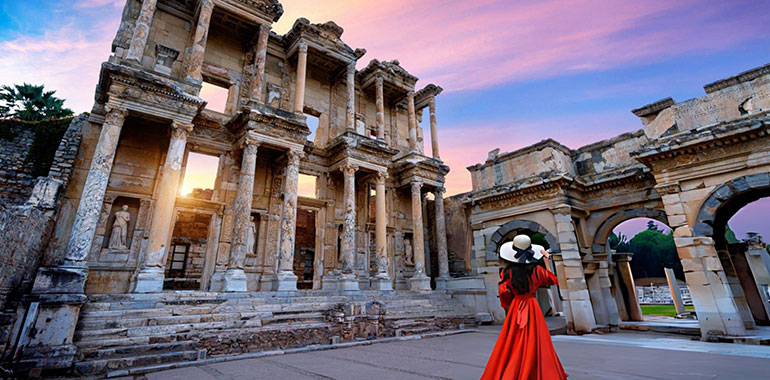
Ephesus is featured in many of our Holidays, allowing travelers to experience one of the world’s finest archaeological sites alongside Turkey’s diverse landscapes and cultural highlights. For those seeking a broader journey, our Egypt and Turkey Vacations combine the timeless wonders of ancient Egypt with the remarkable heritage of Turkey for an unforgettable travel experience.
Ephesus offers an extraordinary opportunity to step into the ancient world through one of the best-preserved archaeological sites on Earth. From its iconic Library of Celsus and impressive Great Theatre to its marble streets and remarkable Roman architecture, every corner of the city reveals another chapter of its fascinating past.
Whether you’re passionate about archaeology, history, or cultural travel, Ephesus is a destination that belongs on every Turkey itinerary.


Tripidays Egypt Tours has been offering an exceptional range of Egypt tours, vacation packages, Nile cruises, day trips, and shore excursions tailored to meet the diverse interests of travelers worldwide for over 45 years.