The Abu Simbel Temple in southern Egypt is one of the most iconic and awe inspiring monuments of ancient Egyptian civilization. Carved into the cliffs along the Nile, this grand temple complex was built by Ramses II to celebrate his reign and honor the gods. With its four colossal statues, intricate carvings, and legendary Sun Festival, Abu Simbel stands as a lasting tribute to Egypt’s glorious past and a symbol of world heritage.
Beyond its beauty, the temple tells stories of love, power, and devotion. It also showcases one of the most impressive relocation projects in history, saving it from the rising waters of Lake Nasser caused by the construction of the Aswan High Dam. Whether you’re a history lover or an adventure seeker, visiting Abu Simbel offers a magical experience that will stay with you forever, especially when sunlight penetrates the sanctuary and illuminates the sculptures.
What Makes the Temple of Abu Simbel Unique?
Abu Simbel isn’t just another ancient site; it’s a masterpiece of power, precision, and passion. Built by Pharaoh Ramses II in the heart of southern Egypt, this monumental complex includes two rock carved temples that stand as symbols of divine authority and eternal love.
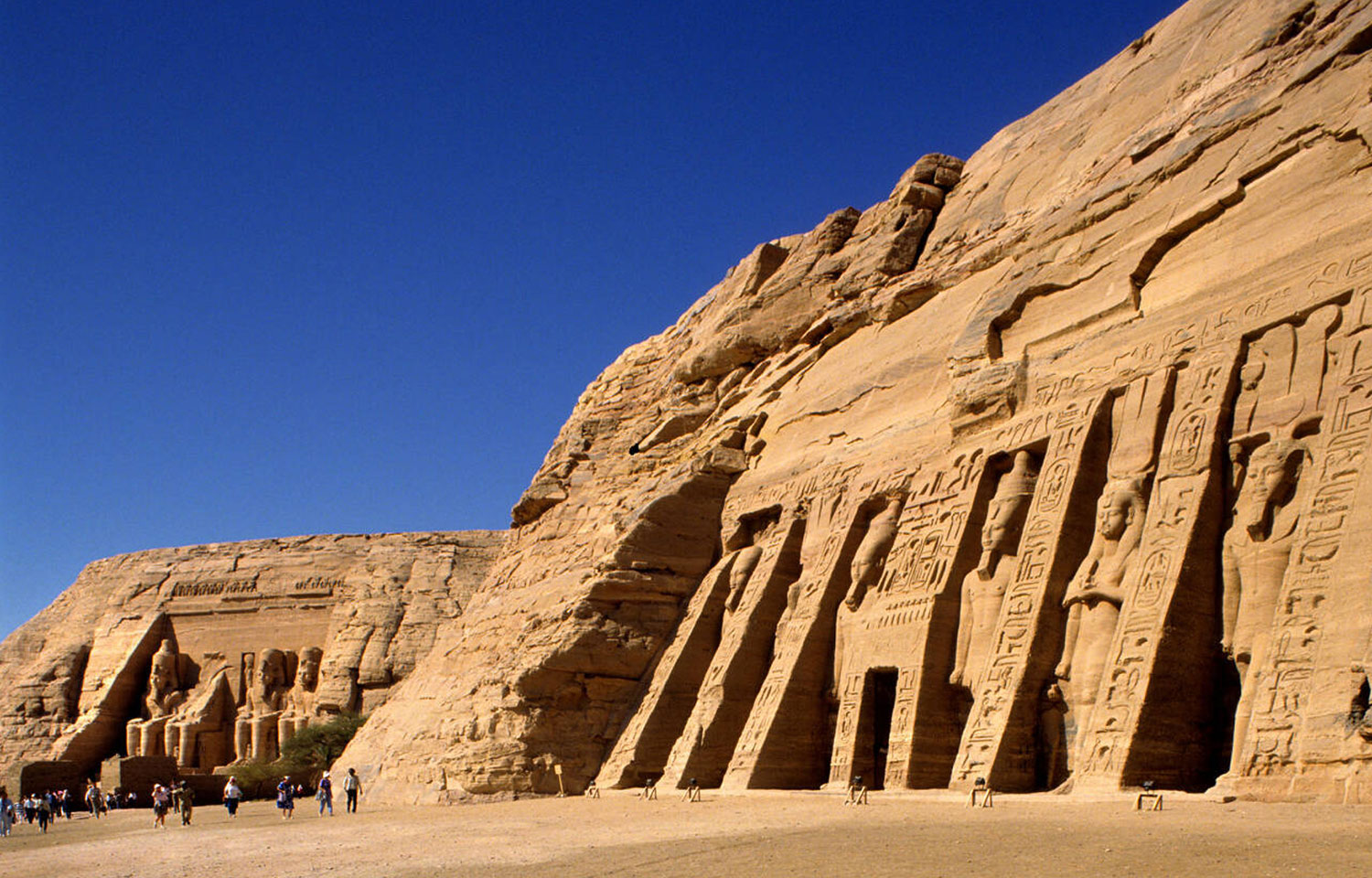
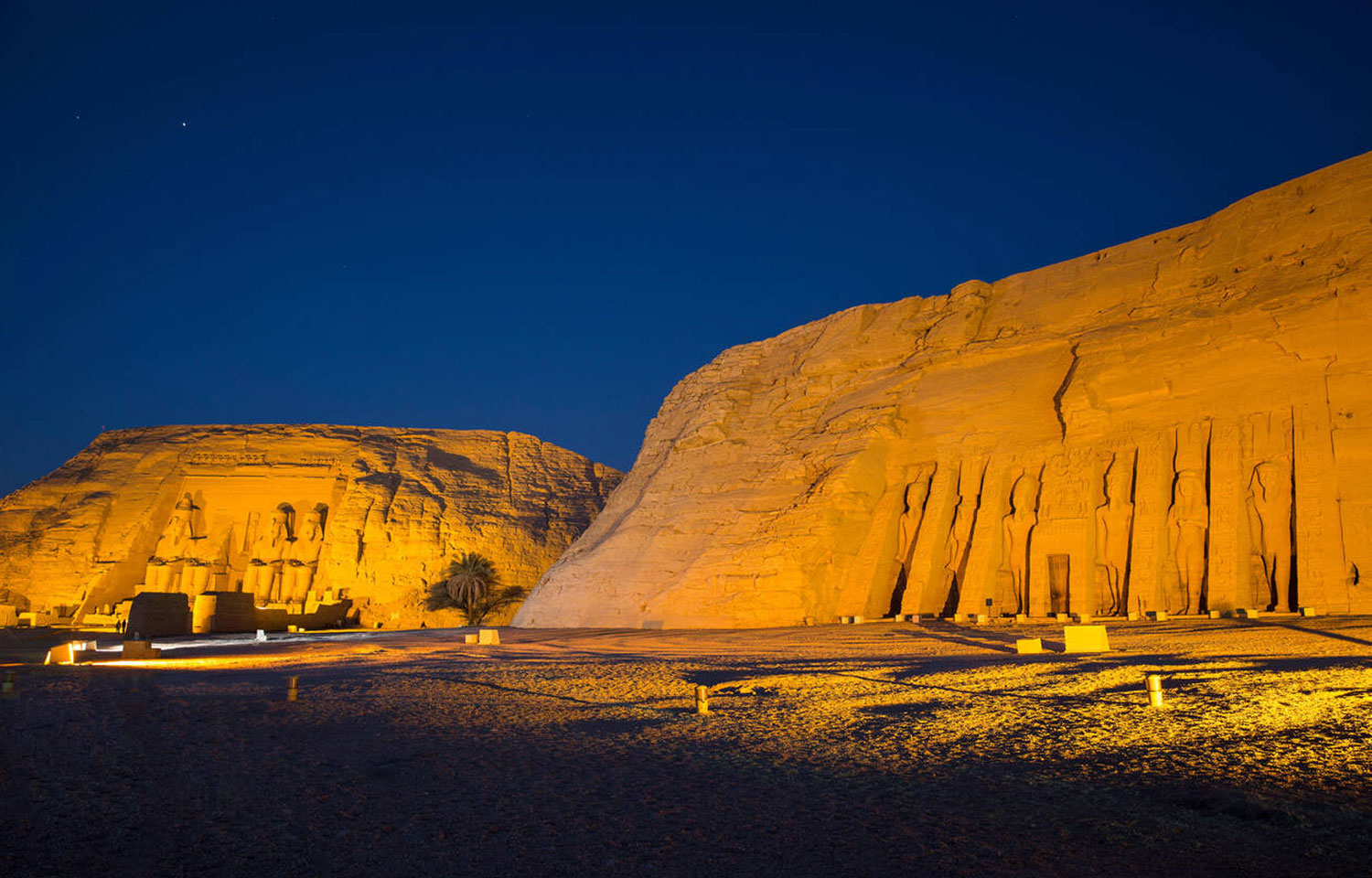
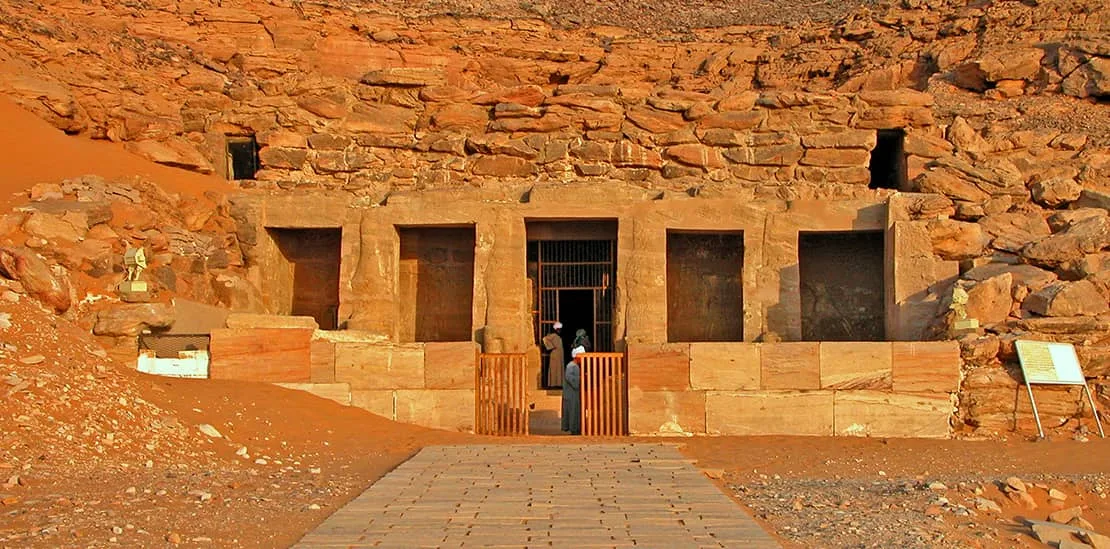
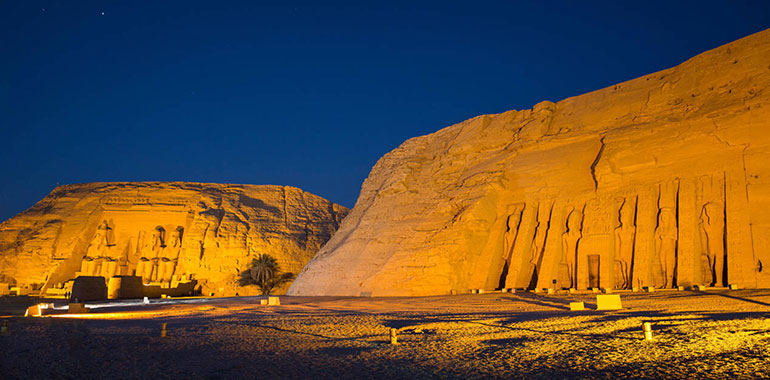
The Great Temple features colossal images of Ramses II and honors multiple gods, while the smaller one, known as the Temple of Hathor and Nefertari, was dedicated to the goddess Hathor and Ramses’ beloved Queen Nefertari. Together, these temples express both political strength and artistic elegance, making them one of the finest creations in ancient Egyptian history.
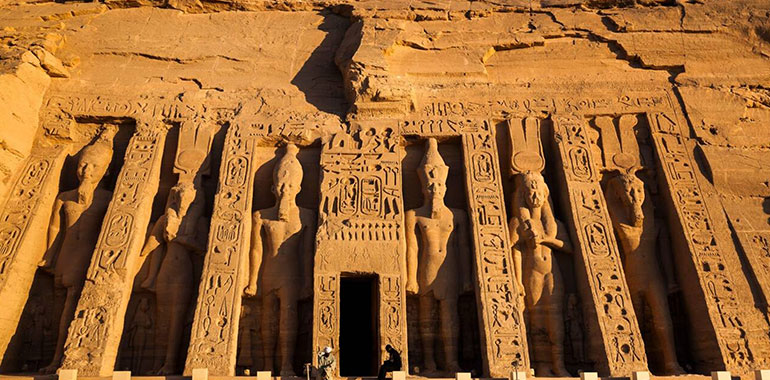
The Great Temple of Abu Simbel vs. the Small Temple of Nefertari
1. Purpose and Dedication
The Great Temple of Abu Simbel was dedicated to Pharaoh Ramses II and the powerful gods Amun-Ra, Ra-Horakhty, and Ptah. It was designed to glorify Ramses as both a divine ruler and a protector of Egypt, especially after his claimed victory at the Battle of Kadesh.
On the other hand, the Small Temple of Nefertari was built in honor of Queen Nefertari, the beloved wife of Ramses, and Hathor, the goddess of love, beauty, and motherhood. This rare dedication to a queen reflects Nefertari’s high status and the celebration of female divinity in ancient Egypt.
2. Size and Scale
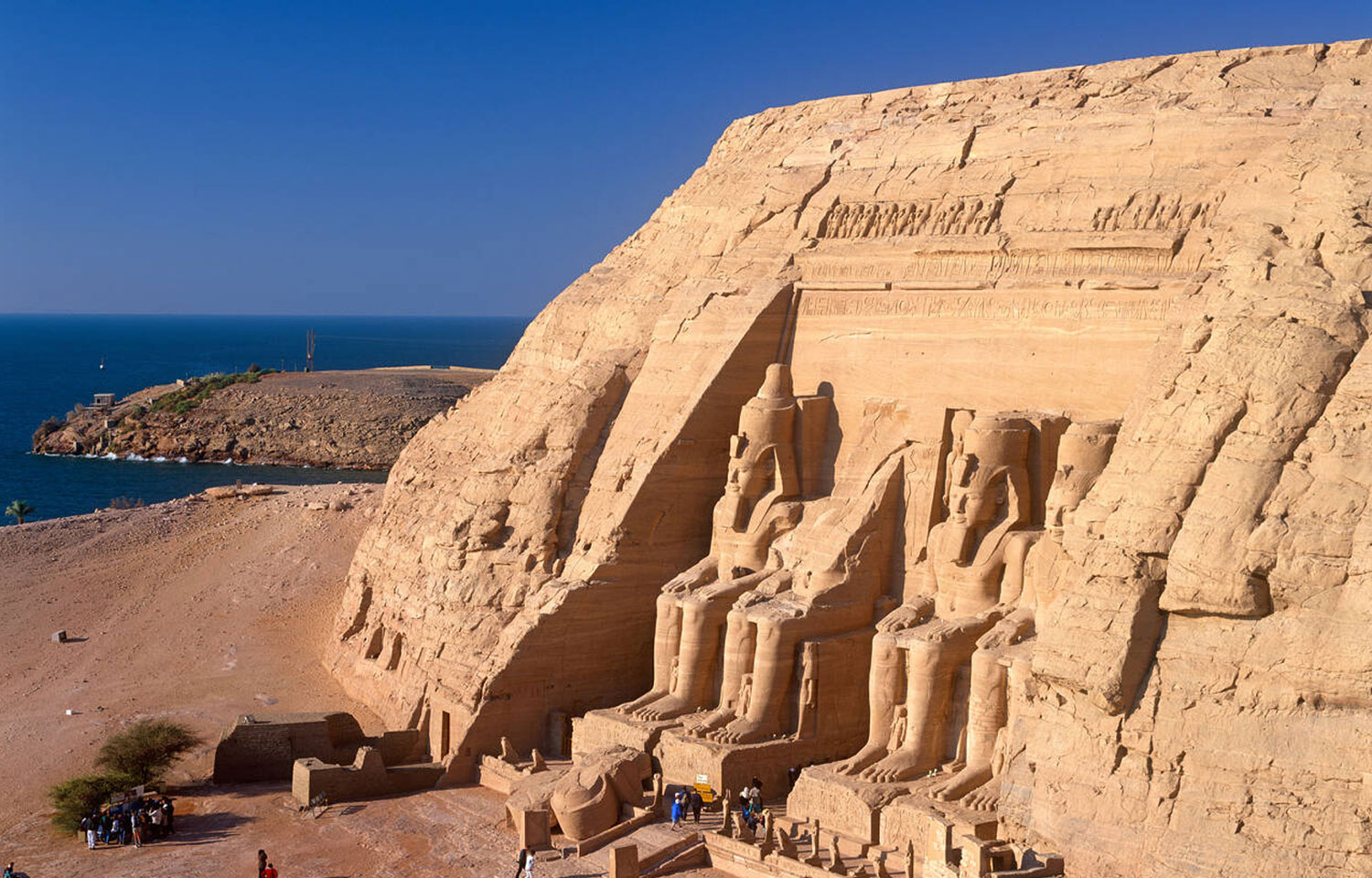
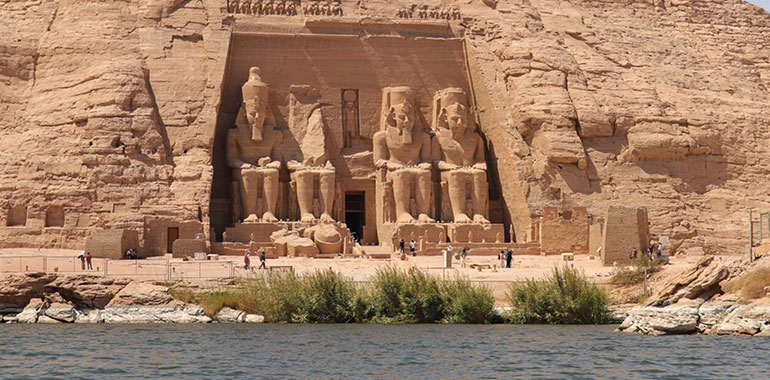
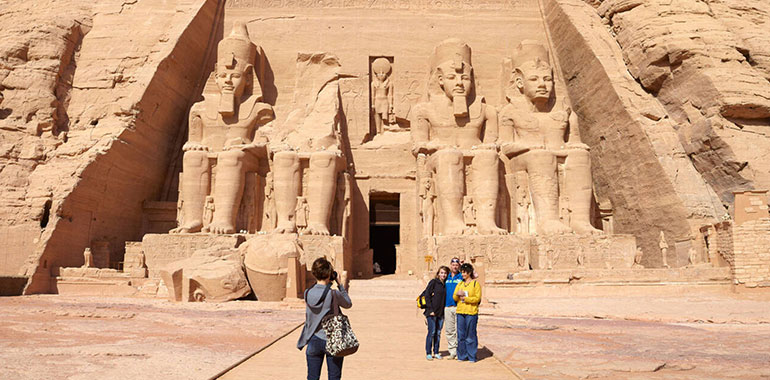
In terms of size, the contrast is striking. The Great Temple’s façade rises 33 meters high, with four colossal statues of Ramses II, each around 20 meters tall, guarding the entrance. Inside, it consists of vast chambers including a hypostyle hall, a vestibule, and a sanctuary. In comparison.
The Small Temple is about 12 meters high and features six standing statues, each around 10 meters tall, four of Ramses and two of Nefertari. Though more modest in scale, the temple’s elegant structure and intricate carvings make it no less significant.
3. Architectural Features
The exterior design of both temples is impressive. The Great Temple showcases Ramses II in all his glory, seated on a throne wearing the double crown of Upper and Lower Egypt.
The Small Temple displays a powerful artistic statement: statues of Ramses and Nefertari carved at equal height, which is highly uncommon in ancient Egyptian art and a strong symbol of equality and royal affection.
Architecturally, the Great Temple projects power and divine kingship, while the Small Temple reflects harmony and the spiritual balance between male and female forces.
4. Interior Decorations
Inside the Great Temple, walls are carved with scenes of military victories, divine rituals, and offerings to the gods. Most famous is the depiction of the Battle of Kadesh, where Ramses presents himself as a heroic warrior. The design and artwork are bold and monumental.
In contrast, the Small Temple’s interior is more delicate and serene. It depicts Queen Nefertari making offerings to Hathor, surrounded by floral motifs, soft lines, and harmonious compositions. The atmosphere inside celebrates femininity, music, love, and beauty, core attributes of Hathor’s divine nature.
5. Sun Festival Phenomenon
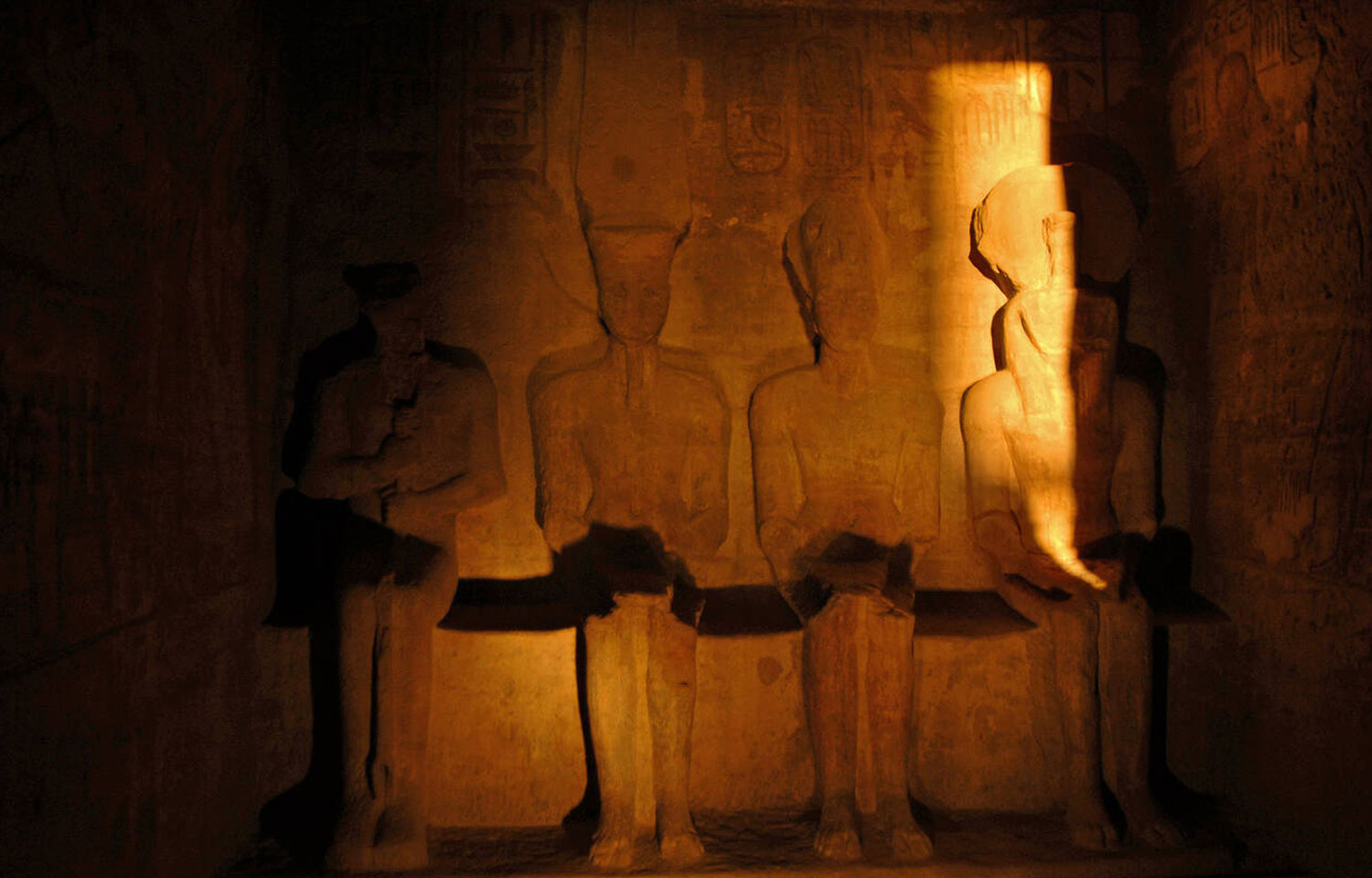
One of the most famous features of the Great Temple is the Abu Simbel Sun Festival, which occurs twice a year on February 22 and October 22. On these days, the rising sun penetrates the temple and illuminates the sanctuary, lighting up the statues of Ramses II, Amun-Ra, and Ra-Horakhty (while Ptah remains in the shadows as the god of darkness).
The Small Temple, however, does not feature a solar alignment phenomenon, highlighting its more symbolic and spiritual role rather than astronomical precision.
6. Cultural Significance
The Great Temple of Ramses II represents the height of imperial power, political strength, and divine kingship. It was not only a religious sanctuary but also a bold statement to the Nubians and all who approached Egypt from the south.
In contrast, the Small Temple is a rare tribute to a royal woman, making it one of the few temples in ancient Egypt dedicated to a queen. Its existence signifies both personal devotion and political respect for Nefertari, offering insight into royal relationships and gender roles in ancient society.
Both temples are part of the Nubian Monuments UNESCO World Heritage Site, which is preserved as a treasure of human civilization.
Conclution
The Great Temple stands as a mighty declaration of power, glory, and military strength, while the Small Temple offers a poetic expression of love, beauty, and spiritual harmony. Together, they tell a complete story not just of a powerful pharaoh, but of a couple remembered forever in stone. The Abu Simbel complex remains a timeless symbol of ancient Egypt’s architectural brilliance and human devotion.
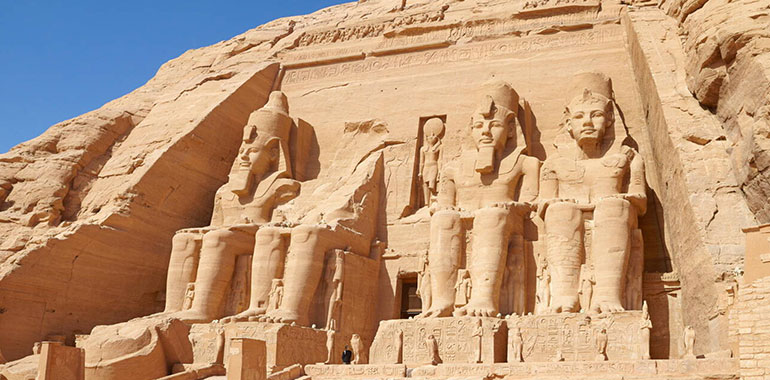
Why Was Abu Simbel Built Into a Mountain?
Ramses II had the temples carved into sandstone cliffs to impress enemies and allies alike. The massive statues and intricate carvings sent a powerful message: Egypt was strong, divine, and eternal. This effort was both a religious devotion and a powerful act of state propaganda by Ramses the Great.
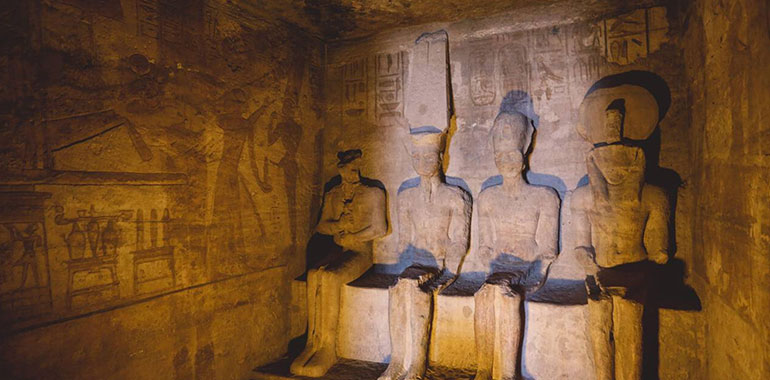
The Sun Festival and A Light Show from the Ancient World
The Sun Festival at Abu Simbel Temple occurs twice a year, on February 22 and October 22. This solar alignment marks Ramses II’s birthday and coronation day, making the Sun Temple of Ramses II at Abu Simbel even more magical, as the sunlight travels 65 meters into the Great Temple, lighting up three of the four statues inside. The event is carefully aligned with the axis of the temple so that light reaches deep into the sanctuary and illuminates the sculptures. Want to attend this event? Here’s your Abu Simbel Temple Sun Festival Guide.
How Was Abu Simbel Built and Saved?
Ancient Construction
Built around 1264 BCE using basic tools like chisels and hammers, the temples took over 20 years to complete. The main temple was carved with incredible precision, reflecting the scale of ambition in ancient Egypt. The construction timeline and royal purpose are beautifully detailed in the history of Abu Simbel Temple.
Modern Relocation
In the 1960s, the Abu Simbel Temples were relocated piece by piece to higher ground to save them from Lake Nasser’s rising waters. This remarkable effort was led by UNESCO and marked the beginning of a global campaign to preserve the monuments of Nubia, the first large scale operation under the World Heritage initiative. Details about the original site and the full relocation process can be found in our Abu Simbel Temple location guide.
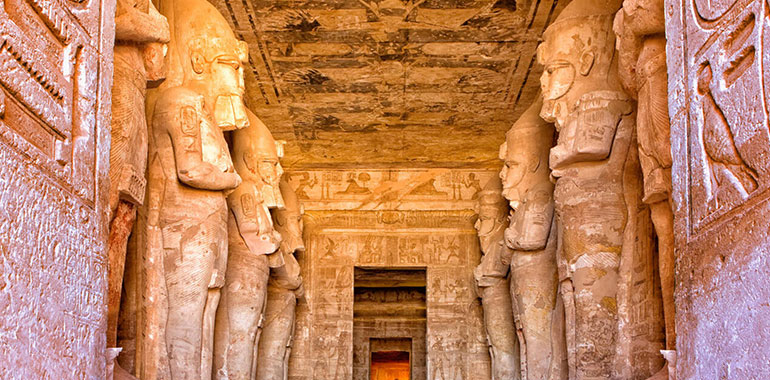
Most Important Facts About the Great Temple of Abu Simbel
- Home to the Great Temple of Ramses II at Abu Simbel
- The only temple in Egypt with this unique solar phenomenon
- Entirely carved from mountain rock
- Saved by a massive international effort led by UNESCO
- A symbol of love: The Temple of Nefertari, Abu Simbel,l Nubia, is one of the few ancient temples dedicated to a queen and the goddess Hathor, known as the small temple
- Designated as a UNESCO World Heritage Site
- The Abu Simbel complex is an outstanding example of dedication and preservation.
- It’s the only time in ancient Egyptian history that a temple was built for both a king and a queen side by side.
- Its sanctuary houses gods and a statue of Ramses II seated on a throne
Abu Simbel is not just a monument; it’s a masterpiece of ancient engineering, love, and preservation. Check out more surprising facts about Abu Simbel Temples that will amaze you.
Abu Simbel vs. Other Temples in Egypt: Which Deserves the Crown?
While Egypt has many breathtaking temples like Karnak, Philae, and Luxor, Abu Simbel Temple stands out because:
- Carved directly into a mountain — not constructed with stone blocks like most other temples.
- Features a rare solar alignment that illuminates the inner sanctuary twice a year during the sun festival, showcasing ancient astronomical precision.
- Saved by a remarkable UNESCO relocation project, making it a global symbol of heritage preservation.
- Represents a dual tribute — one temple to Ramses II and another to Queen Nefertari, highlighting both royal power and romantic devotion.
If you can only visit one remote temple, Abu Simbel is worth the extra effort.
How to Get to Abu Simbel: Flights, Road Trips & Lake Nasser Cruises
- Flight: Quickest option. Fly from Aswan to Abu Simbel Airport (ABS) (45 mins). You can also book a guided Abu Simbel Tour from Aswan by Plane with Tripidays for a smooth and informative visit.
- Road Trip: Around 3.5 to 4 hours by car or bus from Aswan. Some of our tours offer early morning departures.
- Cruise: Lake Nasser cruises include stops at Abu Simbel, such as the 4 Days Lake Nasser Cruise From Abu Simbel to Aswan, which offers comfort and historical insight.
Pro Tip: Go early to avoid the heat and enjoy peaceful views.
What are The Best Hotels to Stay in Abu Simbel?
You can stay overnight for the full experience, especially during the Sun Festival. If you’re arriving from the capital, our Day Tour to Abu Simbel from Cairo by Plane is ideal for those on tight schedules. For those wanting more, try the 2-Day Tour from Cairo to Luxor and Abu Simbel, combining multiple wonders in one trip.
Top Picks:
- Seti Abu Simbel Lake Resort: Closest to the temples with stunning lake views
- Eskaleh Nubian Lodge: An eco-friendly boutique lodge with local Nubian charm
Both options offer warm hospitality and comfort in a remote location northeast of the temple.
Why is Abu Simbel Worth Visiting?
Abu Simbel is worth visiting because it is not just another temple; it’s one of the most breathtaking and historically powerful sites in all of Egypt. From the four colossal statues of Ramses II seated at the entrance to the precise solar alignment that lights up the sanctuary twice a year, every detail of this monument tells a story of ambition, legacy, and divine connection. What makes it even more special is that it was rescued from the rising waters of Lake Nasser and relocated by a global UNESCO campaign, something that has never been done on this scale in history. Whether you’re a history lover, a spiritual traveler, or simply in awe of ancient wonders, Abu Simbel promises a rare kind of magic that stays with you long after you leave.
Why Abu Simbel Temple Should Be in Your Egypt Itinerary
The Abu Simbel Temples of Ramesses II are more than a stop on the tourist trail; they’re a journey into Egypt’s soul. From massive statues to love stories in stone, to solar miracles and global rescue missions, every detail makes it unforgettable. Choose immersive tours like the 8 Days Cairo Aswan Abu Simbel Luxor & Alexandria Tour or the 11 Days Cairo, Nile Cruise, and Abu Simbel Tour Package for a complete experience of Upper Egypt.
Add the Abu Simbel Temple, Aswan, Egypt, to your itinerary. It’s remote but rewarding, majestic but welcoming, and it will leave you speechless. Known as Ramses the Great, King Ramesses truly dedicated a temple that still amazes the world.
Start planning today and stand before a monument that has stood for over 3,000 years.
Plan Your Dream Trip to the great Abu Simbel temple with Tripidays
Ready to experience the magic of Abu Simbel Temple for yourself? At Tripidays Egypt Tours, we offer carefully designed travel packages that suit every kind of explorer, whether you’re short on time, love river cruises, or want to combine multiple destinations in one unforgettable journey.
Want something more personal? Tripidays also offers customizable trips so you can design your perfect Egypt adventure. Whether you’re dreaming of history, nature, or luxury, we’ll make it happen.
Contact us today to start planning your journey to Abu Simbel with confidence and care.