


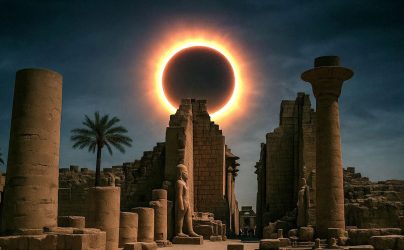
Starlight Festival Egypt 2026: Dates, Lineup & Travel Guide
September 24, 2026
Read more
about Starlight Festival Egypt 2026: Dates, Lineup & Travel Guide






























| Duration |
10 Days / 9 Nights |
|---|---|
| Tour Location |
Cairo / Fayoum / Luxor / Aswan |
| Tour Run | |
| Pickup |
Cairo Airport or Your Hotel |
This 10-day Egypt off the beaten path tour by Tripidays is one of the most distinctive options among Egypt travel package deals, covering Cairo, Fayoum, Luxor, and Aswan entirely by private overland, no cruise ship, no beach resort. It is the only Egypt overland itinerary that deliberately bypasses cruise-route temples to reach hidden sites unreachable by Nile boat: Wadi El Hitan, Tunis Village, Lake Qarun, Kalabsha Temple, and the painted tombs of Deir El-Medina. Every day is guided by a private Egyptologist in a dedicated vehicle, with 5-star hotels throughout.
Start your Journey in Cairo with arrival and hotel check-in on Day 1. Day 2 moves through the ancient pyramid fields: Giza Pyramids, the Great Sphinx, Saqqara Step Pyramid, and the Bent and Red Pyramids at Dahshur. Day 3 leaves the Nile Valley entirely for Fayoum Oasis, Wadi El Hitan (Valley of the Whales), the Western Desert landscape, and the fossil fields of one of Egypt's most remote UNESCO World Heritage Sites. Day 4 visits Tunis Village and Lake Qarun before an overland transfer to Luxor. Day 5 heads north of Luxor to Abydos Temple and Dendera Temple, two of Egypt's most photogenic and least-crowded sites. Day 6 covers the West Bank: Deir El-Medina artisan village, Medinet Habu mortuary temple, and the Valley of the Queens. Day 7 completes the West Bank with the Valley of the Kings and the Tomb of Seti I, then crosses to the Karnak Temple on the East Bank. Day 8 reaches Aswan for a Nubian village experience, Elephantine Island, and Philae Temple. Day 9 visits Kalabsha Temple and the Aswan High Dam before a domestic flight back to Cairo. Day 10 is the departure.
Only on this route
Most luxury Egypt tours skip Qena and Abydos their routes favor the standard Cairo-Luxor-Aswan circuit. This tour sails to Qena for Dendera, then visits Abydos before returning to Luxor.
Arc I · Cairo Beginnings
Pyramids, Sphinx, GEM, and a Nile dinner introduce Egypt’s capital
Your Tripidays representative meets you at Cairo International Airport, handles your transfer formalities, and escorts you directly to your 5-star hotel. No sightseeing today, check in, settle in, and rest before one of the most packed archaeological days in Egypt begins tomorrow.

In the evening, embark on a leisurely dinner cruise along the Nile River. Savor a delightful meal while enjoying traditional Egyptian music and dance performances against Cairo’s illuminated skyline, one of the memorable experiences often included in premium 10-day Egypt travel packages designed to blend cultural highlights with relaxed evening experiences.
Dinner
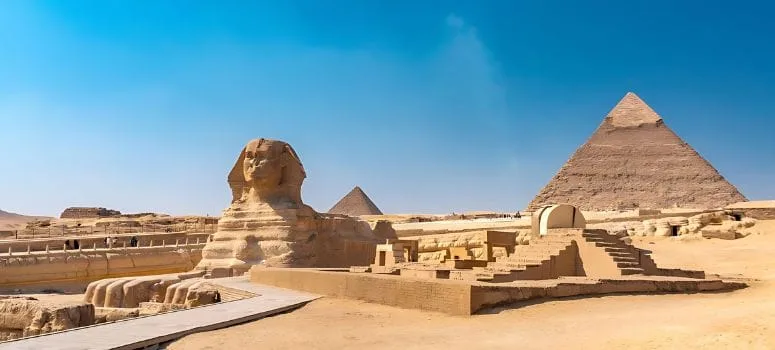
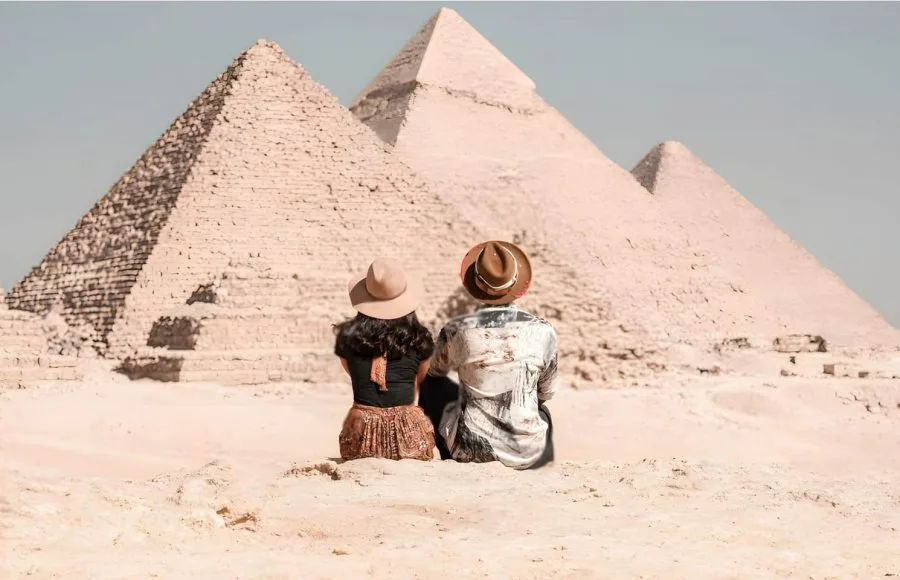
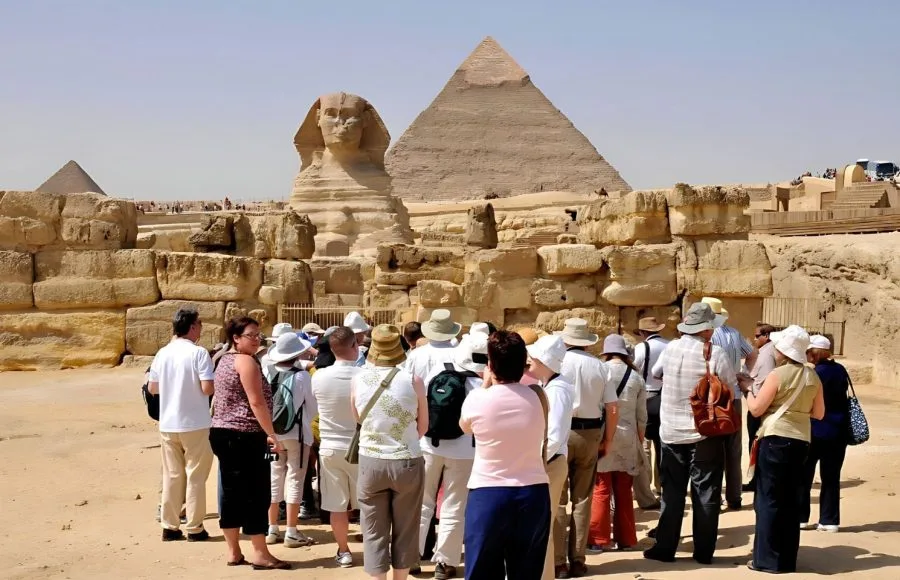
Your private Egyptologist picks you up after breakfast for a full day across Egypt's ancient pyramid fields, the densest concentration of royal burial architecture on earth, and the backbone of this 10 day Egypt off the beaten path overland itinerary.

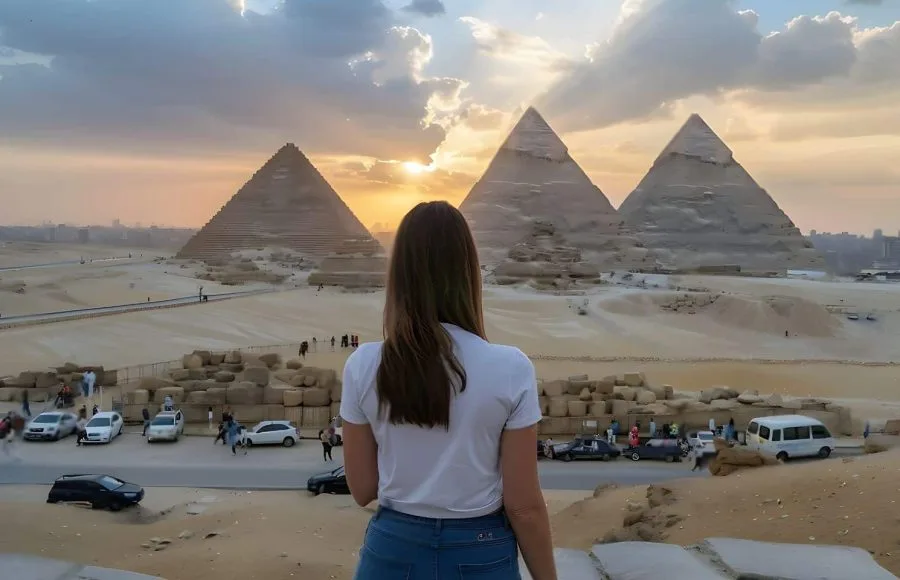
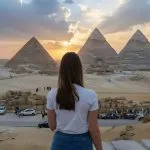
Stand at the base of Khufu's Great Pyramid, and you'll understand immediately why no photograph has ever done it justice. Three pharaohs built their eternal monuments here over just 85 years, a construction pace that still has no satisfactory explanation.

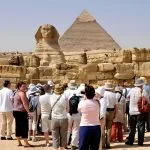
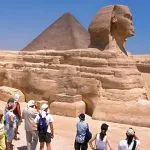
Your guide will position you at the angle where the Sphinx aligns with the second pyramid behind it, the view that makes the scale of the Giza plateau suddenly click. Carved from a single limestone outcrop, it remains the largest monolithic statue ever made.

Continue your journey to the Valley of the Khafraa Temples. Walk among the ruins and immerse yourself in the stories of the past as you explore the remnants of these ancient religious sites.

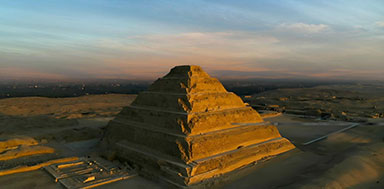
You'll enter the funerary complex of Djoser and walk the same processional corridor that priests used 4,700 years ago, when this was the most ambitious stone structure ever attempted. The Step Pyramid itself is the world's oldest cut-stone monument; everything at Giza came after this.
From the outside, it looks like a miscalculation; the angle shifts visibly halfway up the face. Your guide will walk you to the original entrance, still intact, and explain the mid-build decision that changed pyramid construction forever.
You'll climb down the narrow descending corridor into the burial chamber and stand inside the oldest true smooth-sided pyramid ever completed. The corbelled ceiling rises over 15 metres above you in a space that almost no one else visits the same day they see Giza.
Breakfast, Lunch
Arc II · Qena to Luxor
Dendera and Abydos lead into Luxor’s temples and museums
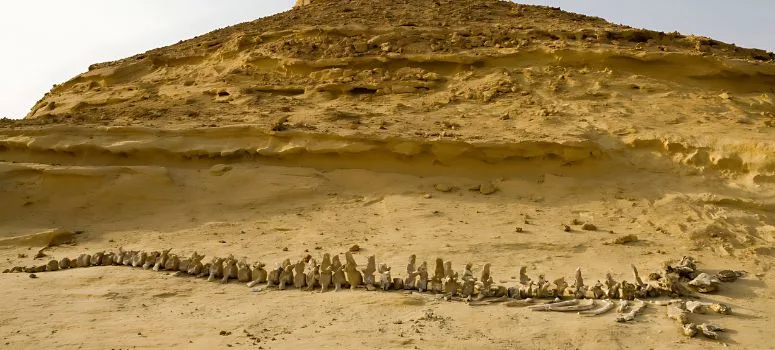
After breakfast, your guide drives you southwest out of Cairo into the Western Desert. This is the day that separates this off-beaten-path Egypt tour from every standard overland itinerary on the market.
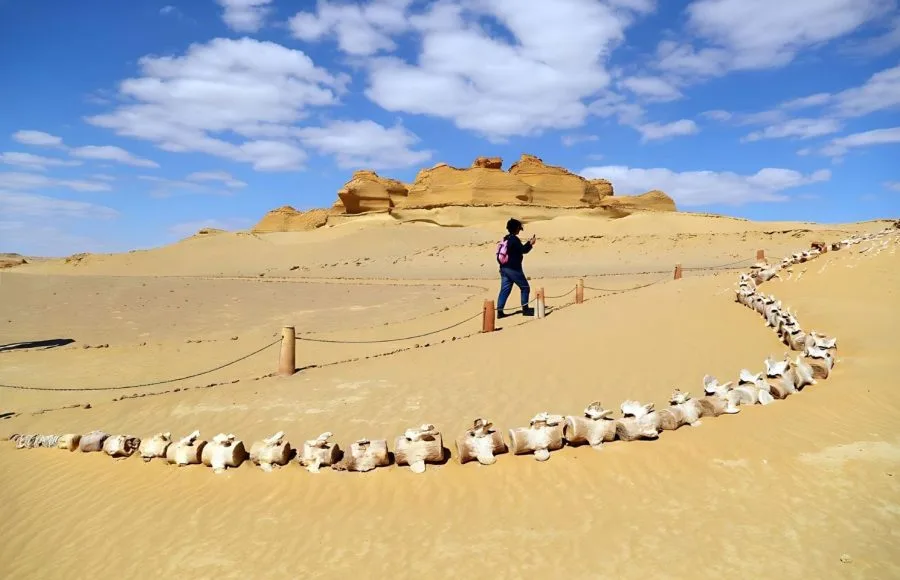
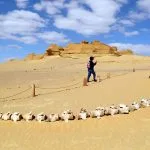
You'll walk among fossilized whale skeletons scattered across the open desert, the remains of creatures that swam here 40 million years ago when this valley was the floor of an ancient sea. It is a UNESCO World Heritage Site that fewer international visitors reach in a year than Karnak sees in a single morning.
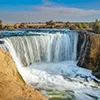
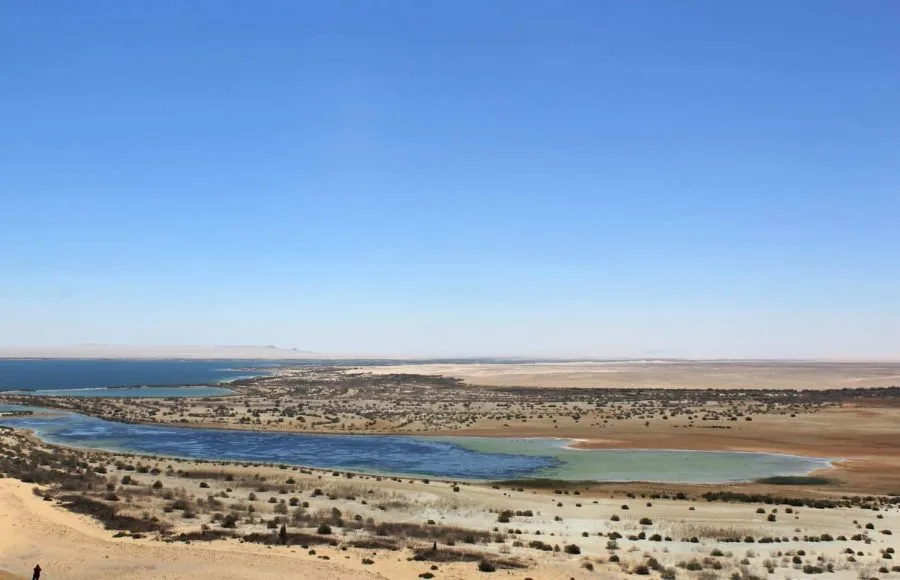
Your guide takes you into the desert fringe where the green of the oasis meets the open sand, a landscape that shifts colour through the afternoon light. Fayoum sits in a natural depression below sea level. The geology here is unlike anywhere else in Egypt.
Breakfast, Lunch
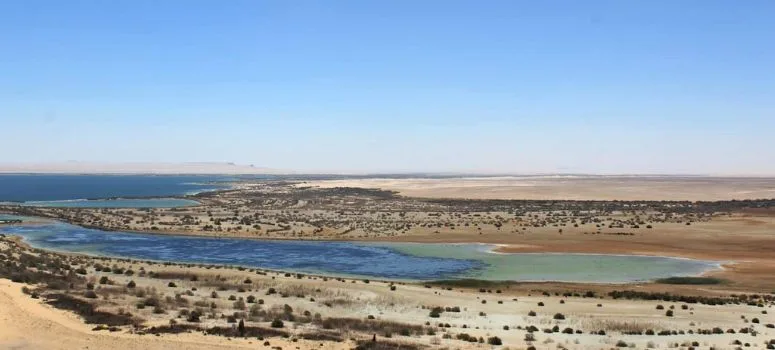
A slower morning in Fayoum before the overland transfer south this day balances craft, landscape, and logistics in a way that feels unhurried even as the route covers ground. Then transfer to Luxor by private vehicle in the afternoon.
Your guide walks you into this small potters' village on the edge of the desert, where Swiss ceramicist Evelyne Porret settled in the 1980s and built a craft community that still operates today. The work coming out of the workshops here, with clean geometric forms in Fayoum clay, is some of the finest functional pottery made in Egypt.
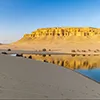
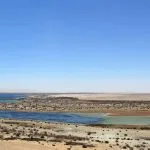
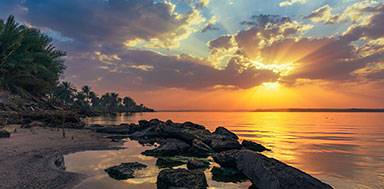
You'll stand at the shore of one of Egypt's oldest natural lakes, a saltwater remnant of the ancient Lake Moeris that once covered the entire Fayoum depression. Migratory birds use this flyway seasonally, and the light off the water in the late morning is the reason photographers keep coming back.
Breakfast, Lunch

Your guide picks you up early for the drive north of Luxor. This is the day most Egyptologists consider the highlight of any serious Egypt itinerary, and the one that no cruise ship passenger ever experiences.

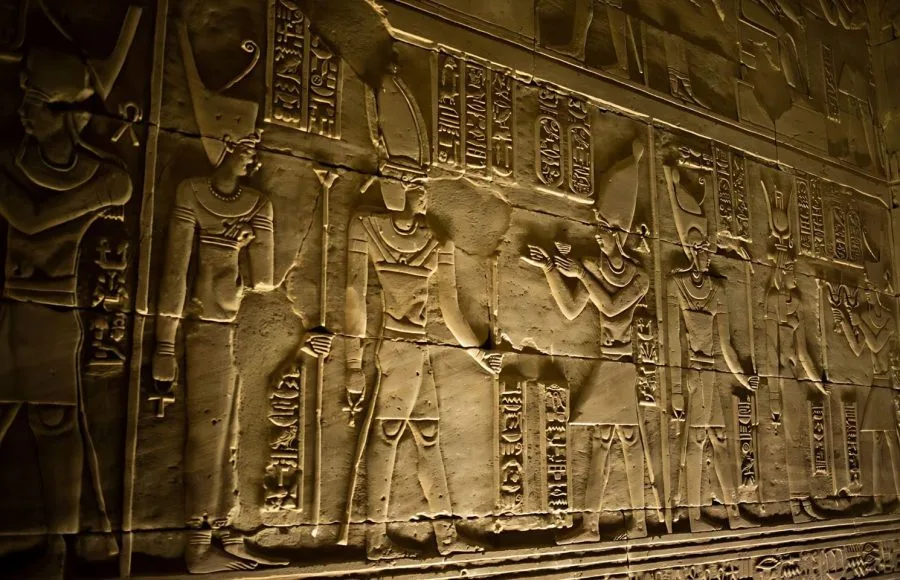
You'll walk into the Hypostyle Hall of the Temple of Seti I and find yourself surrounded by some of the best-preserved painted relief carving in all of Egypt, colours still vivid after 3,300 years. Abydos was Egypt's most sacred city, the burial place of Osiris, and this temple was built as an act of devotion, not administration.
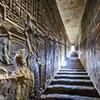
Your guide will bring you to the corridor where 76 royal cartouches are carved in sequence, the names of every pharaoh Seti I considered legitimate. It is one of the most important historical documents in ancient Egypt, carved into a wall rather than written on papyrus.
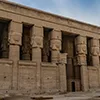
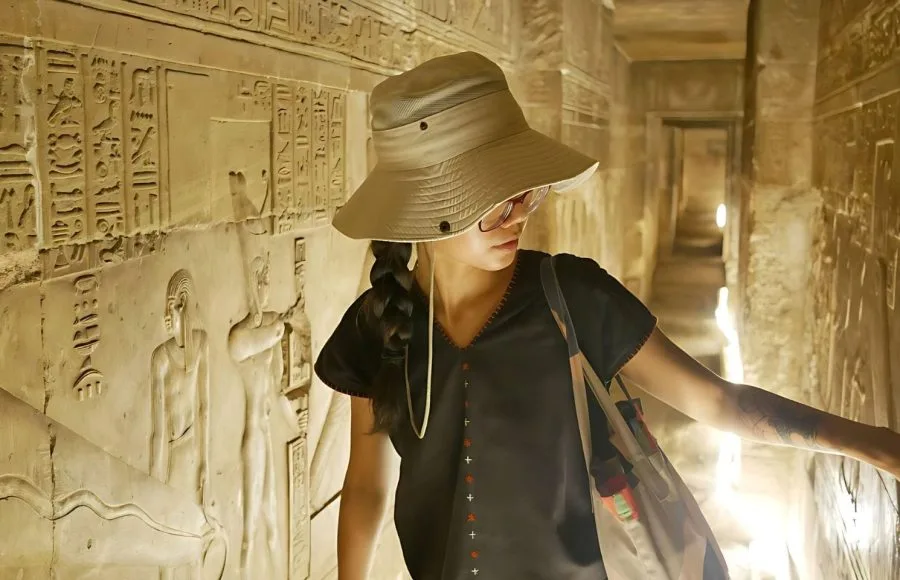
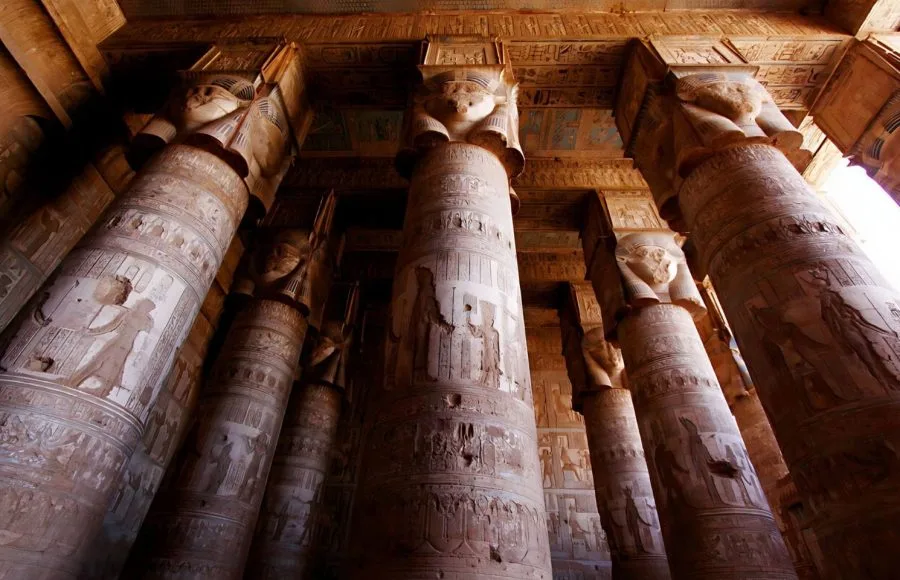
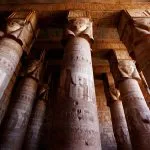
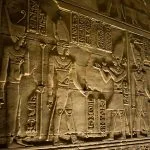
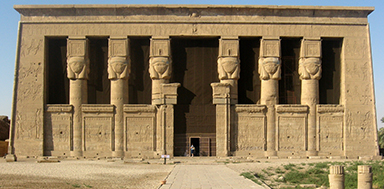
The moment you step inside the hypostyle hall of the Temple of Hathor, the ceiling hits you first, with astronomical paintings covering every surface above your head, including the famous Dendera Zodiac. Construction began under Ptolemy XII and finished under Cleopatra VII, making this one of Egypt's best-preserved temple complexes.
Your guide will take you into the underground crypts below the temple, where ritual objects were stored, narrow passages carved with reliefs that include the controversial Dendera reliefs still debated by Egyptologists today. Very few tour groups make it down here.
Breakfast, Lunch
Arc III · Luxor to Aswan
Royal tombs, Edfu, Kom Ombo, and Philae follow the Nile south
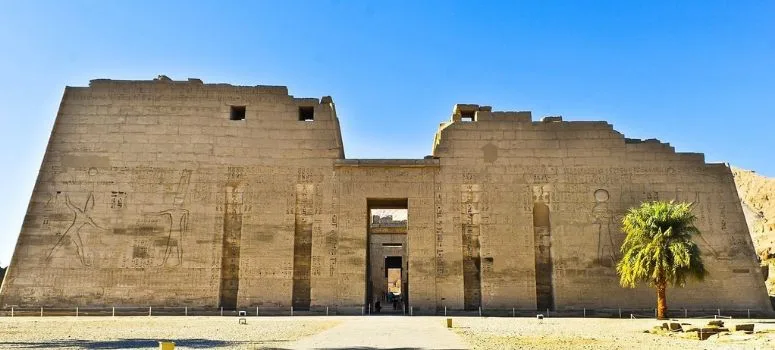
The West Bank opens with the human side of ancient Egypt, not pharaohs, but the workers, artists, and queens who built and populated the greatest necropolis ever created.
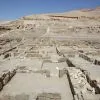
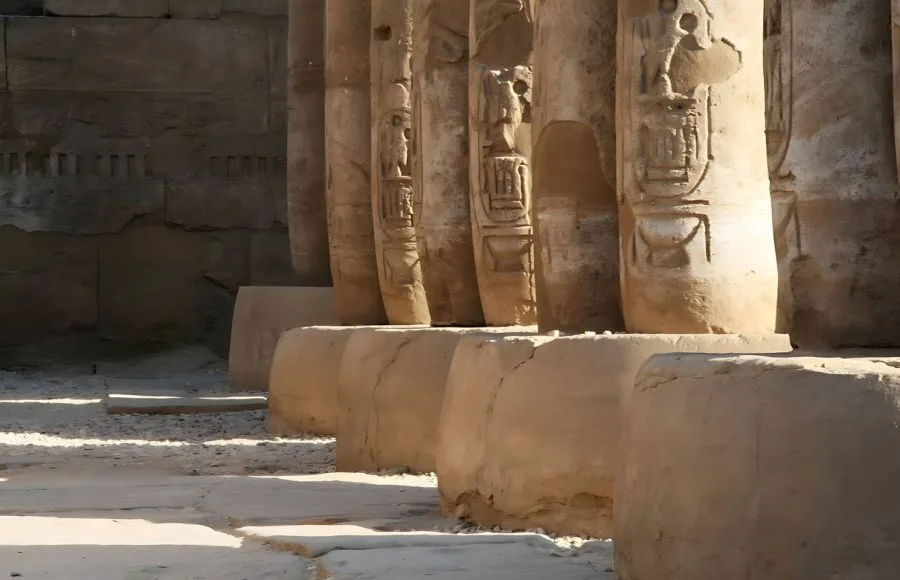
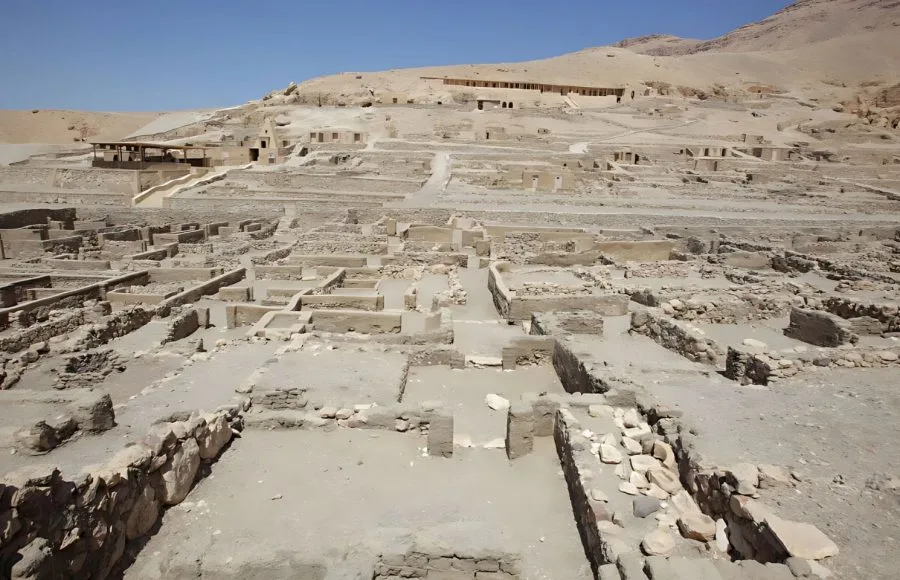
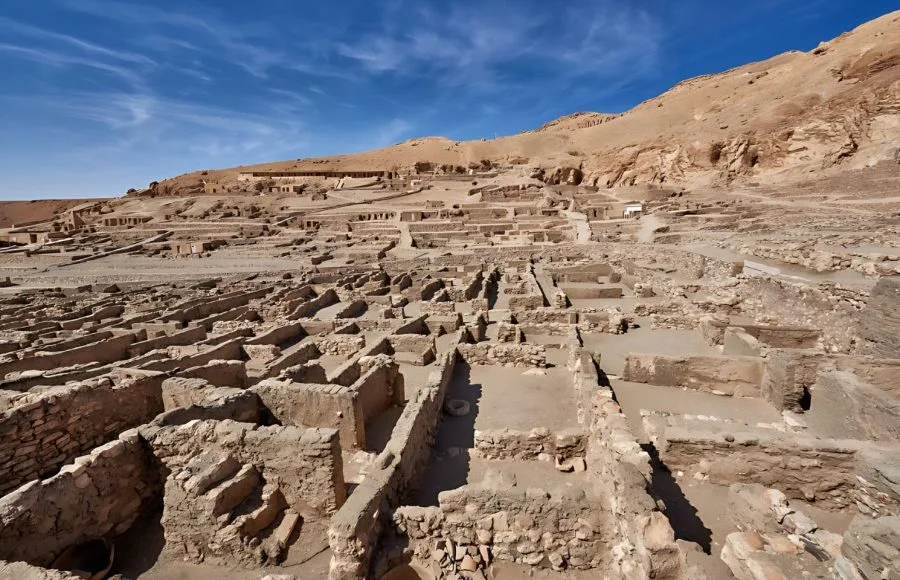
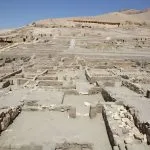
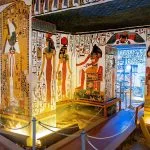
You'll enter the village where the artisans who carved the Valley of the Kings actually lived, a walled community of painters and stonemasons whose own tombs are decorated with the most intimate scenes in Egyptian art. These are not royal propaganda; they show daily life, grief, and belief in a way the royal tombs never do.
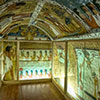
Your guide will take you inside one of the most completely painted small tombs in Egypt, where scenes of the afterlife cover every wall in colours that read as fresh as the day they were sealed. Sennedjem was a servant in the Place of Truth. His tomb is more beautiful than most pharaohs'.
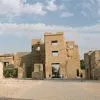
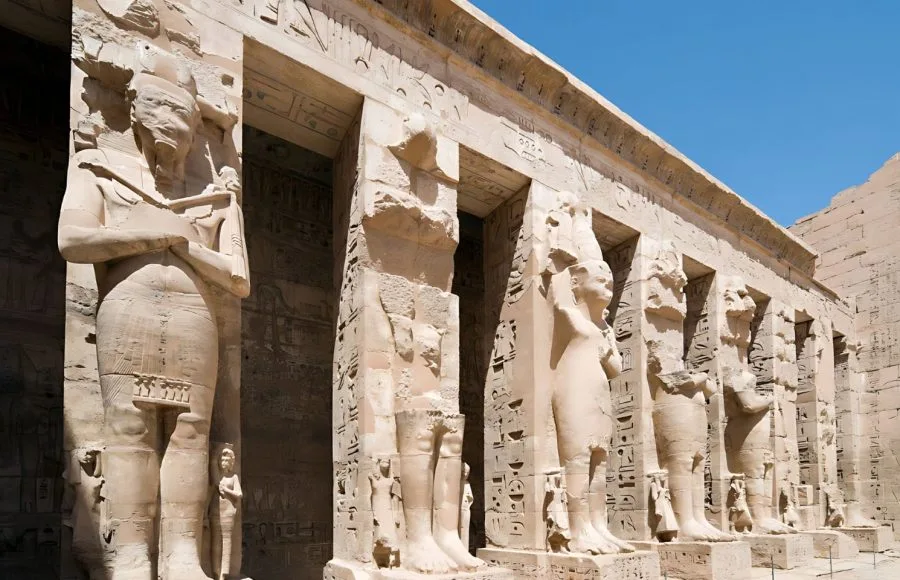
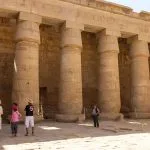
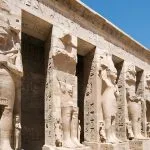
From the outside, it looks fortress-like, with massive gate towers built to impress. Inside, your guide will walk you through the Mortuary Temple of Ramses III, the battle reliefs that cover entire walls, the most detailed military narrative carved in ancient Egypt, still showing traces of original pigment.
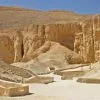
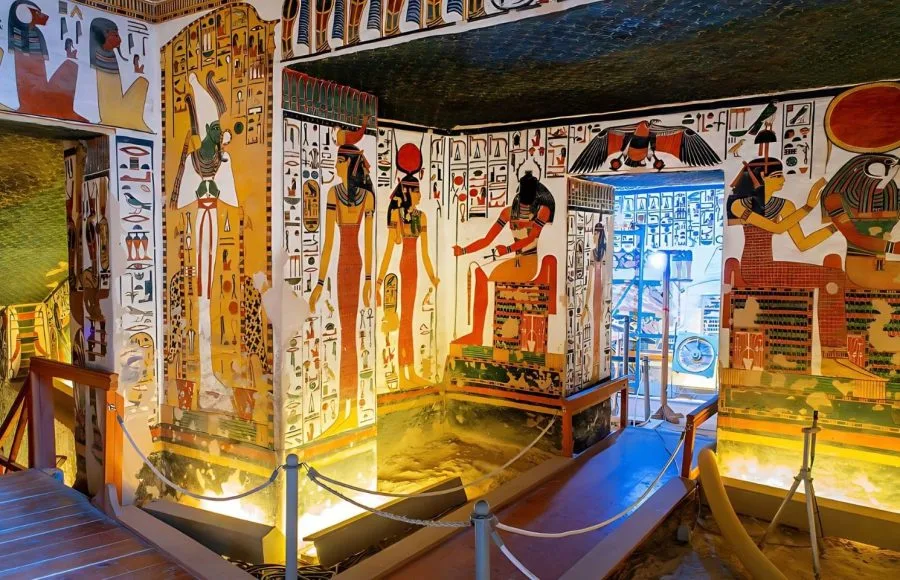
You'll walk through the valley where royal wives and princes were buried, quieter and far less visited than the Valley of the Kings on the other side of the hill. The Tomb of Nefertari, if open, is the most elaborately painted in Egypt, every centimetre of wall covered in scenes from the Book of the Dead.
Breakfast, Lunch

The defining day of any serious 10 day luxury Egypt overland itinerary includes royal tombs in the morning, the greatest temple complex ever built in the afternoon.
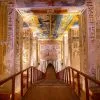
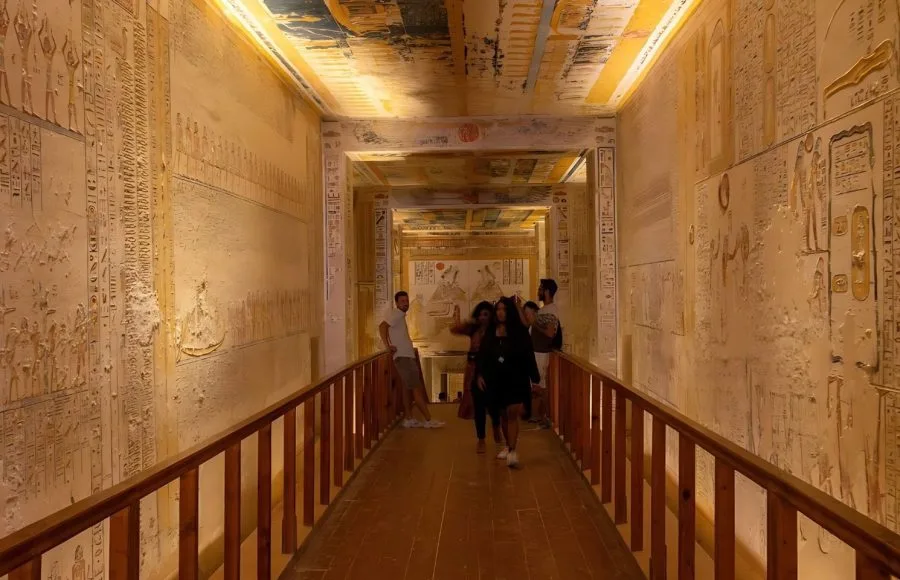
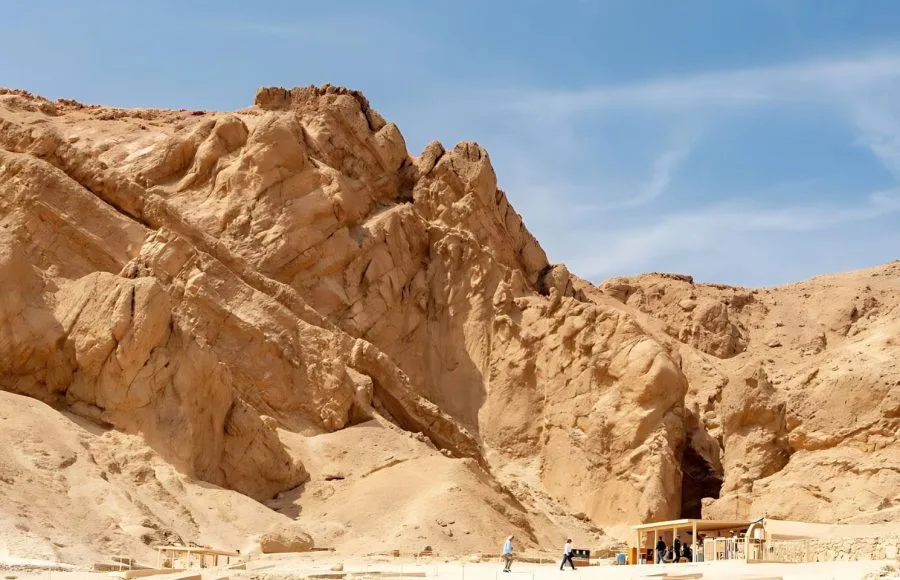
Your guide will walk you into three tombs chosen for their variety: deep corridors, astronomical ceilings, and painted walls that served as guidebooks for the pharaoh's journey through the underworld. There are 63 tombs cut into this valley the ones you enter depend on which are open on the day.
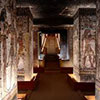
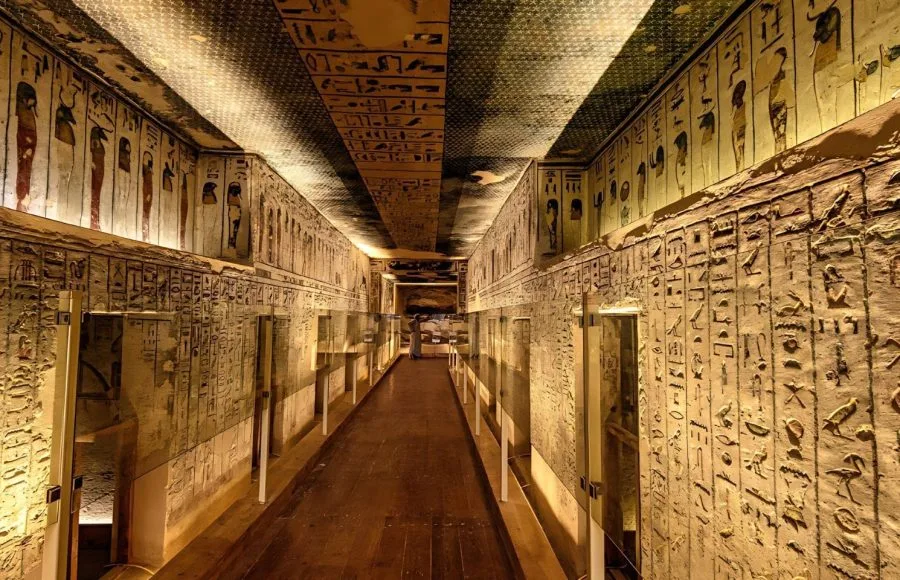
You'll descend the longest and deepest tomb in the Valley of the Kings, over 100 metres into the bedrock, where the astronomical ceiling of the burial chamber was the first ever found in an Egyptian tomb. Seti I died before it was finished. The lower chambers show the transition from sketch to completed painting mid-wall.
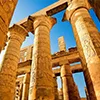
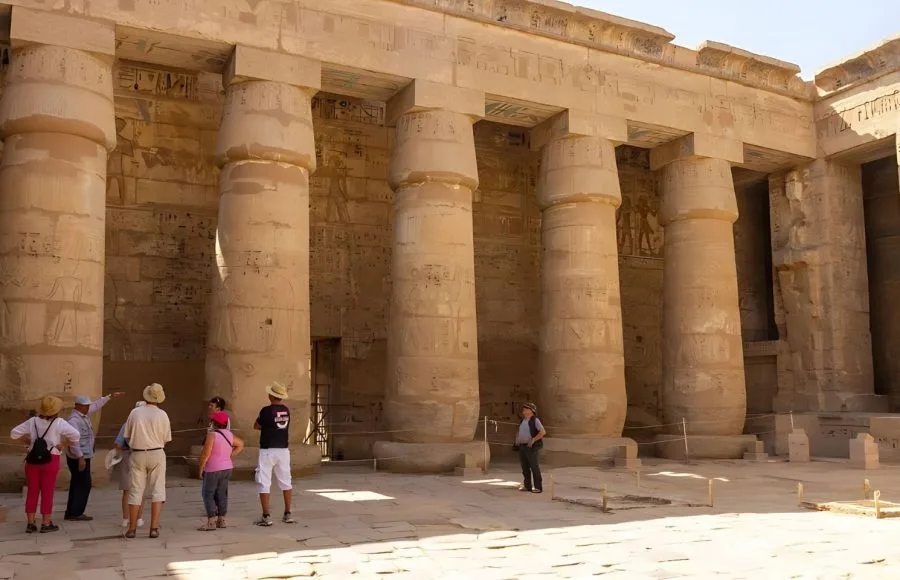
Your guide will walk you into the Great Hypostyle Hall, where 134 columns rise so close together the sky almost disappears above you. It took more than 2,000 years and 30 pharaohs to build what you're standing inside, the largest religious building ever constructed. For travelers who prefer broader route coverage across multiple regions, a grand overland Egypt 5 cities journey offers a larger circuit while maintaining the same private-guided style.
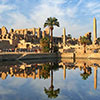
You'll circle the lake where priests performed ritual purification before temple ceremonies, now silent and bordered by the rear walls of the complex. At this scale, the lake itself is the size of a city block — and almost every visitor walks past it without stopping.
Breakfast, Lunch

After hotel check-out in Luxor, you'll transfer by private vehicle to Aswan, where a more relaxed pace and distinctive Nubian character await. This is Egypt's southernmost stop on the itinerary, where Nubian culture begins to replace the pharaonic.

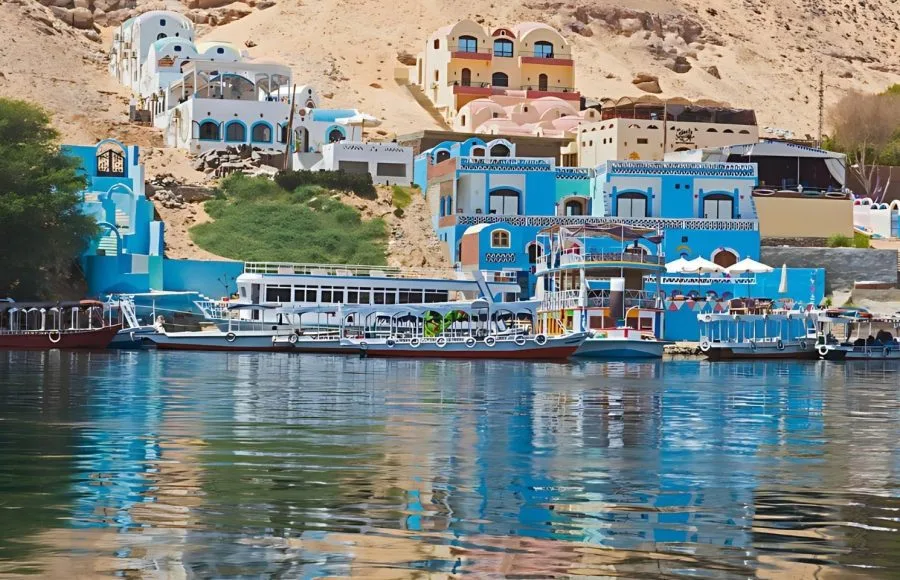
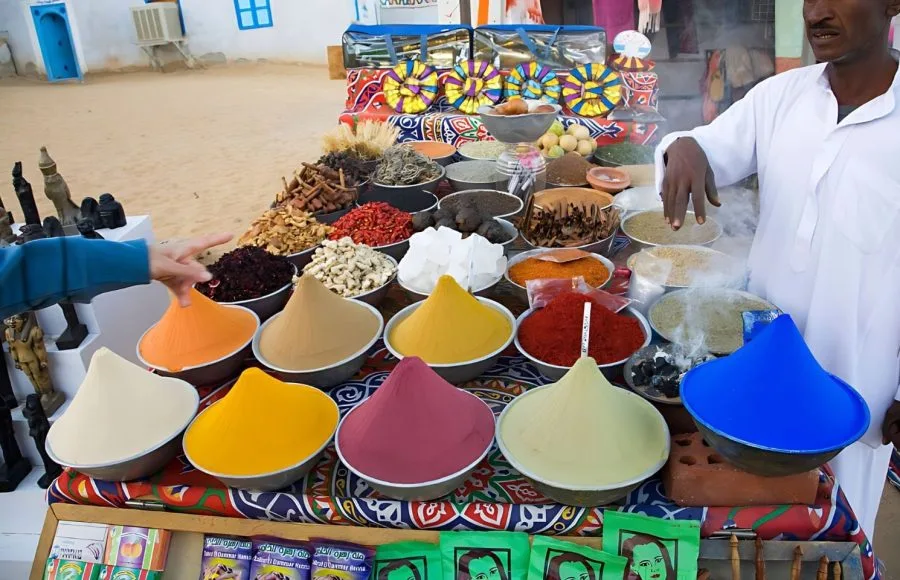
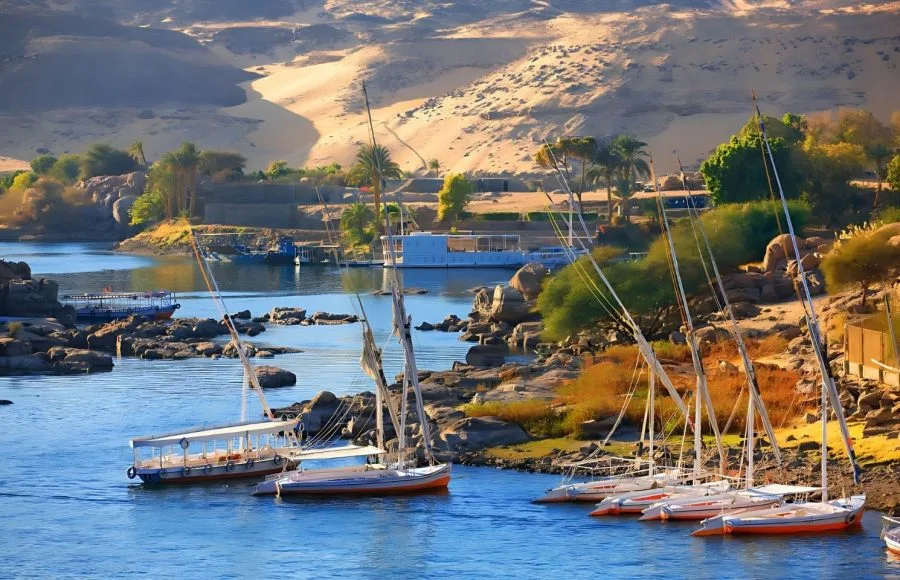
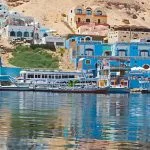
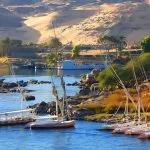
Your guide takes you to a traditional Nubian village by local felucca, where the painted houses and the rhythm of daily life on the riverbank are entirely unlike anything you've seen in Cairo or Luxor. The Nubian people were displaced by the Aswan High Dam. The villages here exist because of a deliberate effort to preserve what was nearly lost.

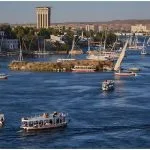
You'll walk the archaeological site at the island's southern tip, where excavations have uncovered continuous human settlement stretching back 5,000 years longer than almost any inhabited site in the world. The ancient Nilometer carved into the rock here was used to measure the annual flood and calculate the harvest tax.
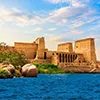
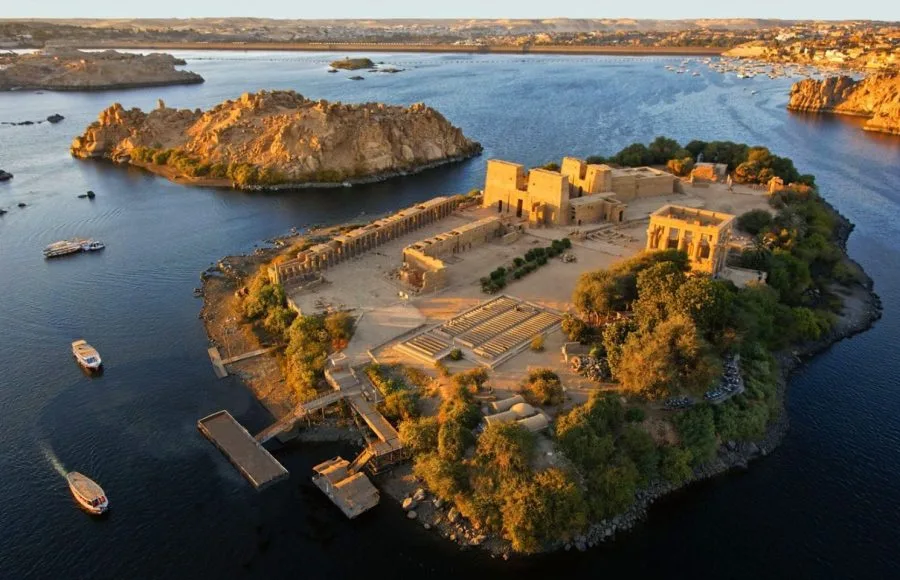
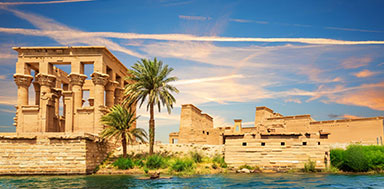
Your guide takes you by motorboat to the island where the Temple of Isis was reassembled stone by stone after UNESCO rescued it from the rising waters of Lake Nasser. The setting, a complete temple on a Nile island surrounded by water, is unlike any other temple experience in Egypt.
Breakfast, Lunch
Arc IV · Aswan to Cairo
Nubian heritage gives way to NMEC before the final departure

The final morning in Aswan reaches into Lake Nasser territory. This is the part of the itinerary that no standard Luxor-Aswan overland ever includes, and the reason this route earns its off-beaten-path Egypt designation. Then, a domestic flight from Aswan to Cairo in the afternoon.
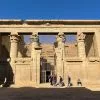
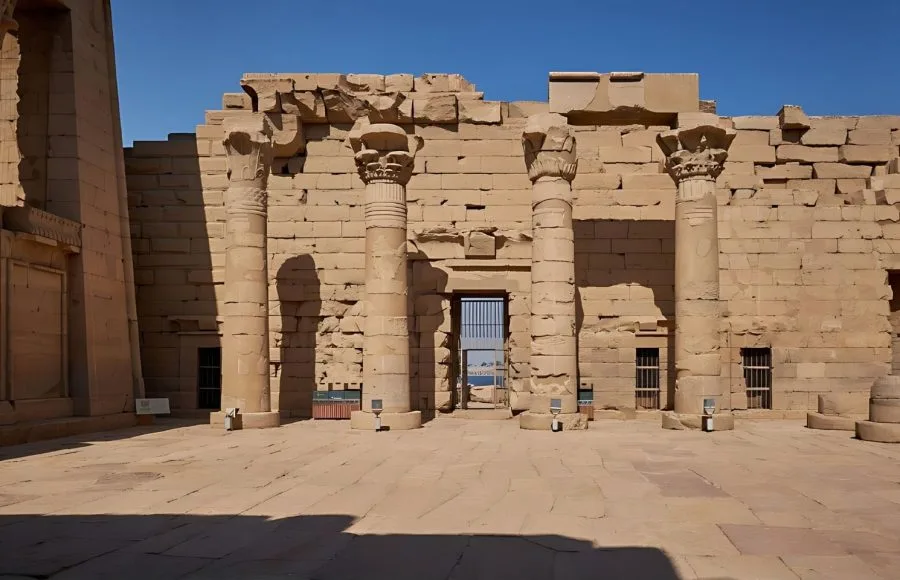
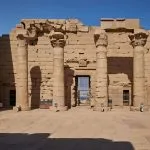
You'll reach this temple by boat across Lake Nasser, approaching the way the ancient Nubians did from the water. Kalabsha is one of the largest freestanding temples in Nubia, also rescued and relocated by UNESCO, and on most mornings, you will have it almost entirely to yourself.
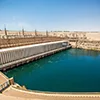
Your guide walks you to the viewing platform where the full scale of the dam registers 3.6 kilometres across, holding back a reservoir that stretches 500 kilometres into Sudan. The engineering here is inseparable from the political story of modern Egypt, and your guide will explain both. Travellers wanting to combine a similar private archaeological journey with Red Sea downtime often continue with a luxury Egypt overland with a Hurghada beach resort experience after Upper Egypt exploration.
Breakfast, Lunch

Your Tripidays representative transfers you from your Cairo hotel to Cairo International Airport for your international departure.

Arrive at the airport in time for your departure, carrying with you unforgettable recollections of Egypt's ancient wonders and modern marvels, ready to share your enriching stories with friends and family back home. Travelers looking for a luxury Nile cruise Egypt alternative often choose routes like this, where remote landscapes and archaeological access replace the traditional Luxor–Aswan sailing circuit.
Breakfast
* You can let us know if you'd like to customize your tour itinerary to meet your needs. We value your input and aim to accommodate your requirements.
This tour includes 9 nights in 5-star hotels across Cairo, Luxor, and Aswan, a private Egyptologist guide throughout, all site entrance fees, two domestic flights (Cairo–Luxor and Aswan–Cairo), daily breakfast, lunch on all touring days, and all overland transfers by private vehicle. No cruise ship and no beach extension are included; this is a pure overland Egyptology itinerary.
This is the only 10-day overland itinerary that combines Wadi El Hitan, Tunis Village, Abydos, Dendera, Deir El-Medina, and Kalabsha Temple in a single private journey, all sites structurally unreachable by Nile cruise.
Wadi El Hitan, the Valley of the Whales, is a UNESCO World Heritage Site in the Fayoum desert where fossilised whale skeletons lie exposed across open sand, the remains of creatures that swam here 40 million years ago. It is included because it is the single site most impossible to reach from a cruise ship, and the one that defines this tour's off-beaten-path Egypt positioning.
Three tombs are included in the standard itinerary, selected on the day based on which are open, always chosen for the variety of depth, ceiling art, and painted narrative. The Tomb of Seti I is included as a confirmed separate-ticket visit: it is the longest and deepest tomb in the valley, over 100 metres into the bedrock, with an astronomical ceiling that no other royal tomb matches.
Yes, two domestic flights are included: Cairo to Luxor at the start of the Luxor leg, and Aswan to Cairo on Day 9 before departure. No overnight trains, no wasted travel days, and no self-arranged transfers between cities.





10 Days / 9 Nights
Cairo Airport
Cairo / Luxor/ Dendera / Abydos / Aswan / Abu Simbel
10 Days / 9 Nights
Cairo Airport
Cairo / Aswan / Abu Simbel / Luxor / Hurghada
8 Days / 7 Nights
Cairo International Airport
Cairo / Luxor / Esna / El Kab / Edfu/ Gebel el-Silsila / Kom Ombo / Aswan
9 Days / 8 Nights
Cairo Airport
Cairo / Aswan / Abu Simbel / Edfu / Kom Ombo / Luxor
All things you should know before visiting Egypt & Beyond


Tripidays Egypt Tours has been offering an exceptional range of Egypt tours, vacation packages, Nile cruises, day trips, and shore excursions tailored to meet the diverse interests of travelers worldwide for over 45 years.