Kenya is one of East Africa’s most distinctive destinations, known for its sweeping savannahs, extraordinary wildlife, mountain landscapes, freshwater lakes, and Indian Ocean coastline. From the open plains of the Maasai Mara to the elephant-filled landscapes of Amboseli, the country brings together some of Africa’s most recognizable natural environments with vibrant cities and historic coastal communities.
Kenya’s appeal extends beyond its famous safaris. Nairobi offers an introduction to modern Kenyan life, the Great Rift Valley reveals a dramatic landscape of lakes and escarpments, and the coast introduces a different atmosphere shaped by Swahili heritage, historic ports, tropical beaches, and maritime traditions. These contrasts make Kenya a destination with several distinct regions rather than a country defined by a single experience.
For travelers exploring East Africa, Kenya can stand on its own or fit into a wider journey connecting Tanzania, the Serengeti, Zanzibar, and other destinations across the region. Exploring Africa’s top destinations can help travelers discover how Kenya fits into the continent’s wider range of landscapes and travel experiences.
Kenya is located in East Africa, along the Indian Ocean. It shares borders with Tanzania to the south, Uganda to the west, South Sudan to the northwest, Ethiopia to the north, and Somalia to the east. The Indian Ocean coastline lies to the southeast, connecting the country to coastal destinations and historic Swahili settlements.
Kenya covers approximately 580,367 square kilometers. Its varied geography includes coastal plains, arid and semi-arid northern regions, fertile central highlands, volcanic landscapes, and the Great Rift Valley. The country is also home to Mount Kenya, expansive savannahs, freshwater lakes, and internationally recognized wildlife reserves.
These contrasting landscapes support diverse wildlife habitats and create opportunities to experience safari destinations, mountain scenery, lakes, and coastal environments within one country.
Kenya has a varied climate influenced by altitude, geography, and proximity to the Indian Ocean. Coastal areas are generally hot and humid, while the central highlands, including Nairobi, tend to have milder temperatures. Northern and northeastern regions are typically hotter and drier.
Rainfall generally follows two main seasons: the long rains from around March to May and the short rains from around October to December, although timing and intensity vary by region and year. These seasonal differences influence landscapes, wildlife viewing, and travel conditions across the country.
Kenya’s main cities and towns serve as centers for business, transport, tourism, and regional travel.
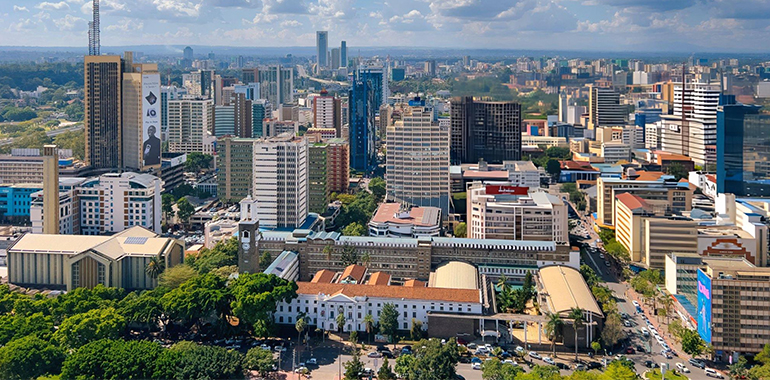
Nairobi is Kenya’s capital and one of East Africa’s principal urban centers. It combines business districts, residential neighborhoods, museums, markets, restaurants, and cultural attractions with an unusual proximity to wildlife habitats.
One of the city’s best-known features is Nairobi National Park, where wildlife can be observed against a backdrop of the capital’s skyline. The park is home to species including lions, giraffes, buffalo, and rhinoceroses, making it a distinctive natural attraction close to a major city.
Nairobi National Museum offers insight into Kenya’s history, natural heritage, and cultural diversity. Other attractions, including the Giraffe Centre and the David Sheldrick Wildlife Trust’s elephant orphanage, are associated with wildlife education and conservation, subject to their visitor arrangements and opening policies.
The city also provides a view of contemporary Kenya through its food, creative industries, shopping areas, and everyday urban life. It is often the starting or finishing point for journeys to national parks and other regions, but it can also be included as a destination in its own right.
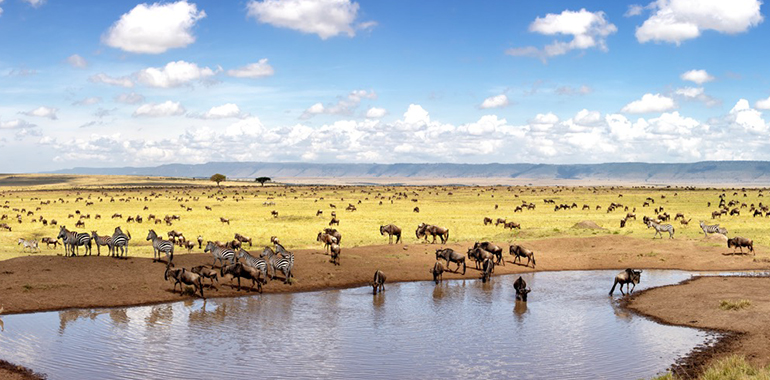
The Maasai Mara National Reserve is one of Kenya’s best-known destinations and a defining part of its international reputation for wildlife viewing. Located in southwestern Kenya near the Tanzanian border, the reserve is characterized by rolling grasslands, open plains, seasonal rivers, and habitats that support a remarkable variety of wildlife.
Lions, elephants, leopards, cheetahs, buffalo, giraffes, zebras, and numerous antelope species are among the animals found in the wider Mara ecosystem. Game drives provide opportunities to observe wildlife in its natural environment, while the open terrain can make animal sightings particularly rewarding.
The Maasai Mara is also closely associated with the Great Wildebeest Migration, when large herds of wildebeest and zebras move between Tanzania’s Serengeti ecosystem and the Mara region. The timing and movement of the herds vary with seasonal rainfall, making the migration a natural event rather than a guaranteed spectacle on specific dates.
For a broader introduction to safari experiences, wildlife viewing, and responsible animal encounters, read our African wildlife and safari travel guide.
Amboseli National Park is located in southern Kenya near the Tanzanian border and is particularly recognizable for its views of Mount Kilimanjaro. The mountain rises beyond the park’s open plains, creating one of East Africa’s most distinctive landscapes.
Amboseli is well known for its elephant populations. These animals can often be seen moving across the plains or gathering around wetlands sustained by underground water flowing from the Kilimanjaro region. The park’s mix of grassland, seasonal lakebed, marshes, and woodland also supports a range of other wildlife and bird species.
The landscape changes with the seasons. Dry periods can expose dusty plains and mirage-like views, while wetter conditions transform parts of the park into shallow wetlands that attract animals and birds. This variety makes Amboseli appealing to wildlife enthusiasts and photographers interested in both animal encounters and expansive scenery.
Tsavo East and Tsavo West form part of one of Kenya’s major protected wilderness regions. Together, they offer a different atmosphere from the more open grasslands of the Maasai Mara and Amboseli, with vast areas of bushland, rocky outcrops, seasonal rivers, and distinctive red-earth landscapes.
Tsavo East is known for its expansive, relatively open terrain and the wildlife found around the Galana River and other water sources. Elephants are a familiar sight in the park, alongside lions, giraffes, zebras, and a variety of antelope species. The scale of the landscape gives visitors a sense of the size and remoteness of Kenya’s wilderness areas.
Tsavo West presents a more varied landscape, with volcanic hills, rocky terrain, springs, and patches of dense vegetation. Mzima Springs is one of its notable natural attractions, while the wider park offers opportunities to explore a different combination of habitats and scenery.
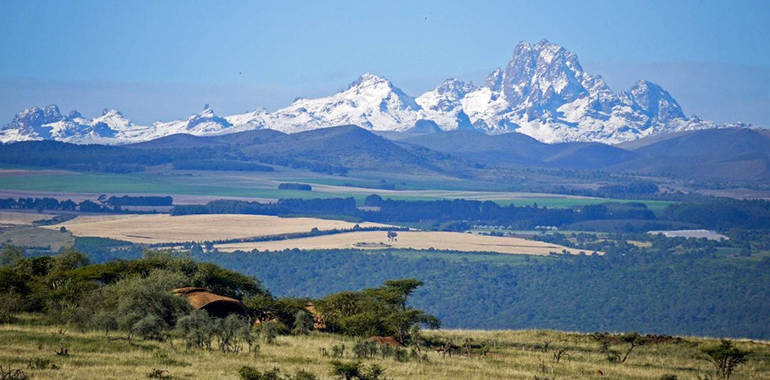
Mount Kenya is the country’s highest mountain and one of its most important natural landmarks. Its rugged peaks, forested lower slopes, alpine vegetation, and surrounding highlands create a landscape that differs considerably from the country’s better-known savannah reserves.
The mountain attracts trekkers, climbers, and visitors interested in highland scenery. Routes vary in difficulty and duration, and reaching the higher elevations requires appropriate preparation and suitable conditions. Even for travelers who do not intend to climb, the surrounding region offers views of the mountain and access to the wider central highlands.
Samburu National Reserve and Northern Kenya
Northern Kenya offers a different landscape from the country’s more frequently visited southern safari regions. Samburu National Reserve lies in a dry, semi-arid environment shaped by rugged hills, open plains, and the Ewaso Ng’iro River, which provides an important source of water for wildlife.
The reserve is known for several species associated with the drier northern ecosystems, including Grevy’s zebra, reticulated giraffe, Beisa oryx, gerenuk, and Somali ostrich. These animals give Samburu a distinctive wildlife character and make it an interesting addition to a broader Kenyan safari.
The river and its surrounding vegetation create a contrast with the dry landscape, attracting elephants, birds, and other animals. Wildlife viewing is often closely connected to these areas where water and vegetation support animal activity.
Beyond Samburu, northern Kenya includes remote landscapes around Lake Turkana and the Chalbi Desert. These regions are less commonly included in shorter itineraries, but they reveal another side of the country through volcanic terrain, arid environments, and communities whose traditions are closely connected to the region.
Mombasa is one of the coast’s principal urban centers and an important historic port. Its Old Town contains narrow streets, traditional architecture, carved wooden doors, and influences reflecting the region’s long connections with African, Arab, Persian, and European trading networks.
Fort Jesus is one of Mombasa’s most significant historic landmarks. Built by the Portuguese in the late sixteenth century, the fort provides insight into the struggle for control of Indian Ocean trade routes and the many cultural influences that shaped the coastal region. It is recognized as a UNESCO World Heritage Site.
Beyond the historic center, Mombasa provides access to coastal beaches, resorts, and marine activities. Its position also makes it a useful connection point for exploring other parts of Kenya’s Indian Ocean shoreline.
Diani Beach
South of Mombasa, Diani Beach is one of Kenya’s best-known coastal destinations. Its white-sand shoreline, palm trees, and turquoise waters create a setting that contrasts with the country’s dry inland landscapes and wildlife reserves.
The beach is associated with swimming, relaxation, and a range of marine and water-based activities, depending on local conditions. The surrounding area also provides access to coastal forests, local communities, and excursions that introduce another dimension of the Kenyan coast.
The beach is only one part of Kenya’s coastal character, but it illustrates why the country appeals to travelers seeking both wildlife experiences and time beside the sea.
Kenya is home to many communities, languages, and cultural traditions, with regional identities shaped by geography, history, livelihoods, and connections between neighboring areas. Its cultural landscape includes pastoral communities, farming regions, urban centers, and coastal societies with long-standing maritime traditions.
Kenya’s landscapes are equally varied. Savannahs, forests, mountains, lakes, dry northern regions, and coastal ecosystems all contribute to the country’s identity. These environments have shaped settlement patterns and livelihoods while supporting the wildlife that makes Kenya internationally significant.
Travelers interested in learning more about cultural traditions and respectful interactions across the continent can explore our guide to African culture and customs.
Tripidays offers travelers opportunities to explore Kenya as part of a wider African journey. For those who want to combine East African wildlife experiences with the ancient monuments of Egypt, our Egypt and African safari tours bring together safari destinations and Egypt’s historic highlights in one holiday. For more guidance on choosing destinations, comparing routes, and organizing a multi-country journey, see our guide on how to plan an Africa trip.


Tripidays Egypt Tours has been offering an exceptional range of Egypt tours, vacation packages, Nile cruises, day trips, and shore excursions tailored to meet the diverse interests of travelers worldwide for over 45 years.