
Morocco is relatively easy to visit, but first-time travelers can avoid a lot of unnecessary hassle by understanding a few practical details before they arrive. Morocco travel tips are especially useful for planning how to handle money, taxis, medinas, luggage, mobile data, accommodation, tipping, and travel between cities.
At Tripidays, we know that a well-planned Morocco trip is not only about choosing where to go; it is also about knowing how to navigate the practical details once you arrive. This guide covers the everyday decisions that can make traveling in Morocco easier, from managing cash and getting around to staying connected and planning realistic travel days.
For a broader overview of Morocco, including what to expect as a first-time visitor and how to approach your trip, see our Morocco Travel Guide for first-time visitors.
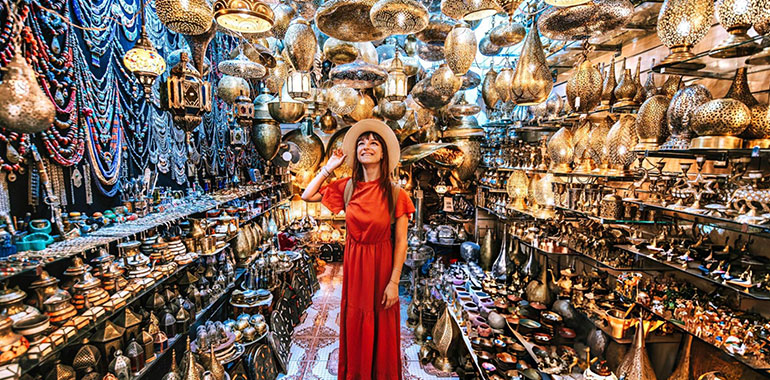
20 Practical Morocco Travel Tips
1. Decide how you want to travel before planning your route
Morocco can be explored independently, with a private driver, through organized tours, or through a combination of trains, taxis, and other local transport.
The best option depends on what you value most.
Independent travel can give you more flexibility, while organized travel can simplify transfers between cities and reduce the amount of daily logistics you need to manage.
If your itinerary covers several cities, the practical question is not only where do I want to go? but also how do I want to move between them?
2. Build your trip around the time you actually have
One of the easiest mistakes is trying to fit too much into a short Morocco trip.
Morocco’s cities may look relatively close together on a map, but a journey involves more than the distance between two points. Transfers, hotel check-ins, time spent navigating medinas and sightseeing all add up.
A shorter trip is often better when it concentrates on a manageable number of places rather than trying to cover the entire country.
For destination ideas, see our guide to the best places to visit in Morocco.
3. Treat long transfers as part of the travel day
A journey between two destinations involves more than the transport itself. You also need to allow time for departure, stops, arrival, hotel check-in, and getting to your accommodation.
If a transfer takes several hours, avoid assuming you will still have a full sightseeing day at both ends. Building realistic travel days will make your itinerary much easier to manage
4. Carry some Moroccan dirhams
Morocco uses the Moroccan dirham (MAD), and having some local currency is useful for everyday purchases.
Cards are increasingly practical in many hotels, restaurants and larger businesses, but cash remains important for smaller purchases and situations where card payment is unavailable.
Avoid arriving with the assumption that you can pay for everything electronically.
A practical approach is to keep a modest amount of cash available for the day and replenish it as needed.
5. Don’t rely on a single payment method
Using a combination of cash and cards gives you more flexibility.
Keep some Moroccan dirhams for smaller purchases and situations where cards are not accepted, while having a card available for larger or unexpected expenses. It is also sensible to keep your payment methods separate rather than putting everything in one wallet.
6. Know when bargaining is appropriate
Bargaining is part of shopping in many Moroccan souks and traditional markets, but it does not mean that every price in Morocco should be negotiated.
The practical rule is simple: bargain where bargaining is expected, and accept fixed prices where they are clearly presented.
If you are interested in the cultural context behind Moroccan shopping and etiquette, our guide to [Morocco culture and customs] goes further.
7. Keep only the cash you need for the day with you
You do not need to carry your entire travel budget while sightseeing.
Take a practical amount for the day’s expected purchases and keep additional money and important documents stored securely elsewhere. This also makes it easier to keep track of what you are spending.
For advice specifically focused on personal security, see our Morocco travel safety tips.
8. Understand the difference between petit and grand taxis
Morocco has different types of taxis for different kinds of journeys.
Petit taxis generally operate within cities, while grand taxis are commonly used for longer journeys or travel beyond the local city network. The exact system can vary between destinations, so check how local taxis work rather than assuming the same arrangement everywhere.
For longer journeys with luggage, also compare taxis with trains, private transfers, or organized transport.
9. Use trains when they make sense
Morocco has a useful rail network connecting several major destinations, making trains a practical choice for some city-to-city journeys.
However, trains are not the answer to every route.
If your itinerary includes places away from the main rail network, you may need to combine rail travel with road transport. Check the current timetable and route before relying on a particular connection, especially when coordinating with hotel check-in or another departure.
10. Think about the complete door to door journey
The main transport leg is only part of the journey.
You might take a train between two cities and then need a taxi or another road transfer to reach your accommodation. This becomes particularly important when staying inside a historic medina where vehicles may not be able to reach the property itself.
When comparing routes, consider the journey from your current accommodation all the way to the next one.
11. Give yourself extra time around medinas
Moroccan medinas are one of the country’s defining travel experiences, but their narrow streets can make navigation slower than expected.
Cars may not reach every area, roads can be confusing for first-time visitors, and your accommodation may be located inside a pedestrianized area.
Save the exact location of your accommodation before leaving your previous stop, and if necessary, ask the property about the best meeting point or arrival instructions.
Do not judge the ease of reaching a hotel simply by looking at its address on a map.
12. Choose accommodation for location, not just appearance
A beautiful riad can look perfect online, but location matters just as much.
Before booking, check:
- How close is it to the main area you want to explore?
- Can vehicles reach it directly?
- Will you need to walk with luggage?
- Is the entrance easy to identify?
- How will you arrive if you reach the city after dark?
A slightly less photogenic property in a convenient location can sometimes make your trip considerably easier.
13. Check the layout before booking a riad
A riad can offer a memorable stay, but it may operate differently from a conventional hotel.
Many have rooms arranged around an interior courtyard, while some have narrow staircases and no elevator. If you have heavy luggage or accessibility requirements, check the property’s layout before booking.
The same applies if you simply prefer easy vehicle access and fewer stairs.
14. Keep your luggage practical
If your Morocco itinerary includes several cities, large suitcases can become inconvenient.
Medina streets, steps, narrow entrances and occasional vehicle restrictions can make compact luggage much easier to manage.
You do not need to pack for every possible situation. Focus on versatile clothing, comfortable footwear and items that suit the season and activities on your route.
If you are adding the Sahara to your trip, your packing needs can be different. Our Morocco Sahara Desert guide covers desert-specific practical considerations in more detail.
15. Arrange mobile data before you need it
Reliable mobile data can make navigating Morocco much easier.
Depending on your phone, you may use a local SIM card, eSIM, or an international roaming plan. Check compatibility and activation requirements before your trip rather than waiting until you arrive and discover that your preferred option does not work with your device.
Download important maps and travel information for offline use as well.
Having mobile data is useful, but having an offline backup is smarter.
16. Keep offline copies of important information
Do not rely entirely on an internet connection to access your travel information.
Save offline copies of:
- hotel names and addresses
- booking confirmations
- transport details
- passport information
- travel insurance information
- important contact numbers
- your planned route
A screenshot or downloaded document can be useful when your connection is slow or unavailable.
17. Leave space between important plans
Avoid building an itinerary where every transfer, activity, and reservation has to happen at an exact time.
Delays happen, navigation can take longer than expected, and you may simply want to spend more time somewhere than originally planned. Leaving some flexibility between important arrangements makes the trip less stressful.
This is particularly useful on days involving long-distance transportation.
18. Carry a practical day bag
A small day bag can make sightseeing easier.
Useful items may include:
- Reusable water bottle
- Portable phone charger
- Sunscreen
- Sunglasses
- Tissues
- Hand sanitizer
- Comfortable walking shoes
- A light layer
The exact contents should depend on the season, destination, and activities planned for that day.
19. Keep tipping simple
Tipping is common in Morocco, particularly for services such as guides, drivers, hotel staff and restaurant service.
The amount can depend on the type of service, its quality and the circumstances. You do not need to turn tipping into a complicated calculation every time you pay for something.
Keep some small cash available and treat tipping as part of your travel budget rather than something to figure out at the last minute.
20. Give yourself time to adjust to a different travel rhythm
Not everything in Morocco will operate at the pace or in the same way you are accustomed to at home.
Transport, shopping, meals, accommodation, and daily interactions may require a little more patience or flexibility than you expect. Instead of trying to make every part of the trip follow a strict schedule, leave room for unfamiliar situations and ask when something is unclear.
That flexibility can make navigating Morocco much easier.
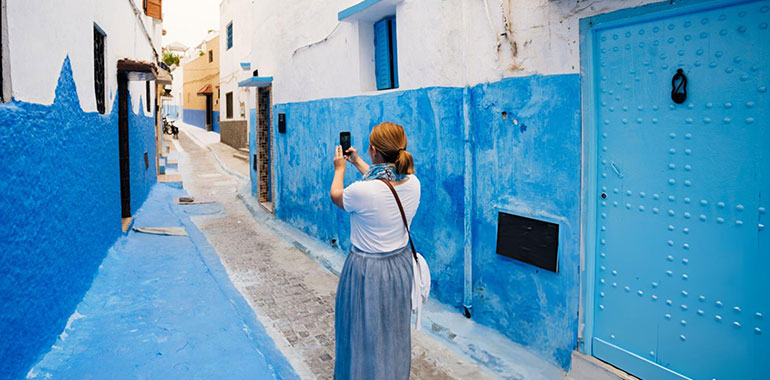
Should You Travel Around Morocco Independently or With a Tour?
There is no single right answer.
Independent travel can suit travelers who enjoy building their own schedules and managing transport themselves. An organized trip can be more convenient when the itinerary covers multiple destinations, particularly when it involves several transfers and different types of transportation.
The important question is how much logistical work you want to handle yourself.
For travelers combining Morocco with Egypt, organized Egypt and Morocco tour packages can simplify the overall journey while keeping the two-country itinerary together.
Tripidays offers different Egypt and Morocco itineraries, from shorter city-focused journeys to longer routes that add a Nile Cruise, Abu Simbel, or the Sahara. The right option depends on how much time you have and which experiences matter most to you.
Final Thoughts
The best Morocco travel tips are not about making your trip rigid. They are about removing avoidable problems, so you have more time to enjoy the country.
Plan your transport realistically, carry practical amounts of cash, make your accommodation easy to reach, keep your travel information accessible offline, and leave room in your schedule.