
Dubai’s food scene is as diverse as the city itself, from traditional Emirati food and Gulf specialties to Arabic favorites, street food, international cuisine, dates, sweets, and Arabic coffee. For travelers wondering what to eat in Dubai, the city offers plenty of ways to experience both its local culinary traditions and its multicultural food scene.
Trying Dubai food is about more than finding a good meal. Traditional dishes can reveal the influence of the Arabian Peninsula’s desert and coastal environment, historic trade routes, hospitality traditions, and ingredients such as rice, dates, meat, seafood, spices, and cardamom.
In this Dubai food guide, Tripidays explores the best traditional Emirati dishes and popular Arabic foods to try in Dubai, along with street food, desserts, drinks, places to experience local cuisine, food etiquette, dietary options, and practical tips for first-time visitors.
What Food Is Dubai Known For?
Dubai is known for a mix of traditional Emirati and Gulf cuisine, Arabic dishes, international food, and modern dining experiences.
Traditional Emirati food often features ingredients such as rice, meat, seafood, dates, spices, yogurt, and legumes. Dishes such as machboos, harees, thareed, luqaimat, and balaleet offer a taste of the region’s culinary traditions.
However, Dubai’s food identity is not limited to Emirati cuisine. Because the city is home to people from many countries, travelers can also find Lebanese, Syrian, Indian, Persian, Pakistani, Turkish, South Asian, and many other cuisines.
For a first visit, try at least a few traditional Emirati or Gulf dishes alongside the wider Arabic and international food available throughout the city.
Traditional Emirati Food to Try in Dubai
Emirati cuisine developed around the ingredients and environment of the Arabian Peninsula.
Historically, food traditions were influenced by the desert, coast, trade routes, seasonal ingredients, and the availability of rice, dates, seafood, meat, grains, and spices.
Many traditional dishes are comforting and filling rather than highly complicated. Rice, meat, fish, bread, stews, dates, and fragrant spices appear frequently.
Some dishes may also have variations across the UAE and the wider Gulf, so the exact ingredients and preparation can differ from one family or restaurant to another.
If you want to understand Dubai beyond its modern attractions, trying traditional food is one of the easiest ways to experience another side of the city.

15 Traditional Foods and Dishes to Try in Dubai
1. Al Machboos
Al machboos is one of the dishes worth trying if you want to explore Emirati cuisine.
It is generally prepared with rice, meat or seafood, and a mixture of spices and other ingredients that give the dish its distinctive flavor.
Chicken, meat, or fish may be used depending on the preparation.
The combination of fragrant rice and seasoned protein makes machboos a filling main dish and a useful introduction to Gulf cuisine.
Best for: First-time visitors who want to try a traditional rice dish.
2. Harees
Harees is a slow-cooked dish made primarily from wheat and meat, creating a thick and smooth texture.
It is particularly associated with Ramadan and other important occasions, although versions can be found at other times.
Its mild flavor and soft consistency make it quite different from heavily spiced dishes.
Best for: Travelers interested in traditional and festive Emirati food.
3. Thareed
Thareed combines bread with a flavorful stew, often containing meat and vegetables.
The bread absorbs the broth, creating a hearty dish with a soft texture.
It is traditionally associated with home-style cooking and is especially connected with Ramadan and family meals.
Best for: Visitors looking for a traditional comfort food.
4. Luqaimat
Luqaimat are small fried dough balls that are typically served with sweet toppings such as date syrup or other sauces.
They are crispy on the outside and soft inside, making them a popular traditional dessert.
For first-time visitors, luqaimat are an easy introduction to Emirati sweets because they are small enough to share.
Best for: Dessert lovers and travelers who enjoy trying small traditional sweets.
5. Balaleet
Balaleet combines sweetened vermicelli with flavors such as cardamom and saffron and is often served with eggs.
The combination of sweet and savory flavors makes it distinctive from many familiar breakfast dishes.
It is commonly associated with breakfast and traditional home cooking.
Best for: Adventurous eaters and travelers who enjoy unusual sweet-and-savory combinations.
6. Chebab
Chebab is a traditional Emirati pancake or flatbread that is often flavored with ingredients such as cardamom and saffron.
It can be enjoyed for breakfast or as part of a traditional meal, sometimes with sweet accompaniments.
Its texture and flavor make it a good choice for visitors who want to try a traditional bread-based dish.
Best for: Breakfast and travelers who enjoy traditional breads and pancakes.
7. Madrouba
Madrouba is a thick, comforting dish made by cooking grains with ingredients such as chicken or fish until they reach a soft consistency.
The name reflects the traditional preparation method, in which the mixture is beaten or stirred to create its distinctive texture.
It is another example of the hearty, home-style side of Emirati cuisine.
Best for: Travelers interested in traditional home cooking.
8. Saloona
Saloona is a traditional-style stew made with vegetables and meat or fish, depending on the recipe.
It is the kind of dish that demonstrates how everyday Emirati cooking can bring together simple ingredients in a flavorful broth.
Different versions can vary considerably depending on the household or restaurant.
Best for: Travelers who prefer soups, stews, and home-style meals.
9. Shorbat Adas
Shorbat adas, or lentil soup, is widely enjoyed across the Middle East and is not uniquely Emirati.
It is nevertheless a useful dish to try in Dubai because it is common across Arabic dining and is generally simple, warming, and filling.
The soup is usually seasoned with spices and may be served with bread.
Best for: Vegetarians and travelers looking for a familiar introduction to regional cuisine.
10. Samak Mashwi
Samak mashwi refers to grilled fish and reflects Dubai’s historic connection with the sea.
Seafood has long been important to communities along the Gulf, and grilled fish remains a straightforward way to experience the region’s coastal food traditions.
Preparation varies, so ask about the fish and seasoning when ordering.
Best for: Seafood lovers.
11. Shish Tawook
Shish tawook consists of marinated grilled chicken, usually served with bread, sauces, vegetables, or rice.
It is a broader Middle Eastern dish rather than an exclusively Emirati specialty, but it is widely available in Dubai and is often an easy choice for travelers trying Arabic food for the first time.
Best for: First-time visitors who want a familiar grilled dish.
12. Shawarma
Shawarma is one of the most recognizable foods in the Middle East and is widely available throughout Dubai.
Thin slices of seasoned meat are cooked on a rotating spit and served in bread with vegetables and sauces.
It is particularly useful when you want a quick, affordable meal while sightseeing.
Best for: Street food, quick lunches, and budget-conscious travelers.
13. Falafel
Falafel is a popular Middle Eastern food made from ground legumes and herbs, then fried until crisp.
It is commonly served in bread or as part of a larger meal with salads, pickles, and sauces.
Because it is usually vegetarian, falafel can also be an easy option for travelers looking for meat-free food.
Best for: Vegetarians, quick meals, and street food.
14. Kunafa
Kunafa is a popular Middle Eastern dessert made with shredded or fine pastry, cheese or another filling depending on the preparation, and sweet syrup.
It can be rich and sweet, making it a good dessert to share.
Different versions are associated with different parts of the Middle East, so do not assume that every kunafa you find in Dubai represents specifically Emirati cuisine.
Best for: Dessert lovers and travelers exploring broader Arabic cuisine.
15. Umm Ali
Umm Ali is a warm dessert made with pastry or bread, milk, and other ingredients such as nuts and raisins.
It is found across the region and is especially popular among people who enjoy warm, creamy desserts.
It is another example of how Dubai’s food scene extends beyond strictly Emirati cuisine into the wider culinary traditions of the Middle East.
Best for: Dessert lovers and travelers who prefer warm, comforting sweets.
Arabic Foods You’ll Find Across Dubai
You do not have to limit your food experience to dishes that originated specifically in the UAE.
Dubai’s multicultural population means that Arabic cuisine from across the region is widely represented.
You may find:
- Lebanese mezze
- Syrian grilled meats and pastries
- Palestinian dishes
- Jordanian specialties
- Egyptian street food
- Iraqi dishes
- Gulf cuisine
- Levantine desserts
- Middle Eastern breads and dips
Popular foods include hummus, baba ghanoush, falafel, shawarma, grilled meats, kibbeh, tabbouleh, fattoush, and various types of flatbread.
This broader Arabic food scene is one of Dubai’s strengths. You can explore the cuisine of several countries without leaving the city.
Dubai Street Food to Try
Street food is one of the easiest ways to experience Dubai’s multicultural food scene without committing to a long restaurant meal.
Depending on the neighborhood and cuisine, you may find:
- Shawarma
- Falafel
- Grilled meats
- Manakish
- Samosas
- Karak tea
- Fresh juices
- Traditional sweets
- South Asian snacks
- Arabic breads and pastries
Street food is particularly useful during a sightseeing day when you want something quick. Older neighborhoods can be especially interesting for travelers who want to combine food with the city’s historic and multicultural atmosphere. If you are planning your first visit, you can combine Dubai food stops with first-time sightseeing to experience more of the city in the same day.
If you are exploring Dubai’s historic side, you can also combine food stops with experiences such as Al Fahidi Historical Neighbourhood, Dubai Creek, and the traditional souks.

Traditional Drinks in Dubai
Food is only part of the experience. Traditional drinks also have an important place in Dubai’s hospitality culture.
Arabic Coffee
Arabic coffee, often known as gahwa, is closely associated with hospitality across the Gulf.
It is usually lightly roasted and flavored with ingredients such as cardamom. It is commonly served in small cups and may be accompanied by dates.
If someone offers you Arabic coffee during a cultural experience, accepting a small serving can be a friendly way to participate in local hospitality.
Karak Tea
Karak tea is a popular tea drink made with strong black tea, milk, sugar, and spices such as cardamom.
It has roots in South Asian tea traditions and became particularly popular in the Gulf.
You can find karak in casual cafés and small tea shops throughout Dubai.
Fresh Juices
Fresh fruit juices are widely available and can be particularly refreshing in Dubai’s warm climate.
They are also a simple option when you want a non-caffeinated drink between sightseeing stops.
What to Eat in Dubai for the First Time
If you are visiting Dubai for the first time and do not know where to begin, choose a small selection that represents different parts of the city’s food culture.
A good starting combination is:
For a traditional Emirati experience: Try machboos, harees, thareed, or luqaimat.
For a quick meal: Try shawarma or falafel.
For seafood: Look for a grilled fish dish such as samak mashwi.
For dessert: Try luqaimat, kunafa, or another regional sweet.
For drinks: Try Arabic coffee with dates or karak tea.
You do not need to eat at expensive restaurants to experience Dubai’s food culture. Some of the most memorable discoveries can come from casual cafés, traditional dining settings, markets, and neighborhood eateries.
If you are visiting Dubai for the first time and do not know where to begin, choose a small selection that represents different parts of the city’s food culture. For a wider overview of planning your first Dubai trip, including how to organize your sightseeing and time in the city, see our complete Dubai travel guide.

Where Can You Experience Traditional Dubai Food?
There is no single neighborhood that represents all of Dubai’s food culture.
Instead, choose the type of experience you want.
Historic Dubai
Areas around Al Fahidi, Bur Dubai, and Deira can be useful for travelers who want to combine traditional food with older neighborhoods, markets, and the Creek.
Traditional and Emirati dining
For specifically Emirati cuisine, look for restaurants or cultural venues that clearly identify their food as Emirati or UAE cuisine.
This is more reliable than assuming that every restaurant serving Arabic food represents traditional Emirati cooking.
Neighborhood cafés
Small cafés can be excellent for casual foods such as karak tea, sandwiches, pastries, and other affordable dishes.
Food markets and casual eateries
These can be useful for trying several foods without committing to a formal meal.
The best choice depends on whether your priority is authentic Emirati cuisine, broader Arabic food, street food, or a particular dining atmosphere.
Dubai Food Etiquette for Travelers
Dubai’s dining culture reflects both Emirati traditions and the city’s international population. Understanding Dubai’s local customs and dining etiquette can also make traditional meals, coffee ceremonies, and interactions with local hosts feel more natural. A few simple habits will help you feel comfortable.
Use your right hand in traditional settings
In traditional Muslim dining contexts, the right hand is generally preferred for eating and offering food.
Accept hospitality graciously
Arabic coffee, dates, tea, or food may be offered as a gesture of hospitality. You do not have to accept everything, but responding politely is important.
Respect Ramadan customs
During Ramadan, be particularly aware of local guidance concerning eating and drinking in public during daylight hours.
Dress appropriately
Dress expectations depend on the setting. A beach restaurant, hotel, traditional venue, and fine-dining restaurant may each have different expectations.
Don’t rush social meals
Meals can be social experiences, particularly when eating with local people or as part of a cultural experience.
If you are unsure about a dining custom, observe what others are doing or politely ask.
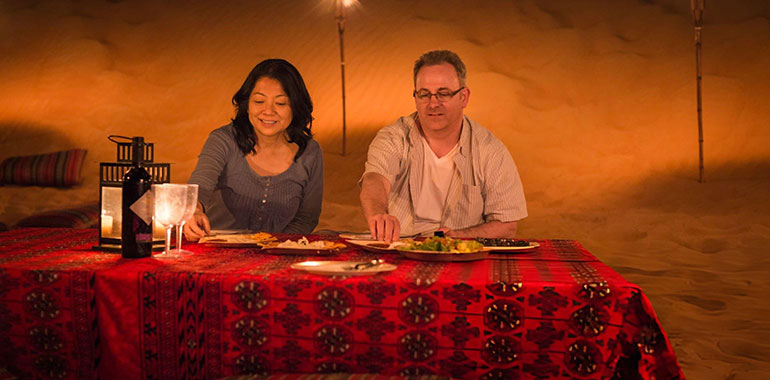
Is Dubai Food Suitable for Different Diets?
Yes. Dubai is generally easy to navigate for travelers with different dietary preferences, particularly because the city has a large and diverse food industry.
Vegetarian food
Vegetarian travelers have many options, including falafel, hummus, salads, lentil dishes, vegetable-based meals, Indian cuisine, and international restaurants.
Vegan food
Vegan options are increasingly common, particularly in international restaurants and cafés. However, check sauces, dairy ingredients, and preparation methods if you need to avoid animal products completely.
Halal food
Halal food is widely available in Dubai. Travelers can find halal meat and many restaurants that follow halal requirements.
Gluten-free food
Gluten-free options are available, especially in larger restaurants and international dining venues, but travelers with celiac disease or severe gluten intolerance should clearly communicate their requirements and ask about cross-contamination.
Dubai Food and Local Culture
Food provides one of the easiest ways to understand Dubai’s cultural diversity.
A traditional Emirati dish can tell you something about the ingredients and environment of the UAE. A plate of shawarma or falafel reflects the wider Arabic food culture found throughout the region. Karak tea reflects the influence of South Asian communities in the Gulf.
That is why Dubai’s food identity cannot be reduced to one cuisine.
The city is both Emirati and international, traditional and modern. Exploring both sides gives you a much better understanding of what makes eating in Dubai different from simply visiting another major global city.

How to Experience Dubai Food Like a Traveler
You do not need to visit the most expensive restaurants to understand Dubai’s food scene.
Instead:
- Try at least one traditional Emirati dish.
- Have Arabic coffee with dates.
- Try a casual street food such as shawarma or falafel.
- Explore food in an older neighborhood.
- Try a regional dessert.
- Ask what ingredients are used.
- Compare Emirati dishes with broader Arabic cuisine.
- Leave room for foods you have never tried before.
And most importantly, do not judge Dubai’s food culture only by luxury restaurants. Some of the most useful cultural experiences can come from simple meals in everyday settings.
If Dubai is one part of a wider Middle East itinerary, you can also combine its modern attractions, traditional neighborhoods, and food culture with time in Egypt. Travelers planning both destinations can explore Egypt and Dubai tours that bring the two experiences together in one trip.