Fez, Morocco, is the country’s historic cultural heart, known for its ancient Medina, traditional craftsmanship, Islamic architecture, and centuries-old intellectual heritage. Founded in the ninth century, the city grew into one of Morocco’s most important centers of religion, learning, trade, and craftsmanship.
At the center of Fez is Fes el-Bali, the vast historic Medina whose narrow streets, markets, mosques, madrasas, workshops, and traditional houses preserve the character of medieval Morocco. Beyond the old city, modern Fez adds another layer to the destination, creating a city where historic neighborhoods and contemporary Moroccan life exist side by side.
Fez is also an important stop on journeys through northern and central Morocco. It can be combined with Meknes and Volubilis, the blue streets of Chefchaouen, the Sahara around Merzouga, or the imperial cities of Marrakech and Rabat.
Fez lies in northern-central Morocco, between the Rif Mountains and the Middle Atlas region. Its geographical position helped establish the city as an important commercial and cultural crossroads connecting different parts of Morocco.
The city is generally understood through three historical areas: Fes el-Bali, the oldest Medina; Fes el-Jdid, the later royal city; and the newer Ville Nouvelle developed during the twentieth century.
This layered geography is important to understanding Fez. The city is not defined only by its famous Medina. Its royal heritage, newer districts, religious institutions, artisan traditions, and surrounding landscape all contribute to its identity.
Fez was also the capital of Morocco for significant periods of the country’s history and remains one of its most important cultural destinations.
Fes el-Bali is the oldest part of Fez and one of the most remarkable historic urban areas in Morocco. Recognized as a UNESCO World Heritage Site, it contains a dense network of streets and alleys filled with historic buildings, markets, workshops, mosques, and traditional residences.
The Medina is largely experienced on foot. Its narrow passages lead through neighborhoods that have traditionally been associated with particular crafts and commercial activities.
Unlike a modern planned district, Fes el-Bali developed organically over centuries. This gives the area its distinctive character, with unexpected courtyards, architectural details, small shops, and historic monuments appearing throughout the maze of streets.
For visitors, the Medina is therefore not simply one attraction to check off a list. It is the defining urban environment of Fez.
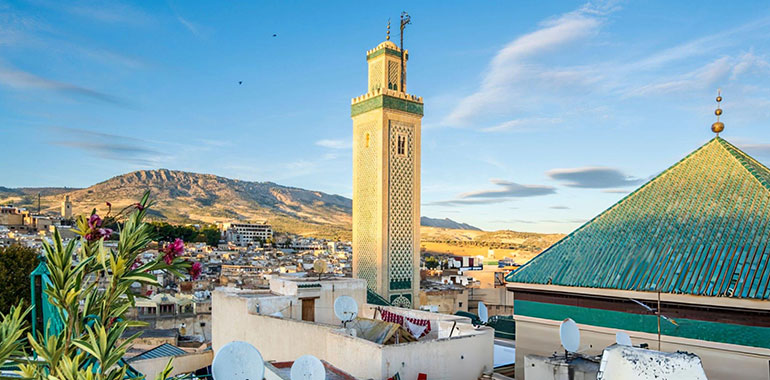
One of Fez’s most significant institutions is Al Quaraouiyine, founded in the ninth century and traditionally associated with the development of Fez as a center of learning.
The institution became an important place of Islamic scholarship and education, contributing to the city’s reputation as a major intellectual center in the Muslim world.
Its historical importance helps explain why Fez is often described as Morocco’s cultural and spiritual capital. The city’s identity has been shaped not only by palaces and markets, but also by scholarship, religion, education, and the transmission of knowledge across generations.
The Bou Inania Madrasa is one of the most important examples of Marinid architecture in Fez.
Built in the fourteenth century, the madrasa combines religious and educational functions with highly detailed Moroccan craftsmanship. Its decoration includes carved cedar, zellige tilework, ornamental plaster, and traditional geometric patterns.
The building illustrates the close relationship between architecture and craftsmanship in Fez. Decorative elements were not simply added for visual effect; they formed part of a broader architectural tradition that developed throughout Morocco.
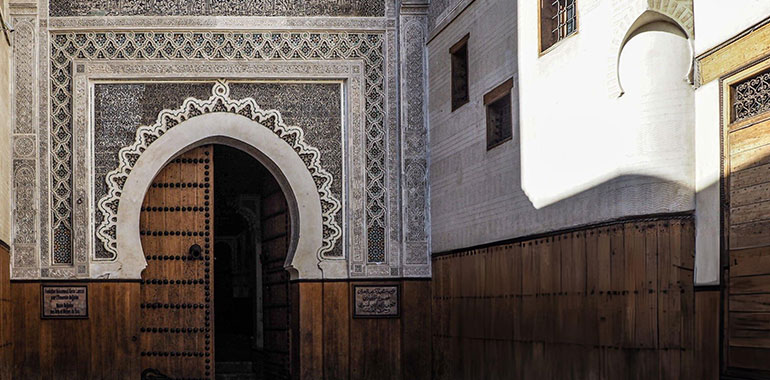
The Nejjarine area is closely associated with traditional woodworking, one of the crafts for which Fez has long been known.
The Nejjarine Museum of Wooden Arts and Crafts occupies a beautifully restored historic building and presents examples of Moroccan woodworking traditions.
The area also demonstrates how the Medina’s neighborhoods historically developed around specialized trades. Craftspeople, merchants, and customers operated within the same urban environment, creating a commercial system that remains visible in parts of Fez today.
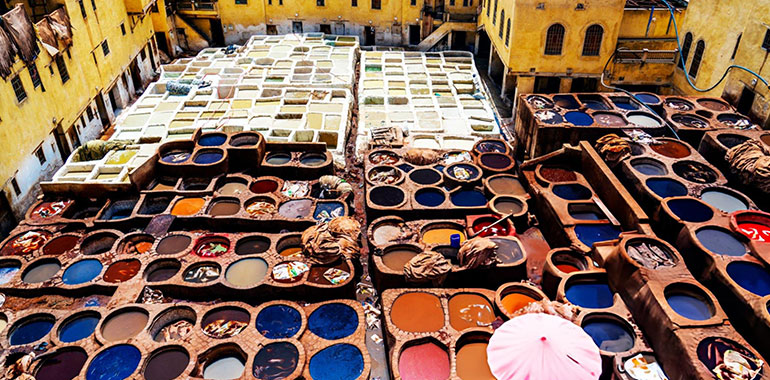
The Chouara Tannery is among Fez’s most recognizable traditional craft sites.
Leather production has been an important part of the city’s economy and craftsmanship for centuries. At the tannery, traditional methods are still associated with the preparation and coloring of animal hides.
The colorful tanning vats have become one of the best-known visual symbols of Fez, but the significance of the site extends beyond photography. It represents a wider craft tradition that connects raw materials, specialist workshops, leatherworkers, and the markets of the Medina.
Fez is one of Morocco’s defining cultural destinations, but its position within the country makes it easy to combine with other historic cities, mountain destinations, coastal towns, and the Sahara. Explore our Top destinations of Morocco to see how Fez connects with Marrakech, Chefchaouen, Meknes, Merzouga, Casablanca, Rabat, Essaouira, and Tangier.
Its artisans are associated with a wide range of skills, including zellige tilework, carved wood, leatherwork, metalwork, embroidery, weaving, and traditional ceramics.
The city’s architecture provides a setting in which these crafts can be seen in their original context. Decorative tiles, carved doors, painted ceilings, leather goods, and handmade objects are part of the city’s historic environment rather than separate museum pieces.
This living relationship between craftsmanship and urban life is one of the qualities that distinguishes Fez from many other Moroccan destinations.
The architecture of Fez reflects the city’s long religious, royal, and commercial history.
Historic buildings often turn inward toward courtyards, creating private spaces decorated with tilework, carved wood, plasterwork, and fountains. Streets within the Medina can be narrow and shaded, while larger monuments reveal more elaborate architectural proportions.
The use of geometric decoration is particularly important. Zellige mosaics, carved cedar, ornamental plaster, and Arabic calligraphy combine to create an architectural style that is distinctly Moroccan while reflecting wider Islamic artistic traditions.
Walking through Fez therefore provides an opportunity to understand Moroccan architecture at an urban scale rather than through individual monuments alone.
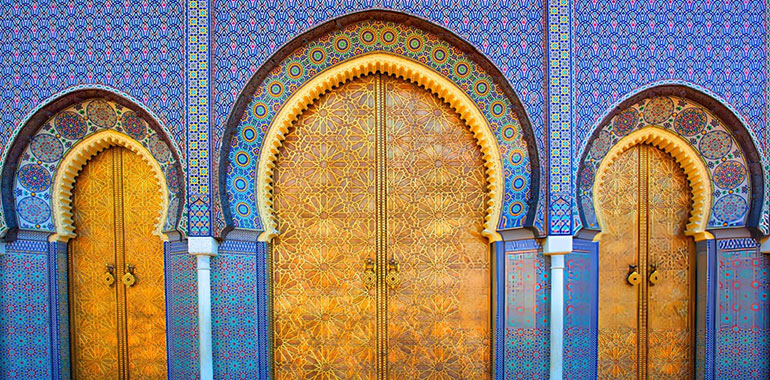
While Fes el-Bali represents the oldest part of the city, Fes el-Jdid reveals a later period of Fez’s development.
Founded during the Marinid period, the district became associated with the royal court and included palaces, gardens, military structures, and important gates.
The area is also connected with the Royal Palace of Fez, one of the city’s best-known landmarks. Although the palace itself is not generally open for interior sightseeing, its impressive exterior gates provide an example of Moroccan royal architectural decoration.
Fes el-Jdid helps complete the historical picture of Fez by showing how the city expanded beyond its earliest Medina.
The Mellah, the historic Jewish quarter, forms another important part of Fez’s urban history.
Jewish communities played a significant role in the cultural and commercial life of Moroccan cities for centuries. In Fez, the Mellah developed distinctive architectural and social characteristics within the wider city.
Exploring this part of Fez provides a broader understanding of the city’s multicultural history and the different communities that contributed to its development.
Fez can be included in both shorter city-focused journeys and longer routes through Morocco.
A northern itinerary might connect Fez with Meknes, Volubilis, and Chefchaouen. Longer journeys can continue toward Merzouga and the Sahara before crossing southern Morocco toward Marrakech.
Fez can also be paired with Casablanca and Rabat when focusing on Morocco’s major urban and historic centers.
For travelers planning their first journey through the country, understanding how these destinations connect can make itinerary planning much easier. Tripidays’ Morocco travel content can provide additional background on Morocco’s culture, destinations, and practical travel considerations.
Tripidays includes Fez in selected Morocco and Egypt–Morocco itineraries, making the city part of broader journeys through Morocco rather than treating it as an isolated stop.
Depending on the route, Fez may be combined with Chefchaouen, Meknes, Volubilis, Marrakech, the Sahara, or major Egyptian destinations.
This makes Fez particularly valuable for travelers interested in history and culture. Its Medina, religious heritage, architecture, and craftsmanship add a different dimension to itineraries that also include Morocco’s desert landscapes and imperial cities.
Travelers who want to experience Fez alongside Egypt can also explore Egypt and Morocco tours, where the city can form part of a two-country journey connecting Morocco’s historic heritage with Cairo, Giza, Luxor, and the Nile Valley.
Fez occupies a unique position in Morocco’s history and cultural identity.
Its ancient Medina preserves one of the country’s most important historic urban environments, while its madrasas, mosques, artisan workshops, markets, and traditional neighborhoods reflect centuries of religious, intellectual, and commercial life.
The city also provides an important link between Morocco’s imperial past and its living cultural traditions. Crafts continue to be practiced, traditional foods remain part of everyday life, and historic neighborhoods remain active rather than existing solely as monuments.
For travelers interested in understanding Morocco’s deeper cultural heritage, Fez offers an experience that is different from Marrakech and essential to understanding the country as a whole.
Fez connects naturally with several important destinations:
Together, these destinations place Fez within the wider geographic and historical network of Morocco.
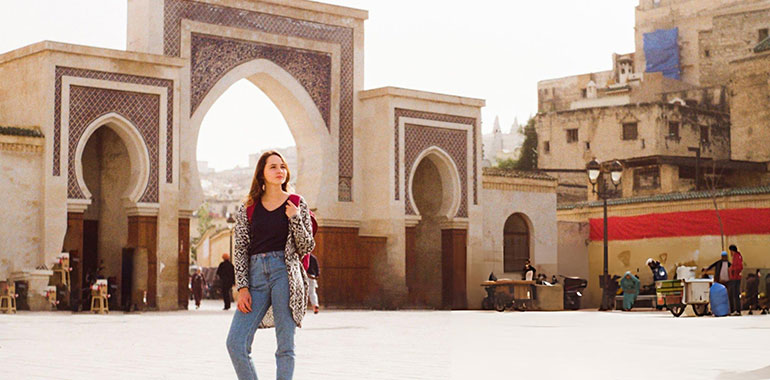
Fez is more than a historic city to visit for a handful of monuments. Its Medina, architecture, craftsmanship, religious heritage, food, and historic neighborhoods create an unusually complete picture of Morocco’s cultural development.
From the narrow streets of Fes el-Bali and the workshops of its artisans to the city’s royal heritage and connections with Meknes, Chefchaouen, Volubilis, and the Sahara, Fez provides a deeper look at Morocco’s history and living traditions.
Whether visited on its own or included in a wider Morocco or Egypt–Morocco journey, Fez offers a distinctive experience that complements the country’s other major destinations.


Tripidays Egypt Tours has been offering an exceptional range of Egypt tours, vacation packages, Nile cruises, day trips, and shore excursions tailored to meet the diverse interests of travelers worldwide for over 45 years.