Rabat, Morocco’s capital, is a historic Atlantic city where royal heritage, ancient monuments, gardens, coastal landscapes, and modern government districts come together. As the seat of Morocco’s government and one of its historic imperial cities, Rabat offers a different experience from the busier atmosphere of Marrakech and the dense Medina of Fez.
The city combines important landmarks such as the Hassan Tower and Kasbah of the Udayas with archaeological remains, historic gates, gardens, museums, and contemporary neighborhoods. Its position on the Atlantic coast also gives Rabat a distinctive relationship with the Bou Regreg River and the neighboring city of Salé.
For travelers exploring Morocco, Rabat is particularly valuable as a destination that brings together the country’s political identity and its long historical heritage.
Rabat is located on Morocco’s Atlantic coast at the mouth of the Bou Regreg River. The river separates Rabat from Salé, creating a natural boundary that has influenced settlement and trade in the area for centuries.
The city has served as Morocco’s capital since the early twentieth century, although its history extends much further back. Almohad rulers established Rabat as an important fortified settlement in the twelfth century, while later dynasties and the modern Moroccan state added further layers to the city.
Today, Rabat has a more spacious and administrative character than many of Morocco’s major tourist cities. Historic walls and monuments stand alongside government buildings, residential districts, parks, cultural institutions, and modern avenues.
This combination makes Rabat an important destination for understanding both historic and contemporary Morocco.
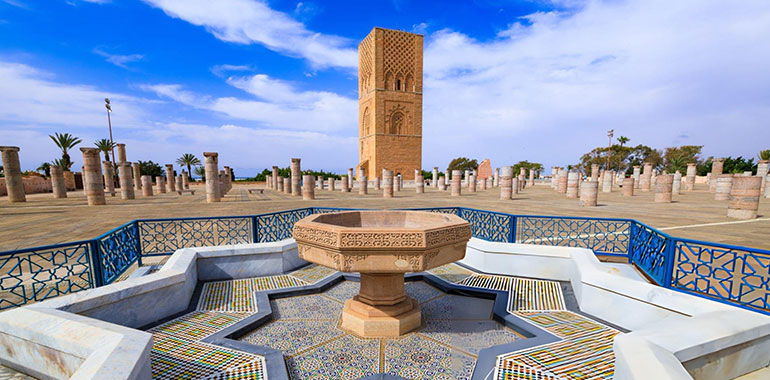
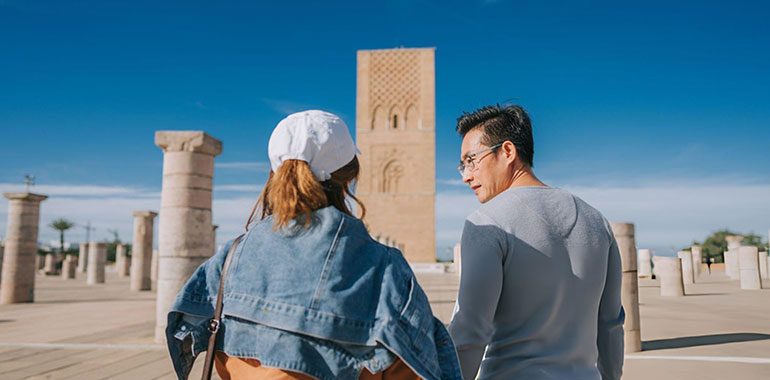
The Hassan Tower is one of Rabat’s defining landmarks and an important symbol of the city.
The tower forms part of the remains of a major mosque project begun during the Almohad period in the twelfth century. Although the mosque was never completed as originally planned, the surviving structures provide an impressive glimpse into the ambitions of the rulers who established Rabat as a major fortified city.
The tower’s geometric design and reddish stone create a distinctive presence within the city. The surrounding archaeological remains also help visitors understand the original scale of the unfinished complex.
Hassan Tower is particularly significant because it connects Rabat with the wider architectural tradition of the Almohad dynasty, which also left an important legacy in other parts of Morocco and North Africa.
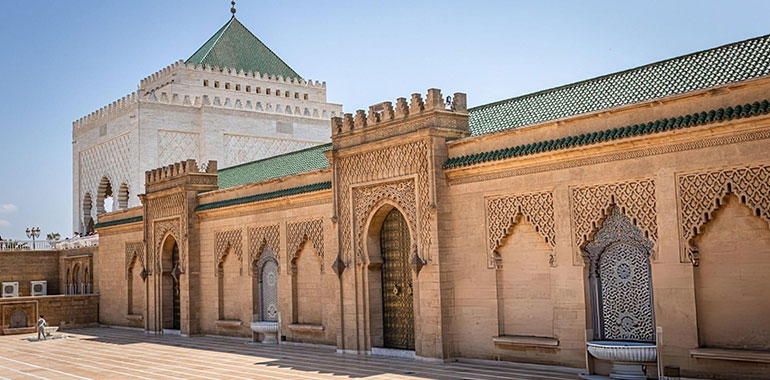
Next to Hassan Tower is the Mausoleum of Mohammed V, an important modern monument associated with Morocco’s royal history.
The mausoleum contains the tombs of King Mohammed V and his sons, King Hassan II and Prince Moulay Abdallah. Its architecture combines traditional Moroccan design with carefully crafted marble, tilework, carved wood, and ornamental details.
The building illustrates how modern Morocco has continued to draw on traditional architectural forms. Its location beside the historic Hassan Tower creates a visual connection between medieval Rabat and the modern Moroccan monarchy.
Together, the two monuments form one of the city’s most important historic and symbolic sites.
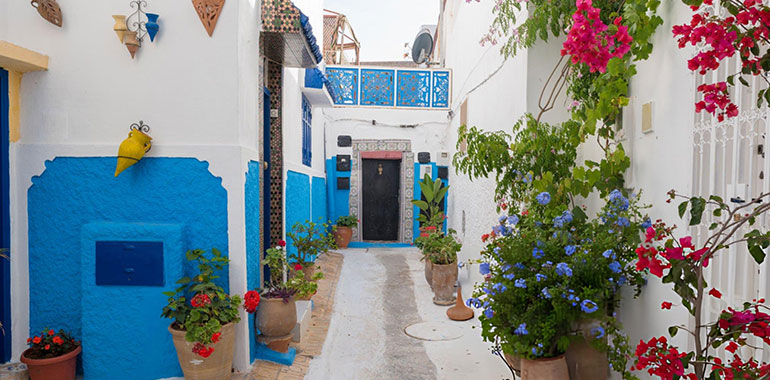
The Kasbah of the Udayas is one of Rabat’s most atmospheric historic districts.
Located above the Bou Regreg River near the Atlantic, the fortified neighborhood contains narrow streets, whitewashed buildings, gardens, and historic structures. Its elevated position also provides views toward the river, ocean, and neighboring Salé.
The Kasbah developed through several stages of Rabat’s history and became associated with military communities and defensive structures.
Walking through its streets provides a very different experience from the monumental area around Hassan Tower. Here, the appeal lies in the combination of architecture, narrow lanes, gardens, and coastal scenery.
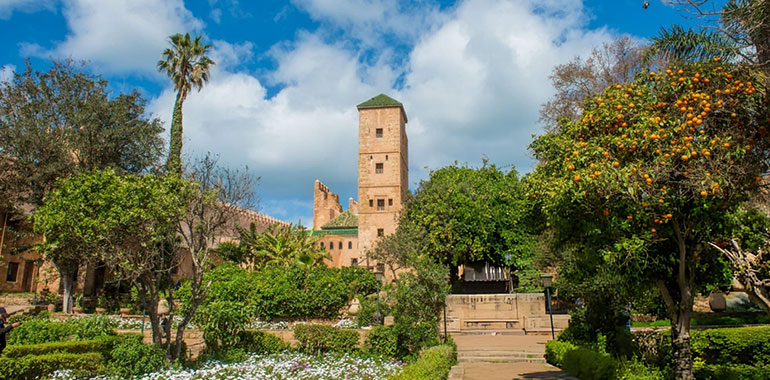
Within the Kasbah, the Andalusian Gardens provide a peaceful green space surrounded by historic architecture.
The gardens reflect the broader cultural connections between Morocco and Andalusia, particularly in their layout, planting, and decorative character.
They also provide a useful transition between the more defensive architecture of the Kasbah and the residential streets surrounding it.
For visitors exploring Rabat on foot, the gardens offer a quieter part of the historic center and a place to experience the city away from its larger monuments.
Rabat’s Medina forms an important part of the historic city and provides a more intimate experience than the larger Medinas of Fez or Marrakech.
Its streets contain traditional shops, homes, food stalls, craftspeople, and local businesses. The atmosphere is generally less overwhelming than in some of Morocco’s larger historic markets, making it easier for visitors to explore at a relaxed pace.
The Medina also demonstrates how Rabat remains a living city rather than simply a collection of preserved monuments.
Its relationship with the surrounding walls, gates, Kasbah, and modern districts makes it an important part of understanding the capital’s urban development.
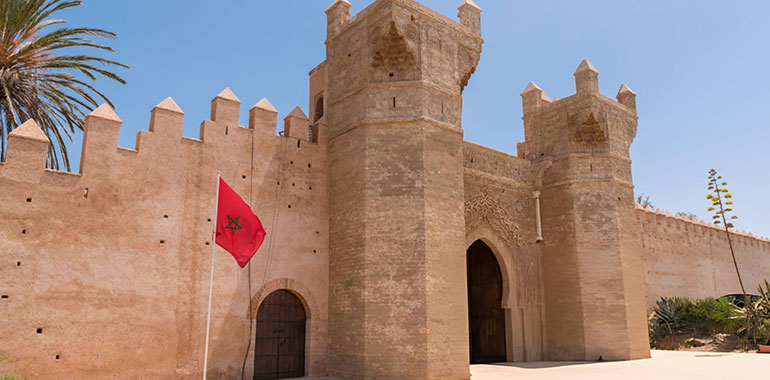
Chellah is one of Rabat’s most historically layered sites.
The archaeological complex contains remains associated with ancient settlements in the area as well as later Islamic structures. Roman and medieval remains occupy the same broader landscape, revealing the long history of settlement around Rabat.
The site is surrounded by greenery and enclosed within historic walls, creating a setting very different from the busy streets of the modern capital.
Chellah is particularly valuable because it demonstrates that Rabat’s history did not begin with the Almohads or the modern Moroccan state. The region has been connected with settlement and trade for many centuries.
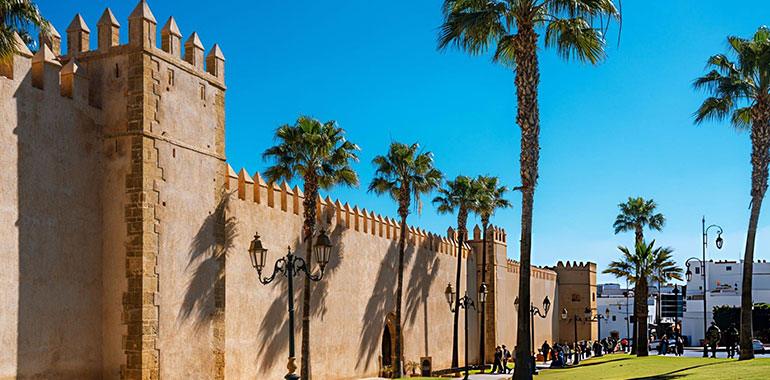
The historic walls surrounding parts of Rabat are another important element of the city’s identity.
Built and expanded during different periods, the walls helped protect the settlement and define its historic boundaries. Several monumental gates provide entrances through the defensive structures.
Bab Rouah is among the best-known gates and is particularly notable for its scale and decorative design.
The gates and walls are important not only as individual monuments but also because they reveal how Rabat was organized as a fortified city.
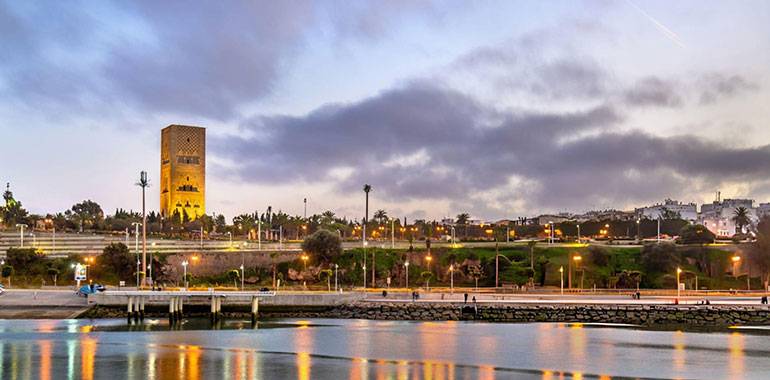
The Bou Regreg River plays an important role in Rabat’s geography.
The river separates Rabat from Salé before reaching the Atlantic Ocean. Historically, it influenced settlement, trade, transportation, and defense, while today it forms one of the city’s most recognizable geographical features.
The riverfront also helps connect several of Rabat’s major attractions. From the Kasbah of the Udayas, visitors can look across the water toward Salé, while boats and waterfront areas provide a different perspective on the two cities.
This relationship between river, historic fortifications, and Atlantic coast is an important part of Rabat’s character.
Rabat’s role as Morocco’s capital gives it an importance that extends beyond tourism.
Government institutions, diplomatic missions, royal residences, and national cultural institutions are concentrated in the city. This political role distinguishes Rabat from Morocco’s other historic destinations.
At the same time, the capital retains strong links to the country’s historical identity through its monuments, Medinas, royal architecture, and religious heritage.
For travelers, this creates an opportunity to see a side of Morocco that is both historically rooted and firmly connected to the modern state.
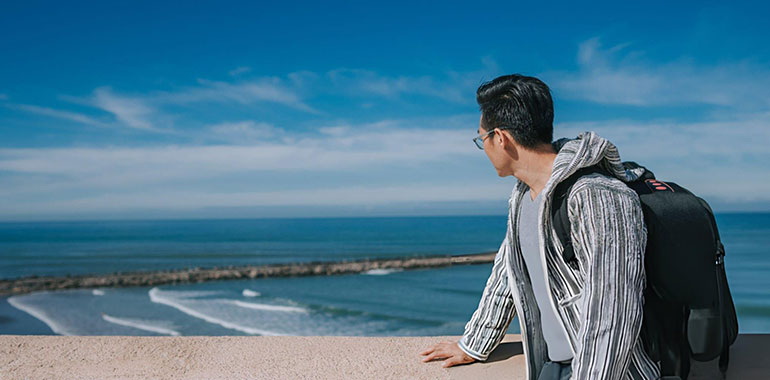
Although Rabat is primarily known for its historical and political importance, its Atlantic location is an important part of the city’s identity.
The coast provides beaches, ocean views, and a different atmosphere from Morocco’s inland destinations. The combination of historic walls, river landscapes, and Atlantic shoreline gives Rabat a varied geography within a relatively compact area.
This coastal setting also connects Rabat naturally with other Atlantic destinations farther south and north.
Rabat works particularly well as part of a northern and central Morocco route.
It can be visited alongside Casablanca before continuing toward Fez, Chefchaouen, or other northern destinations. Longer itineraries can connect the capital with Marrakech and eventually continue toward southern Morocco and the Sahara.
Because of its compact historic center and concentration of major landmarks, Rabat can also work well as a shorter stop within a larger itinerary.
Travelers planning a broader journey can explore Morocco’s leading destinations to see how Rabat connects with the country’s historic cities, Atlantic coast, northern mountains, and desert regions.
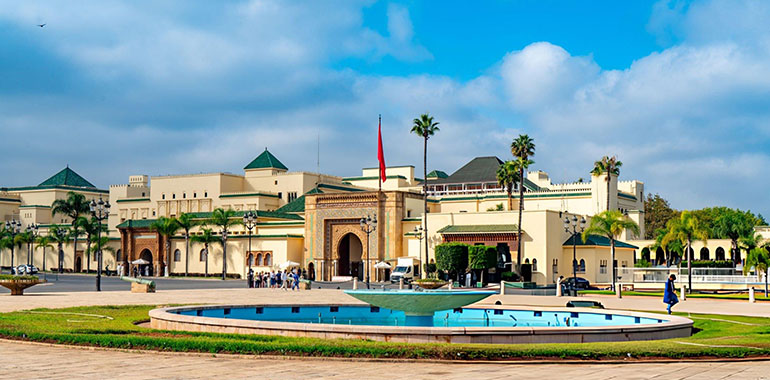
Rabat is one of the few destinations in Morocco where the country’s historic and modern identities are particularly visible together.
The Hassan Tower and Chellah reveal layers of medieval and ancient history, while the Kasbah and Medina preserve traditional urban heritage. The Mausoleum of Mohammed V and the city’s royal and government institutions demonstrate the continuing importance of the capital in modern Morocco.
Its Atlantic setting adds another dimension, connecting the historic city with the wider coastal landscape.
For travelers who want to understand Morocco beyond its most famous tourist centers, Rabat provides an important perspective on the country’s political history, royal heritage, architecture, and contemporary identity.
Rabat is one of Morocco’s essential destinations, but its significance becomes clearer when viewed alongside the country’s other cities and regions.
The historic culture of Fez, the distinctive blue streets of Chefchaouen, the modern Atlantic character of Casablanca, the imperial atmosphere of Marrakech, and the Sahara landscapes around Merzouga all reveal different sides of Morocco.
Our Morocco destination collection brings these places together, helping travelers understand how the country’s major cities, coastal destinations, mountain regions, and desert gateways can be combined into a single journey.
Discover Rabat with Tripidays
Rabat offers a different experience from Morocco’s better-known tourist centers. As the country’s capital, it combines royal heritage, historic monuments, fortified neighborhoods, Atlantic landscapes, and modern political life.
From Hassan Tower and the Mausoleum of Mohammed V to the Kasbah of the Udayas, Chellah, the Medina, and the Bou Regreg waterfront, the city reveals several layers of Moroccan history within a relatively compact area.
Rabat is particularly rewarding when combined with other Moroccan destinations, allowing travelers to compare the capital with the cultural heritage of Fez, the metropolitan character of Casablanca, or the imperial atmosphere of Marrakech.
For travelers extending their journey beyond Morocco, Rabat can also form part of an Egypt–Morocco itinerary, bringing together Morocco’s modern capital and historic heritage with the ancient monuments and Nile landscapes of Egypt.
Tripidays includes Rabat in selected Morocco and Egypt–Morocco itineraries, allowing travelers to experience the capital alongside other major destinations.
Depending on the route, Rabat can be combined with Casablanca, Fez, Marrakech, and other Moroccan cities before continuing toward the mountains or Sahara.
The city’s position also makes it useful within longer multi-country journeys. Travelers combining Morocco with Egypt can explore Egypt and Morocco packages that connect Moroccan destinations such as Rabat with Cairo, Giza, Luxor, and the Nile Valley.
Tripidays places Rabat within these journeys as more than a short transfer point, allowing travelers to experience its royal, political, historic, and coastal character.


Tripidays Egypt Tours has been offering an exceptional range of Egypt tours, vacation packages, Nile cruises, day trips, and shore excursions tailored to meet the diverse interests of travelers worldwide for over 45 years.