Moroccan culture is a blend of Arab, Amazigh, Islamic, African, Mediterranean, and Andalusian influences, reflected in the country’s greetings, hospitality, dress, food traditions, religious practices, architecture, crafts, and everyday social customs. For travelers, understanding these cultural norms makes it easier to know what is considered respectful and appropriate in different situations.
At Tripidays, we believe that understanding the culture behind the places you visit makes a trip to Morocco more meaningful. You do not need to memorize a long list of rules; the most important things are to respect local customs, dress appropriately for the setting, ask before photographing people or sensitive places, and remain open to different social traditions.
This guide explains the Moroccan culture and customs travelers are most likely to encounter, including Moroccan hospitality, greetings, modesty, Islam and Ramadan, photography etiquette, souk culture, Amazigh heritage, traditional crafts, and the architecture of Moroccan homes.
What Is Moroccan Culture Like?
Moroccan culture combines long-established traditions with modern daily life. Islam has an important place in society, while Amazigh heritage, Arab traditions and regional influences all contribute to the country’s cultural identity.
Family, hospitality, community and respect are important themes in Moroccan social life. Customs can also vary between cities, rural areas and different communities, so it is better to treat cultural guidance as a framework rather than a rigid set of rules.
For visitors, the most useful approach is simple: be observant, dress appropriately for the setting, ask before taking photographs, respect religious practices and follow the lead of your hosts when social situations are unfamiliar.
Greetings are an important part of Moroccan social interaction. A friendly greeting before beginning a conversation is generally more appropriate than immediately getting to a request or question.
Handshakes are common, although the exact form of greeting can depend on the people involved and their level of familiarity. Some people may place a hand over the heart or use other gestures of respect.
You do not need to master every Moroccan greeting before arriving. A polite attitude and willingness to follow the other person’s lead are often more useful than trying to perform unfamiliar customs perfectly.
When entering someone’s home, shop, or other social space, take a moment to acknowledge the people around you rather than rushing straight into business.
Is It Important to Learn Arabic or Amazigh?
No. You can travel through Morocco without speaking Arabic or Amazigh.
However, learning a few simple expressions can be a courteous gesture and may make everyday interactions warmer. Morocco is multilingual, and language use varies by region and situation.
French is also widely used in many parts of the country, particularly in business, tourism and urban settings.
Moroccan hospitality is an important part of social life. Visitors may be offered tea, food or another form of refreshment, particularly when visiting someone’s home or being welcomed into a social setting.
Mint tea is strongly associated with Moroccan hospitality, but the important cultural point is broader than the drink itself. Offering refreshments can be a way of showing welcome, generosity and respect.
If someone offers you something in a social setting, responding politely is usually more important than following a complicated set of rules. In unfamiliar situations, observe how others behave and follow their lead.
Hospitality can also make conversations feel more personal than travelers from some cultures may expect. Taking a little time for greetings and conversation can be part of the experience rather than an interruption to it.
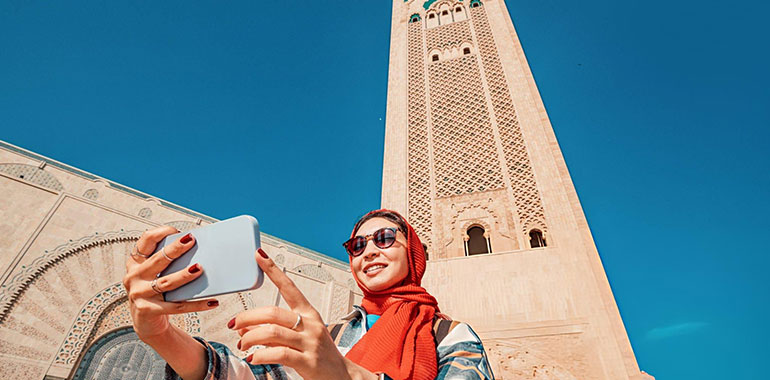
Dress and Modesty in Morocco
Morocco is accustomed to international visitors, particularly in major tourist destinations, but modest dress is generally the respectful choice.
There is no single dress code that applies everywhere. What feels appropriate at a beach resort may not be appropriate when visiting a conservative neighborhood, rural community or religious site.
For most travelers, practical choices include:
- Covering shoulders and avoiding very revealing clothing in conservative settings
- Choosing clothing that covers the knees when visiting more traditional areas or religious sites
- Carrying a light layer for situations where more coverage is appropriate
- Dressing more conservatively when entering religious or culturally significant places
Women do not generally need to dress in a particular traditional Moroccan style. Men should also avoid assuming that tourist areas have the same social expectations as more conservative communities.
The principle is to adapt your clothing to the setting rather than treating Morocco as having one uniform dress code.
Islam and Everyday Life in Morocco
Islam is an important part of Moroccan society and influences many aspects of daily life, including religious observance, family traditions, the calendar and public rhythms.
Morocco is predominantly Muslim, and travelers will encounter mosques, calls to prayer, religious celebrations and customs connected with Islamic traditions.
Visitors do not need to participate in religious practices. Respect is the key expectation.
This means being considerate around people who are praying, dressing appropriately when entering places where visitors are permitted, and understanding that religious observances can affect the rhythm of daily life.
At the same time, Morocco is not culturally identical from one region or community to another. Urban areas, tourist centers, and rural communities can have noticeably different social environments.
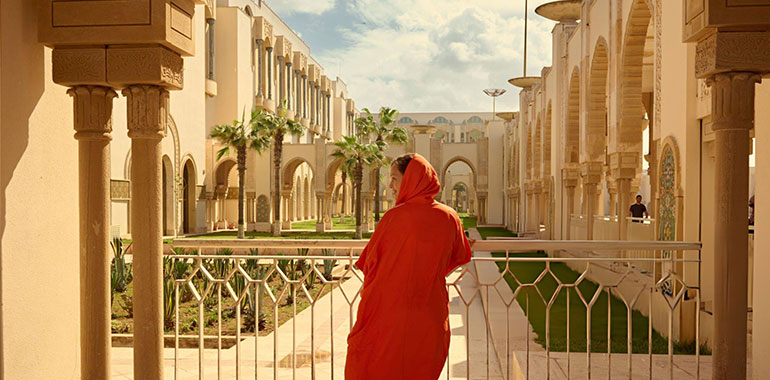
Visiting Mosques and Religious Places
Many Moroccan mosques are places of worship rather than tourist attractions, and access for non-Muslim visitors can be restricted.
Do not assume that a mosque is open to tourists simply because it is architecturally impressive.
When visiting a religious site that welcomes visitors, dress modestly, keep your behavior quiet and respectful, and follow any instructions given by staff or local guides.
Photography may also be restricted in certain religious settings. If you are unsure, ask before taking a photograph.
The same principle applies to religious ceremonies: observing quietly from an appropriate place is preferable to interrupting or treating a religious moment as a tourist spectacle.
Ramadan in Morocco
Ramadan is an important period in Moroccan religious and social life. During the month, Muslims who observe Ramadan fast from dawn until sunset.
Travelers visiting Morocco during Ramadan may notice changes in the daily rhythm. Businesses, restaurants, and attractions can operate differently, and evenings can become particularly active as people gather after sunset.
Visitors are not expected to fast simply because they are in Morocco. However, being discreet and respectful around people who are fasting is considerate.
A few useful principles include:
- Avoid making a spectacle of eating or drinking around people who are fasting.
- Be patient if some services follow different schedules.
- Expect evenings to have a different social atmosphere.
- Respect prayer and religious observance.
- Check arrangements for specific services before relying on normal schedules.
Ramadan can also offer travelers a deeper understanding of Moroccan family and community life, particularly around the evening meal and gatherings after the daily fast.
Because dates and practical arrangements change each year, travelers should verify current Ramadan dates and local operating arrangements before their trip.
Photography and Respect for Privacy
Morocco offers countless opportunities for photography, from architecture and markets to landscapes and street scenes. But being able to photograph something does not always mean that doing so is appropriate.
Be particularly careful when photographing people.
A useful rule is simple: ask before taking a close-up or clearly identifiable photograph of someone.
This matters especially in markets, residential areas, religious settings and situations involving children.
Also avoid treating local people as props for travel photography. A busy souk may look visually compelling, but the people working there are going about their daily lives.
When photographing religious ceremonies, private homes or culturally sensitive situations, be especially cautious.
If someone indicates that they do not want to be photographed, respect that immediately.
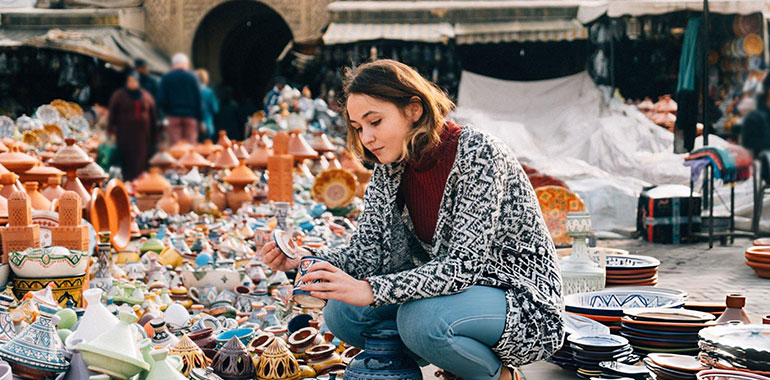
Souks, Bargaining and Traditional Shopping
Bargaining is part of the shopping culture in many Moroccan souks, particularly where prices are not fixed. It is often understood as a social interaction as well as a commercial transaction.
That does not mean every purchase requires aggressive negotiation.
A good approach is to:
- Ask the price politely.
- Decide what you are genuinely willing to pay.
- Negotiate without becoming confrontational.
- Walk away politely if you do not want to buy.
- Avoid agreeing to a purchase and then trying to undo it simply because you changed your mind.
The experience can be part of visiting a souk, but remember that sellers are working rather than performing a cultural show for tourists. For the broader practical side of shopping, money and bargaining, our Morocco travel tips provide a more useful place to go deeper.
Amazigh Culture and Moroccan Traditions
Amazigh culture is an essential part of Morocco’s identity and has deep roots across North Africa.
The term Amazigh refers to the Indigenous peoples of North Africa, with diverse communities and traditions rather than one single uniform culture.
Amazigh heritage can be encountered through language, music, clothing, crafts, architecture, food traditions, and community life. The cultural expressions you see can differ significantly between regions.
The Atlas Mountains and other areas with strong Amazigh communities offer particularly important examples of this heritage, but Amazigh identity is not limited to one geographic area.
For travelers, the most useful approach is to recognize Amazigh culture as a living part of contemporary Morocco rather than treating it simply as something from the country’s past.
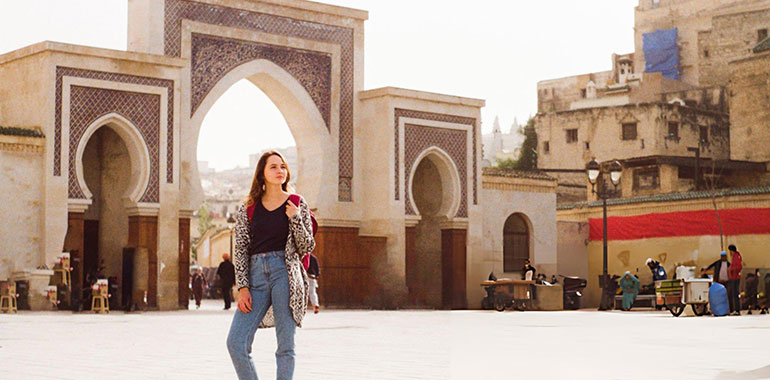
Moroccan Crafts, Design and Architecture
Moroccan craftsmanship is one of the clearest ways to see cultural traditions expressed in everyday objects and spaces.
Visitors may encounter:
- Zellige tilework
- Handwoven carpets
- Leatherwork
- Metalwork
- Wood carving
- Ceramics
- Traditional textiles
- Decorative plasterwork
These crafts are connected to regional traditions, skilled artisans and generations of design knowledge.
Architecture tells a similar story. Geometric patterns, courtyards, carved wood, tiles and decorative plaster can be found across historic buildings and traditional homes.
Rather than viewing these details simply as decoration, look at how they reflect Moroccan ideas about privacy, craftsmanship, climate, geometry and hospitality.
Riads and the Cultural Meaning of Moroccan Homes
A traditional riad is typically organized around an interior courtyard, often with rooms arranged around a central open space.
This design reflects more than aesthetics.
Traditional Moroccan homes can place strong emphasis on privacy and inward-facing living spaces. The courtyard creates a private center within the home while also allowing light and air into the building.
This is one reason staying in a riad can feel different from staying in a conventional hotel. The architecture provides a glimpse into a traditional approach to domestic life.
At the same time, not every property marketed as a riad represents an unchanged historic home. Many have been restored or adapted for modern travelers.
If architecture and historic settings are an important part of your trip, our guide to the best places to visit in Morocco can help put different cultural experiences into a broader destination context.
Cultural Mistakes Travelers Should Avoid
Most cultural misunderstandings are easy to prevent when visitors approach Morocco with awareness.
Avoid:
- Assuming every Moroccan follows the same customs
- Entering religious spaces without checking whether visitors are permitted
- Taking close-up photographs of people without asking
- Treating traditional clothing or religious practices as costumes or spectacles
- Dressing without considering the setting
- Being dismissive of local traditions because they differ from your own
- Turning bargaining into an argument
- Assuming tourist areas represent Moroccan culture as a whole
- Treating Amazigh culture as a historical curiosity rather than a living culture
- Expecting every interaction to follow your own cultural norms
The goal is not to behave perfectly. It is to show awareness, flexibility, and respect.
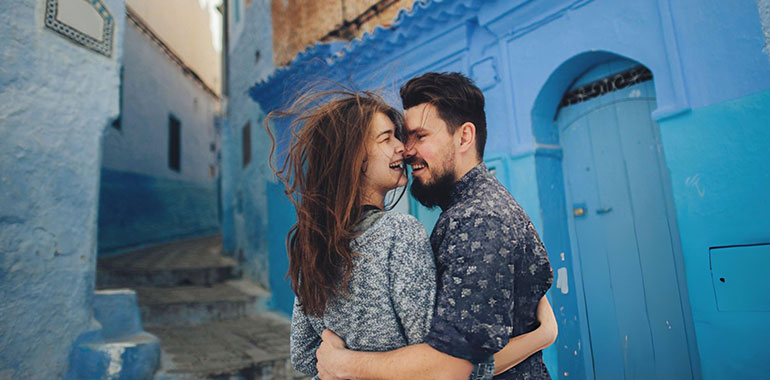
How to Be a Respectful Visitor in Morocco
You do not need extensive knowledge of Moroccan culture before arriving. A few principles will take you a long way:
Observe first.
If you are unsure how to behave, watch how people around you handle the situation.
Ask when appropriate.
A simple question is usually better than assuming a religious, social, or photographic situation.
Respect privacy.
People, homes, and religious moments are not automatically tourist attractions.
Dress for the setting.
Morocco is accustomed to international travelers, but modesty remains an important consideration in many situations.
Accept hospitality graciously.
A warm response and a little patience can make social interactions much more enjoyable.
Remember that Morocco is diverse.
Customs vary between regions, communities, generations, and individual families.
Stay curious without turning culture into a spectacle.
The best cultural experiences often come from paying attention to ordinary interactions rather than searching only for staged experiences.
For travelers combining Morocco with Egypt, understanding the cultural differences between the two countries can also make an organized journey easier to appreciate. Tripidays has been operating for 45 years and offers Egypt and Morocco journeys with expert Egyptologist guides and 24/7 support.