






Starlight Festival Egypt 2026: Dates, Lineup & Travel Guide
September 24, 2026
Read more
about Starlight Festival Egypt 2026: Dates, Lineup & Travel Guide











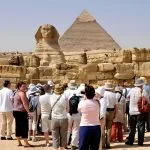

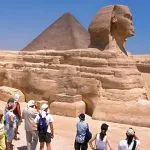














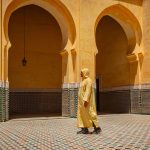
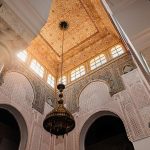
| Duration |
13 Days / 12 Nights |
|---|---|
| Tour Location |
Cairo / Giza / Luxor / Aswan / Casablanca / Rabat / Meknes / Fez / Marrakech |
| Tour Type |
Daily Tour |
| Pickup |
Cairo Airport or Casablanca Airport |
This 13 day Egypt and Morocco tour with Nile Cruise, Fez & Marrakech combines Cairo, the Giza Pyramids, Grand Egyptian Museum, Luxor, Aswan, and a multi-day Nile Cruise with Casablanca, Rabat, Meknes, Volubilis, Fez, and Marrakech. Travelers comparing Egypt and Morocco Trips can see how this route goes beyond the main highlights by adding Upper Egypt, a full Nile Cruise, and Morocco’s historic imperial cities. Tripidays connects both countries through guided sightseeing, domestic flights, private transfers, and carefully planned accommodation.
Day 1: Arrive in Cairo, meet your Tripidays representative, and enjoy a Nile dinner cruise. Day 2: Visit the Giza Pyramids, Great Sphinx, Valley Temple, and Grand Egyptian Museum before flying to Luxor. Day 3: Explore Karnak and Luxor Temples, then board your Nile Cruise. Day 4: Discover the Valley of the Kings, Hatshepsut Temple, and Colossi of Memnon. Day 5: Visit Edfu and Kom Ombo as you sail through Upper Egypt. Day 6: Explore Aswan High Dam, the Unfinished Obelisk, and Philae Temple. Day 7: Fly back to Cairo and discover the Egyptian Museum, Old Cairo, Al-Muizz Street, and Khan El Khalili. Together, these days create a deeper Egypt experience built around the Nile Cruise and Upper Egypt.
Only on this route
This route connects Cairo, Luxor, Aswan, Casablanca, Rabat, Meknes, Volubilis, Fez and Marrakech in one 13 day journey, with a multi-day Nile Cruise forming the backbone of the Egypt experience. Unlike shorter Egypt & Morocco itineraries that focus mainly on Cairo and Marrakech, this journey continues deep into Upper Egypt before crossing to Morocco and progressing through the country's historic imperial cities, from Rabat and Meknes to Fez and Marrakech.
Arc I · Cairo Beginnings
Giza monuments and GEM introduce Egypt before Luxor
Arrive in Cairo and meet your Tripidays representative at Cairo International Airport for assistance and a private transfer to your hotel. After check-in and time to settle in, begin your 13 day Egypt & Morocco with Nile cruise, Fez & Marrakech tour with an evening dinner cruise along the Nile.

As Cairo lights begin to reflect across the river, step aboard your Nile dinner cruise for your first taste of Egypt. Enjoy dinner while the city moves quietly around you, with illuminated bridges, waterfront buildings, and the sounds of traditional Egyptian entertainment creating an atmospheric introduction to the country.
Dinner
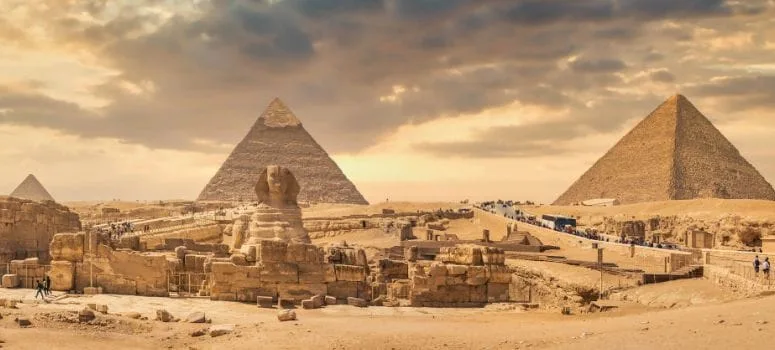
After breakfast, begin your Egypt adventure at the Giza Plateau, where the Great Pyramids and Sphinx introduce you to the ancient civilization at the heart of your journey. Continue to the Grand Egyptian Museum before flying from Cairo to Luxor, where your Nile Cruise experience begins the following day.

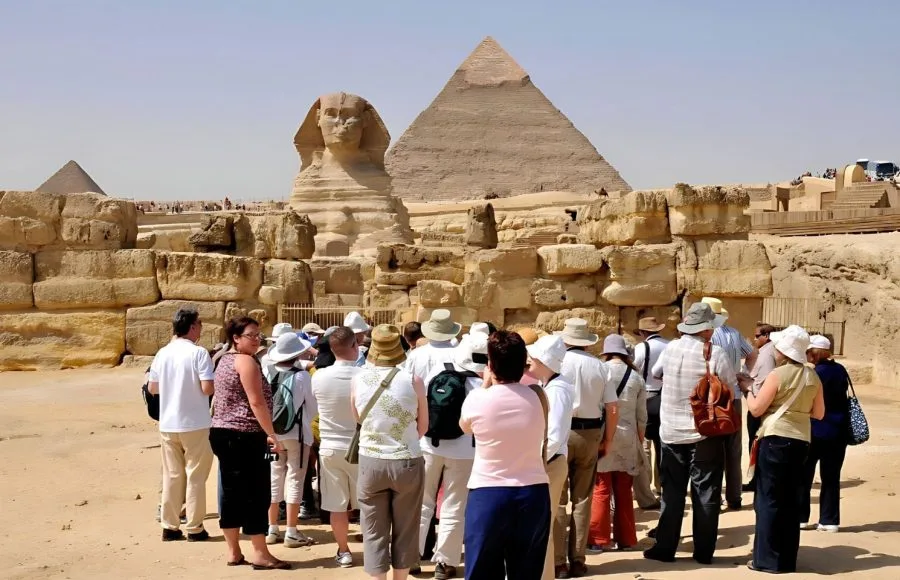
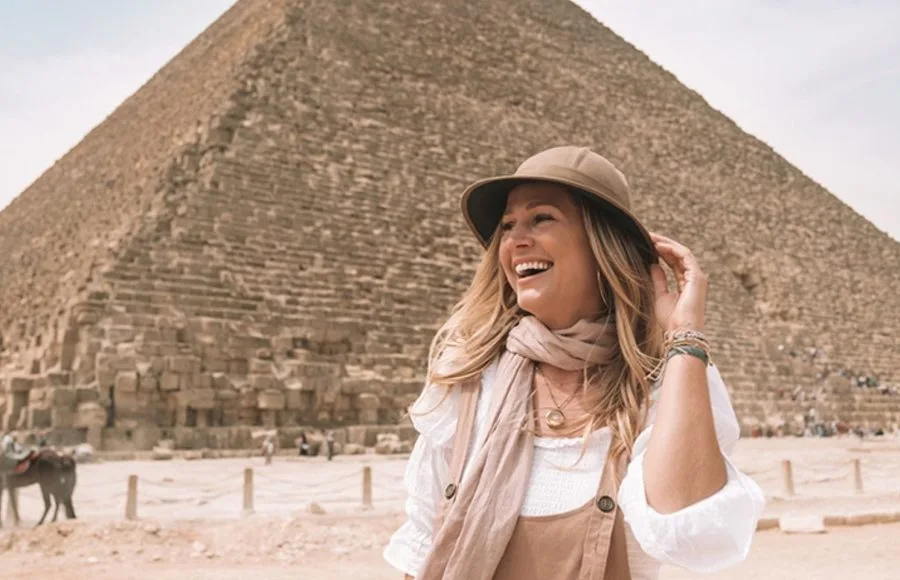
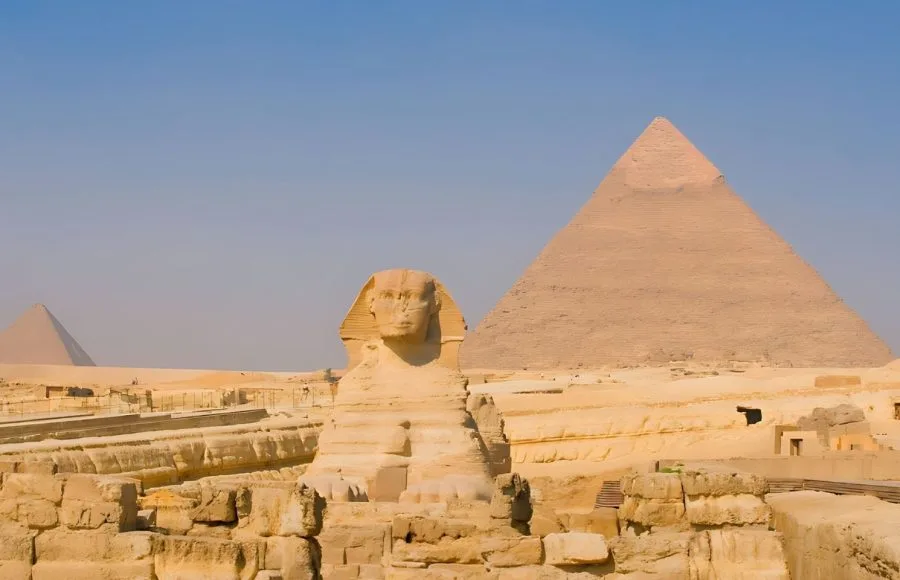
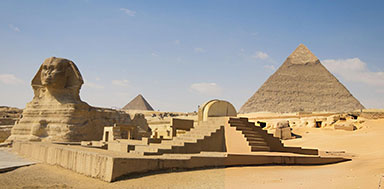
Begin at the Giza Pyramids Complex, where Khufu, Khafre, and Menkaure rise above the desert plateau. Standing before these monumental structures brings the scale of ancient Egypt into perspective as your Egyptologist guide explains how the pyramids formed part of an enormous royal funerary complex.
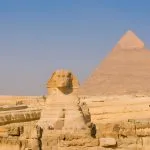
Continue to the Great Sphinx, the iconic limestone monument with the body of a lion and the head of a king. Positioned beside the pyramids, the Sphinx offers another glimpse into the beliefs, symbolism, and royal power that shaped ancient Egyptian civilization.
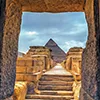
Near the Sphinx, explore the Valley Temple of Khafre, a remarkably preserved structure built from massive limestone and granite blocks. Its imposing architecture formed an important part of the king's funerary complex and provides a closer look at the rituals surrounding royal burial.
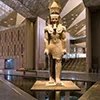
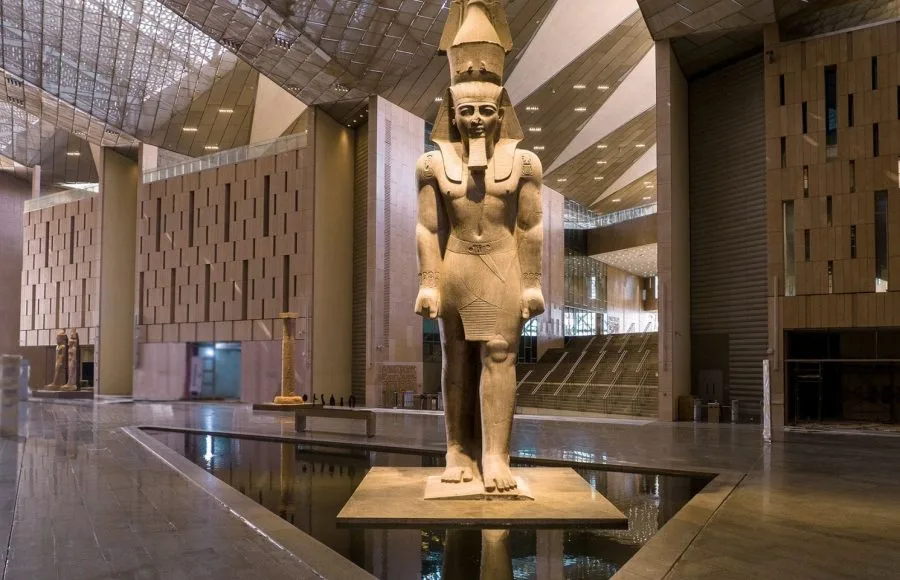
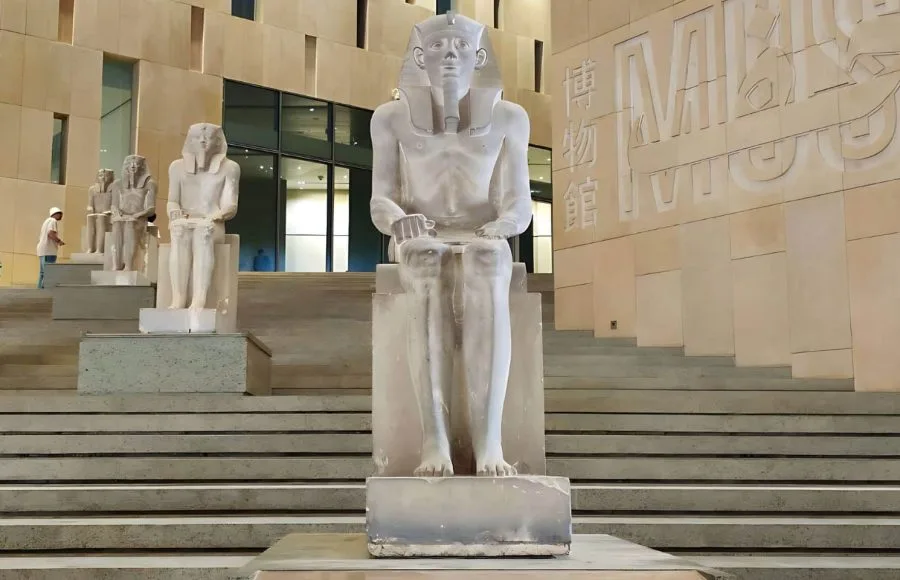
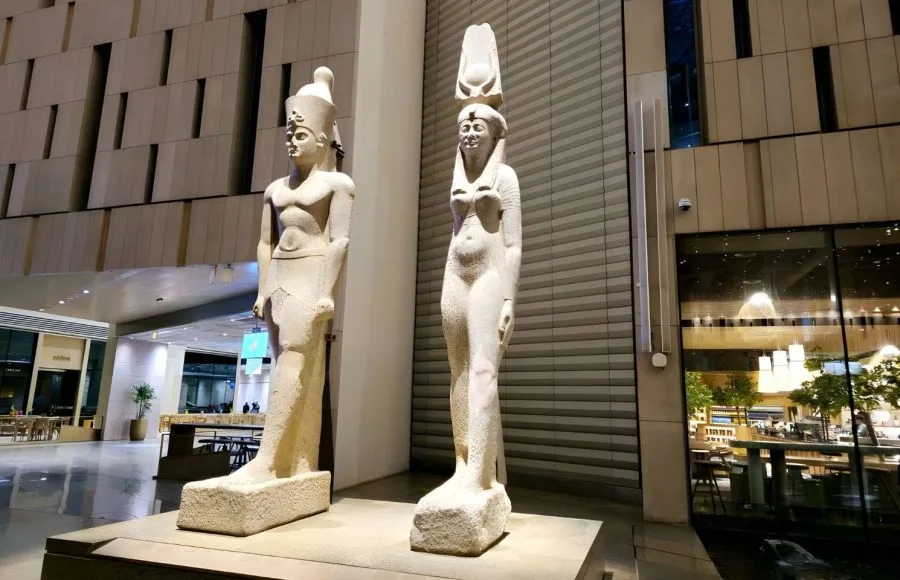
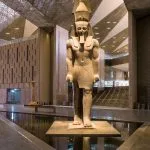
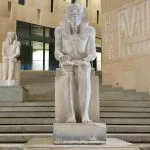
Continue to the Grand Egyptian Museum (GEM), where the story of ancient Egypt expands beyond the monuments you have just experienced at Giza. Explore archaeological collections spanning thousands of years and discover the statues, artifacts, funerary objects, and cultural treasures that reveal more about the people and civilization behind Egypt's famous monuments.
Breakfast, Lunch
Arc II · Luxor to Aswan
Karnak, royal tombs, Edfu, Kom Ombo and Philae follow

After breakfast, discover Luxor's magnificent East Bank before boarding your Nile cruise. From the vast temples of ancient Thebes to an evening sailing along the river, today marks the beginning of the cruise chapter of your Egypt & Morocco tour with Fez and Marrakech.
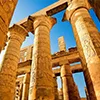
Begin at Karnak Temple, one of ancient Egypt's greatest religious complexes. Walk through monumental pylons, vast courtyards, towering columns, and richly decorated sacred spaces as your Egyptologist explains how generations of pharaohs expanded the complex over centuries.
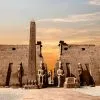
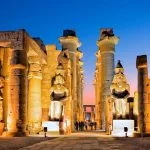
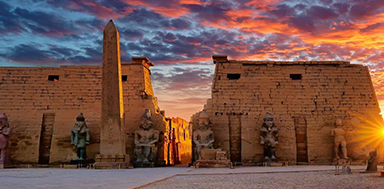
Continue to Luxor Temple, located in the heart of modern Luxor. Built and expanded by several pharaohs, including Amenhotep III and Ramesses II, the temple was closely connected with royal ceremonies and the ancient Opet Festival.
Breakfast, Lunch, Dinner

After breakfast on board, cross to Luxor's West Bank to explore the royal necropolis and the monumental temples of ancient Thebes. Return to the cruise afterward and continue sailing south through Upper Egypt.
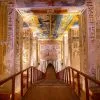
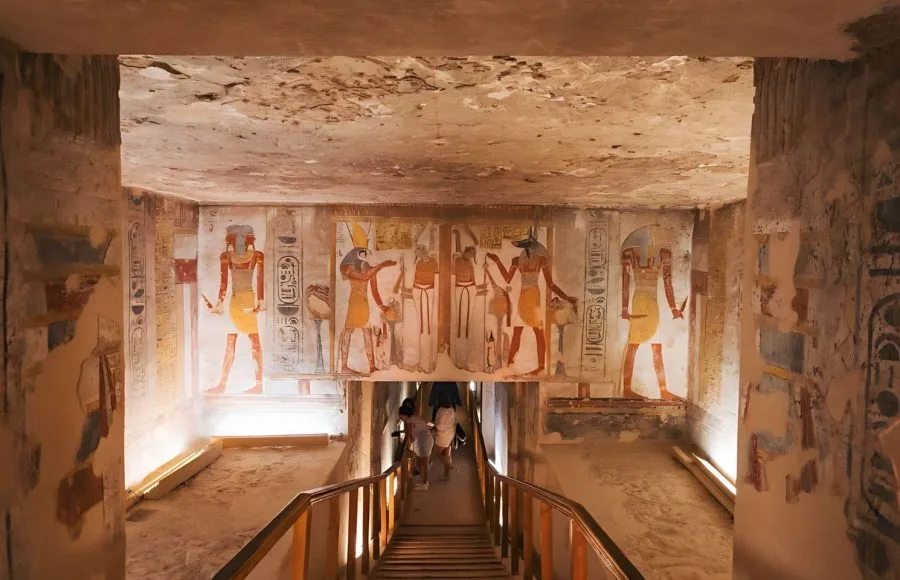
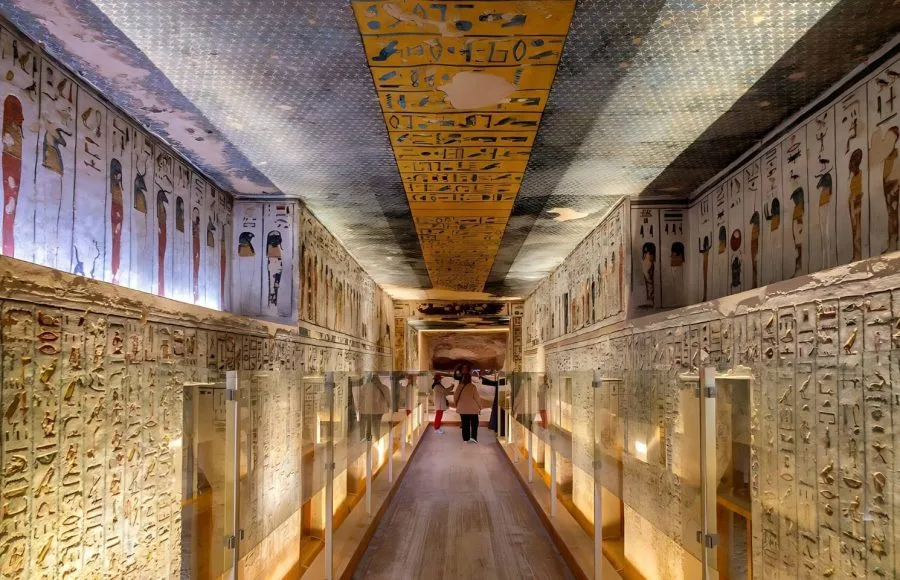
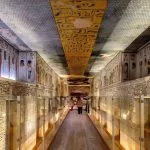
Enter the Valley of the Kings, where New Kingdom pharaohs were buried in elaborately decorated tombs carved into the desert mountains.
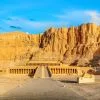
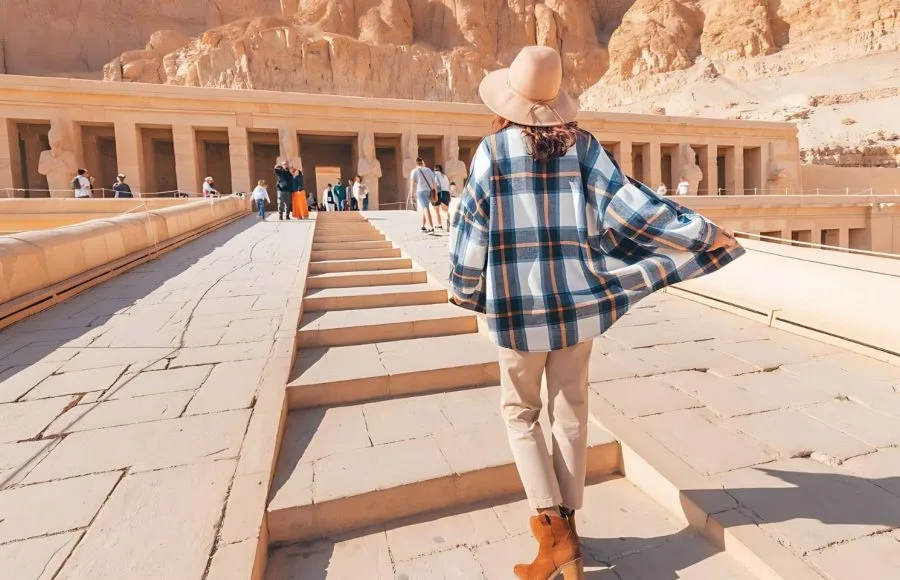
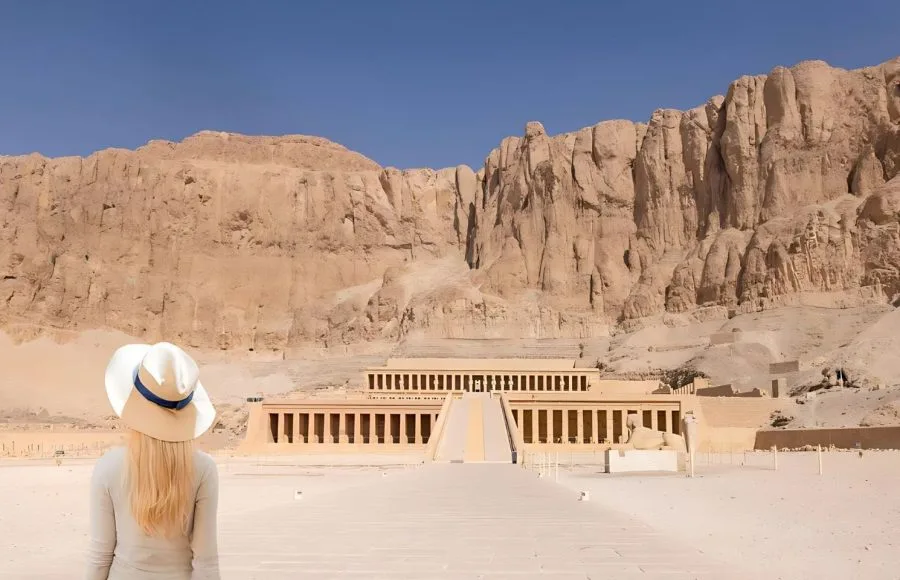
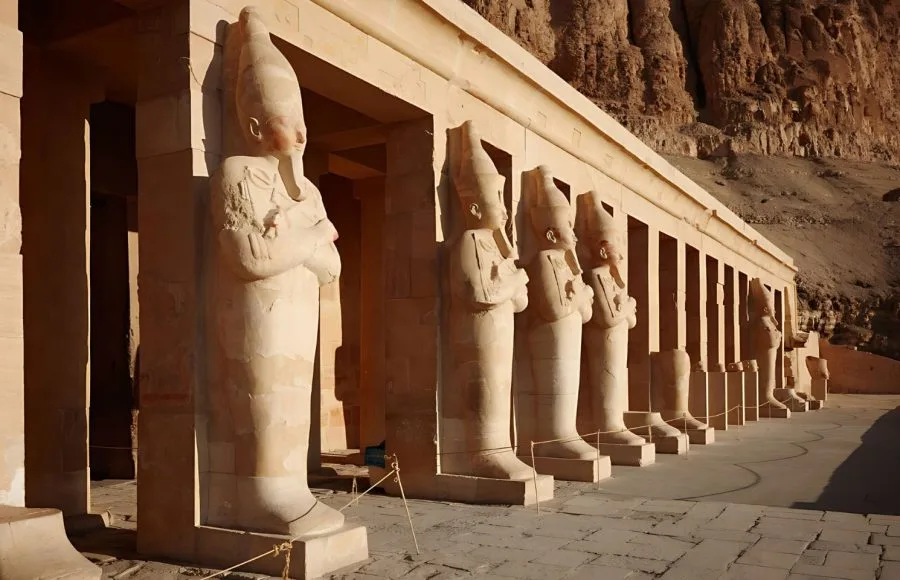
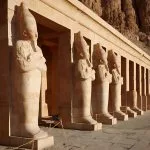
Continue to the Temple of Hatshepsut at Deir el-Bahari, dramatically positioned against the cliffs of Luxor's West Bank.
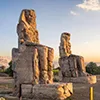
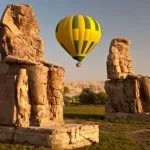
Pause at the Colossi of Memnon, two enormous seated statues of Pharaoh Amenhotep III that once stood before his vast mortuary temple.
Breakfast, Lunch, Dinner

Wake to the changing scenery of Upper Egypt as your Nile cruise continues south. Today brings two distinctive riverside temples, Edfu and Kom Ombo, before another peaceful night sailing through the Nile Valley.
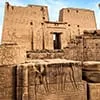
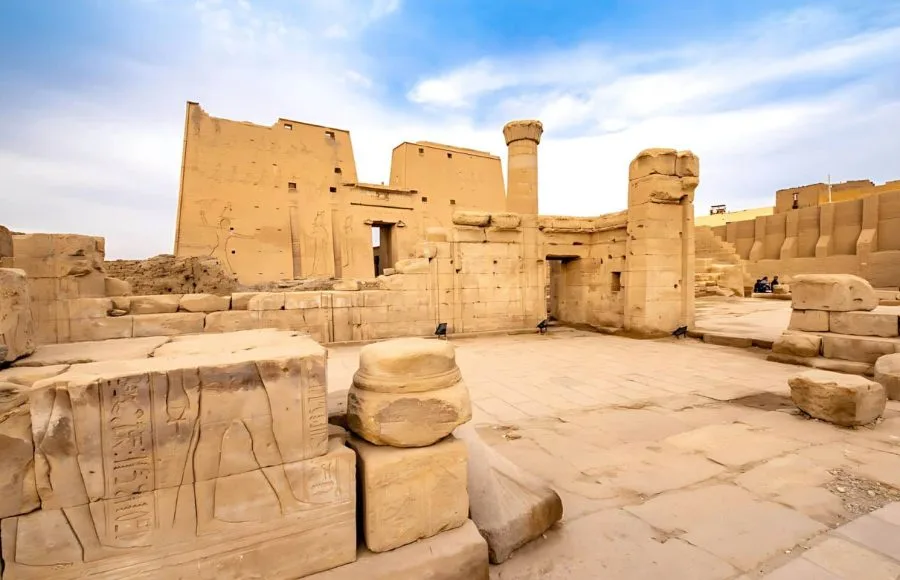
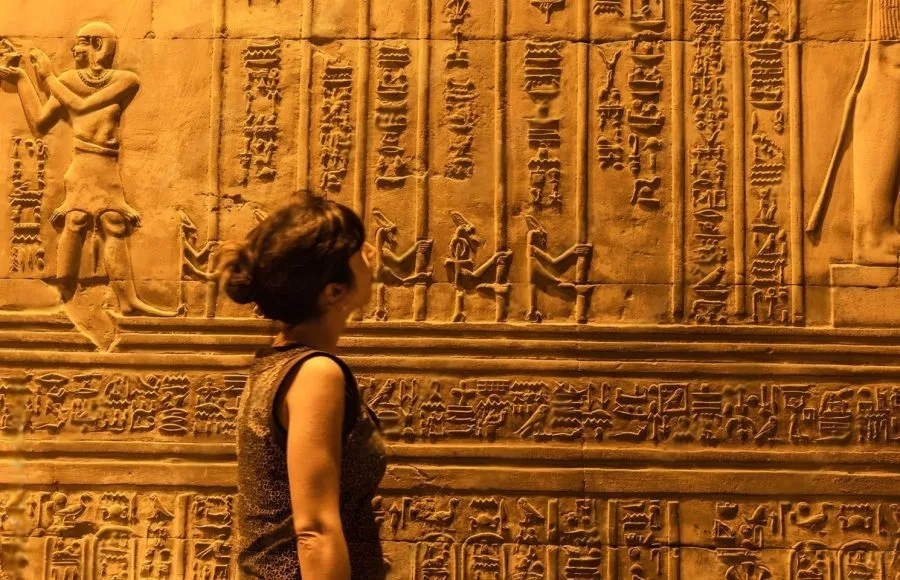
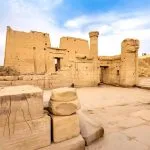
Visit the remarkably preserved Temple of Edfu, dedicated to the falcon-headed god Horus. Its enormous pylons, courtyards, columns, and detailed inscriptions provide an unusually complete picture of the design of an ancient Egyptian temple.
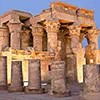
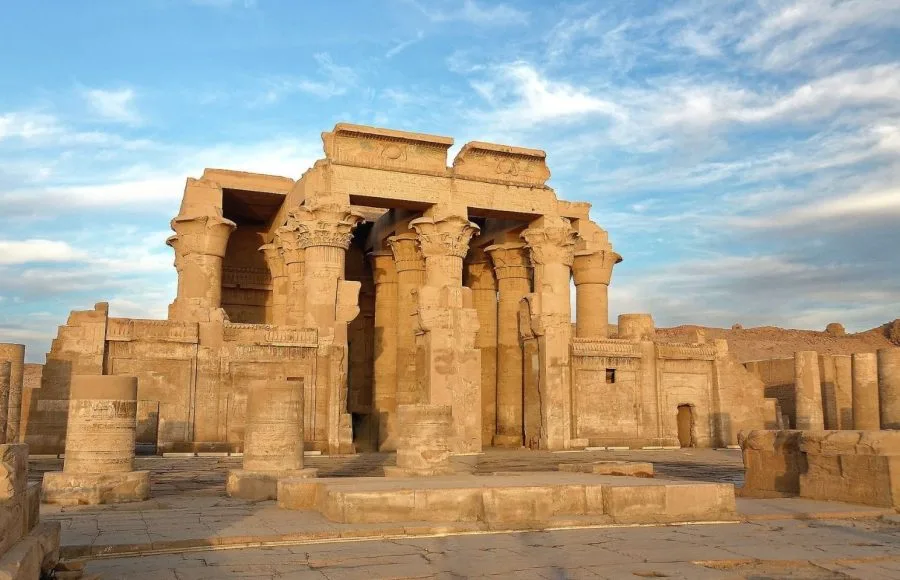
Continue to Kom Ombo Temple, uniquely dedicated to two deities: Sobek, the crocodile god, and Horus the Elder. The temple's unusual double design reflects its dual dedication, with parallel sanctuaries and halls creating one of the most distinctive layouts along the Nile. If you prefer a shorter itinerary built around this classic sailing experience, explore a shorter Egypt and Morocco journey centered on a Nile Cruise, with Aswan, Kom Ombo, Edfu, Luxor, Cairo, Casablanca, and Marrakech combined in one route.
Breakfast, Lunch, Dinner

After breakfast, arrive in Aswan and discover the city's ancient monuments and modern engineering landmarks. Visit the High Dam, the Unfinished Obelisk, and the Philae Temple before enjoying your final night on board the Nile cruise.
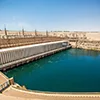
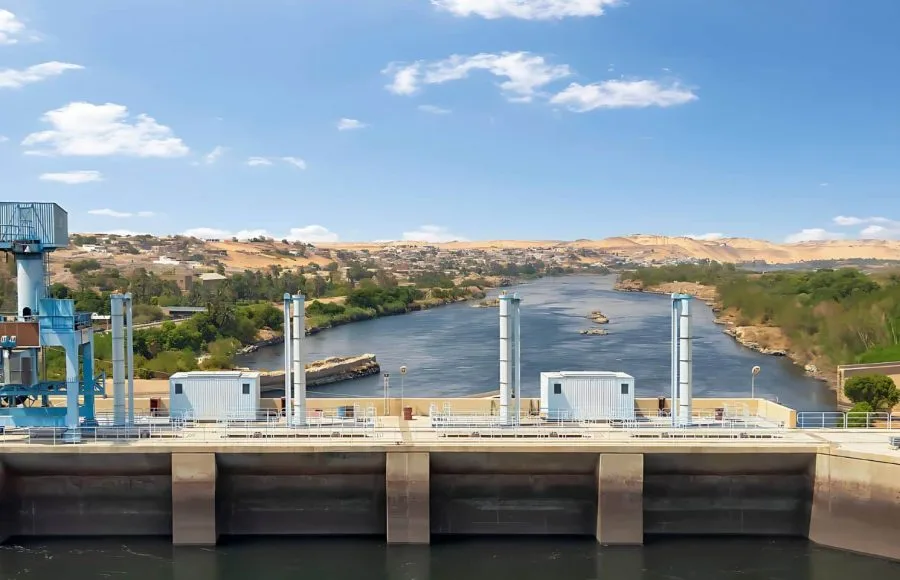
Begin at the Aswan High Dam, one of modern Egypt's most important engineering projects. Built to regulate the Nile and support water storage and hydroelectric generation, the dam created Lake Nasser and transformed the relationship between the river and communities throughout southern Egypt.
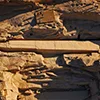
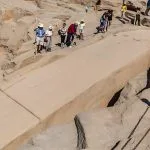
Continue to the ancient granite quarries to see the Unfinished Obelisk. Still resting in the stone where ancient craftsmen began carving it, the monument provides a fascinating glimpse into the techniques used to extract and shape enormous pieces of granite.
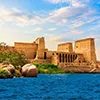
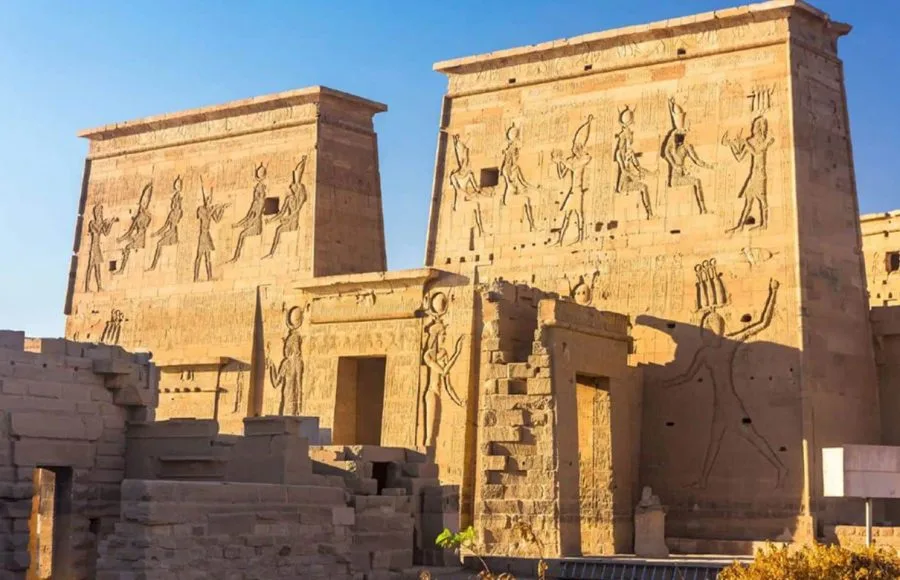
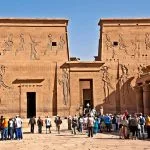
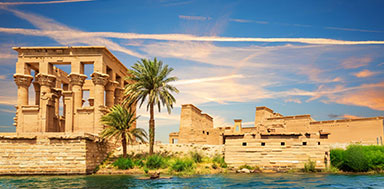
Take a short boat ride across the Nile to Philae Temple, dedicated primarily to the goddess Isis. Set on Agilkia Island and surrounded by water, the temple combines finely decorated sanctuaries and columns with one of Egypt's most memorable settings.
Breakfast, Lunch, Dinner
Arc III · Cairo to Rabat
Old Cairo gives way to Casablanca and Morocco’s capital

After breakfast, disembark from your Nile cruise and fly from Aswan back to Cairo. Continue your Egyptian journey through the city's museums, Coptic heritage, Islamic architecture, and traditional markets before returning to your Cairo hotel.
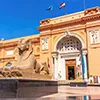
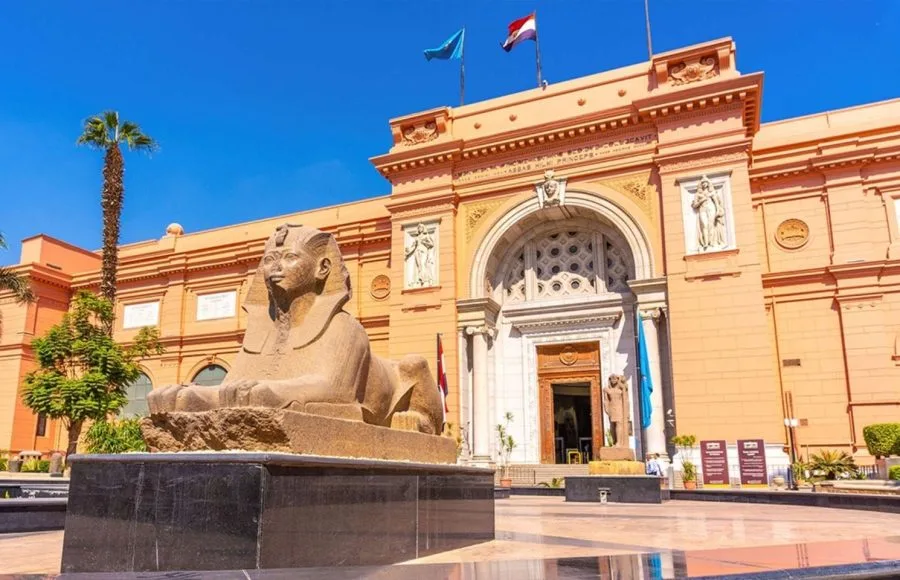
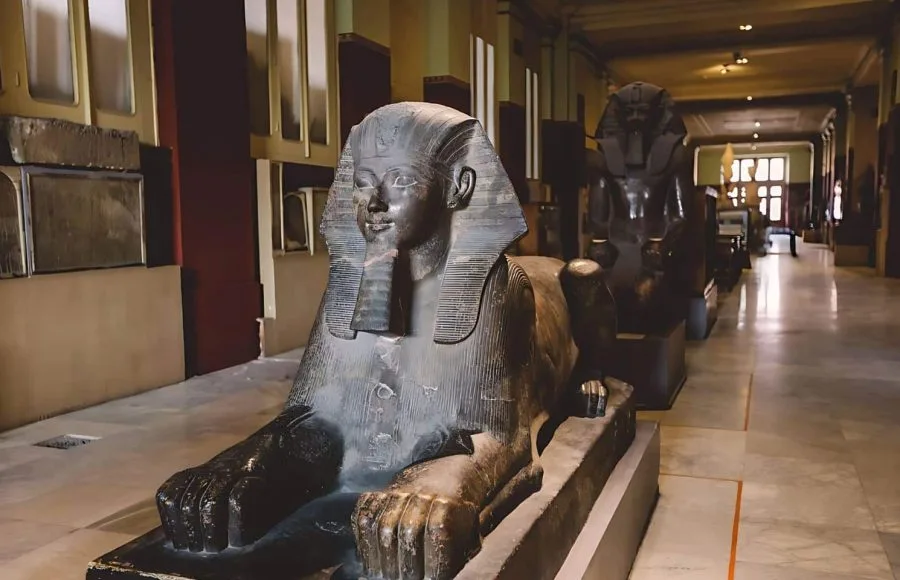
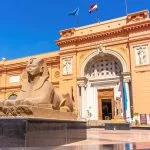
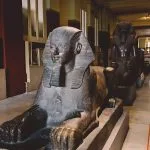
Begin with the Egyptian Museum in Cairo, one of the country's most important collections of ancient Egyptian antiquities. Its galleries provide another perspective on the civilization you encountered at Giza, Luxor, and Aswan, bringing together statues, funerary objects, jewelry, and other archaeological treasures.

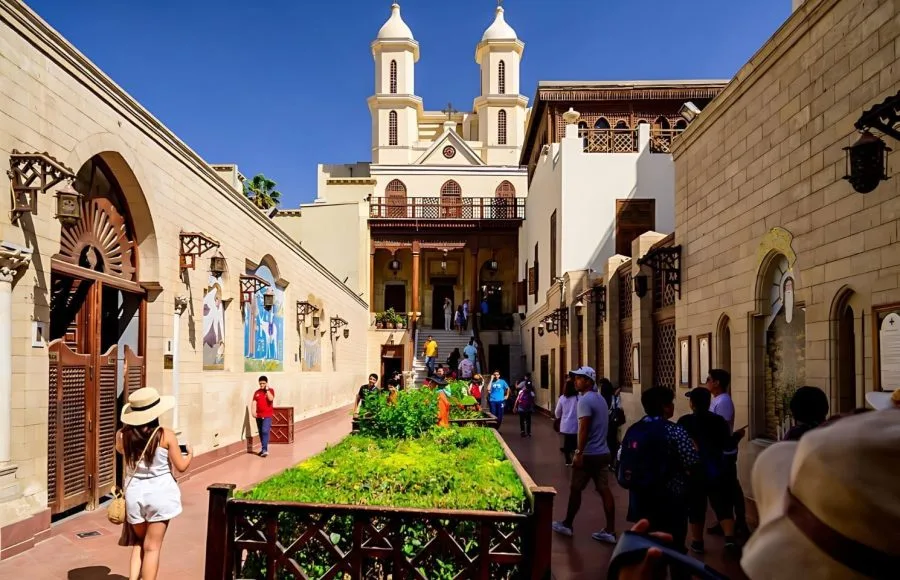
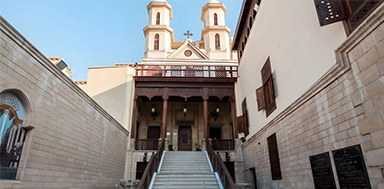
Continue to Old Cairo and visit the Hanging Church, one of the area's most important Coptic landmarks. Built above part of the Roman-era Babylon Fortress, the church reflects the long Christian history of Cairo and introduces a different chapter of Egypt's cultural heritage.
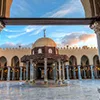
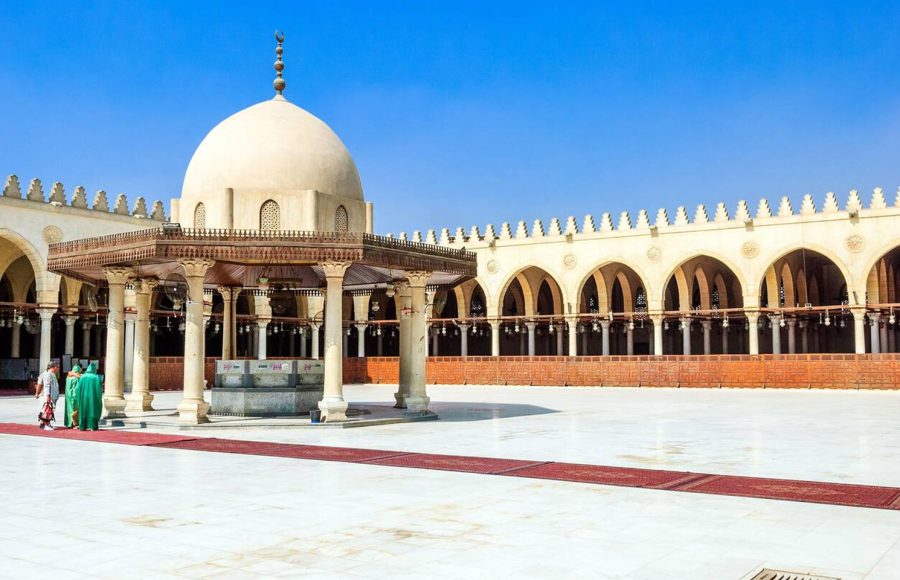
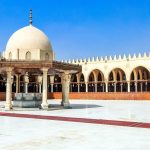
Begin your Old Cairo experience at the Amr Ibn Al-Aas Mosque, traditionally regarded as the oldest mosque in Egypt and one of the country's most important early Islamic landmarks
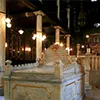
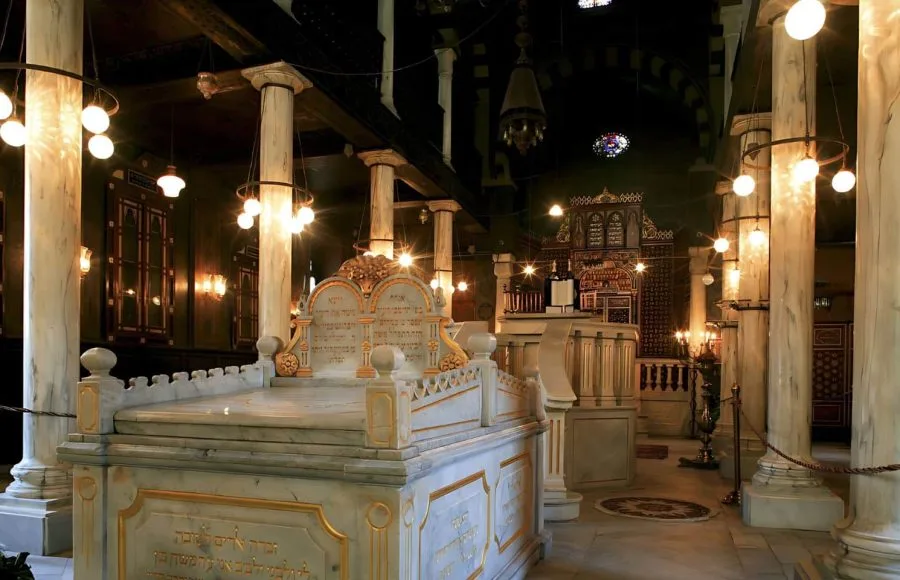
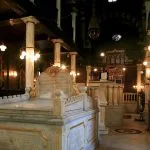
Next, visit Ben Ezra Synagogue, one of the historic Jewish landmarks of Old Cairo. The synagogue stands within the same compact heritage area as several important Coptic churches, making this part of the journey a unique opportunity to see how different religious traditions have shaped Cairo's history over centuries.
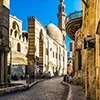
Walk along Al-Muizz Street, where medieval Islamic Cairo unfolds through historic mosques, madrasas, sabils, and traditional buildings. The street feels like an open-air museum, but it is also part of the living city, with local shops and daily activity continuing among centuries-old architecture.
Finish your Cairo sightseeing at Khan El Khalili Bazaar, where narrow lanes lead between shops selling traditional crafts, spices, jewelry, textiles, perfumes, and souvenirs.
Breakfast, Lunch
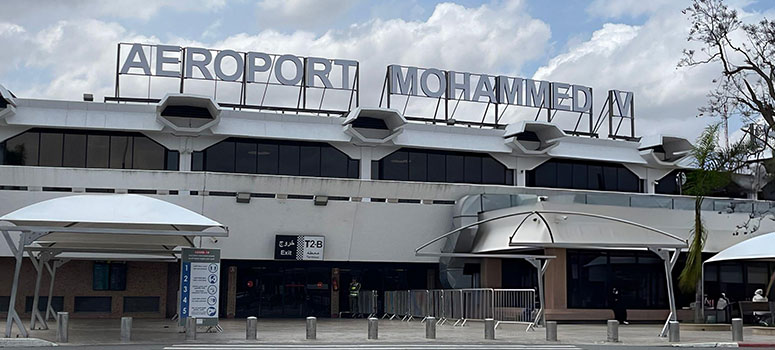
After breakfast, transfer with your Tripidays representative to Cairo International Airport for your flight to Casablanca. Upon arrival in Morocco, meet your local representative and transfer to your hotel as your 13 day Egypt and Morocco journey enters its second chapter. If you are considering extending your Moroccan experience beyond the cities included in this itinerary, our guide to the best places to visit in Morocco can help you compare destinations and understand which regions may suit your travel plans.
Breakfast
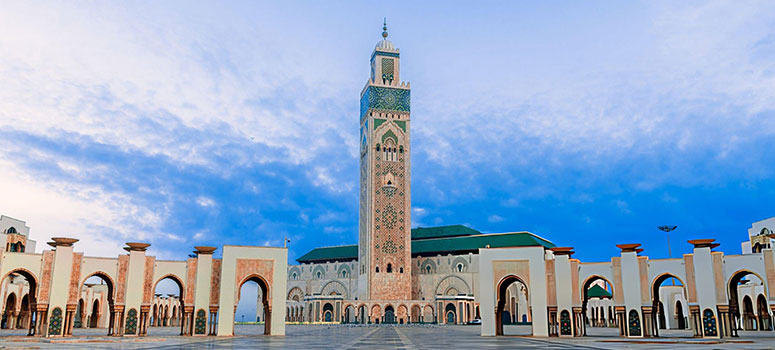
After breakfast, discover Casablanca's Atlantic character before continuing to Rabat. Today's route introduces two different sides of Morocco, from the modern energy of Casablanca to the royal and historic atmosphere of the capital.
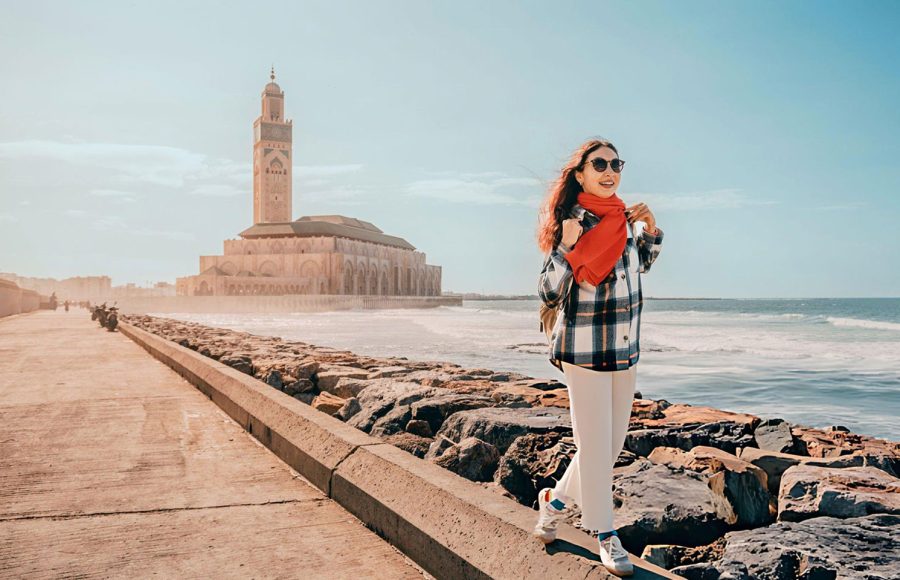
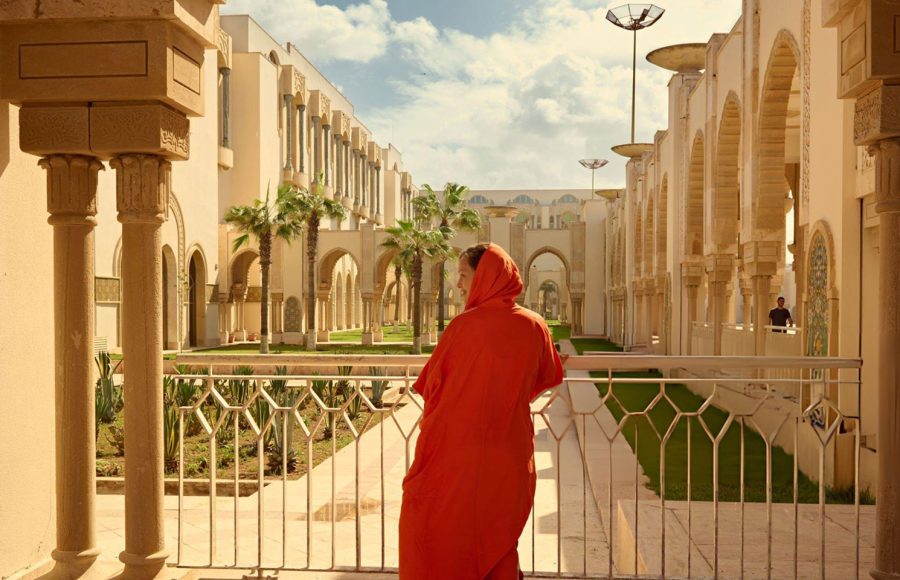
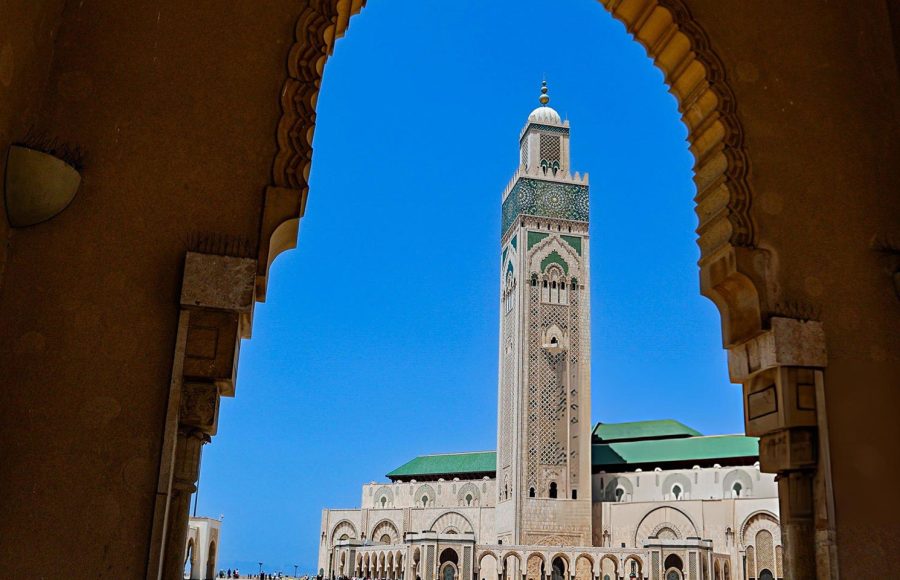
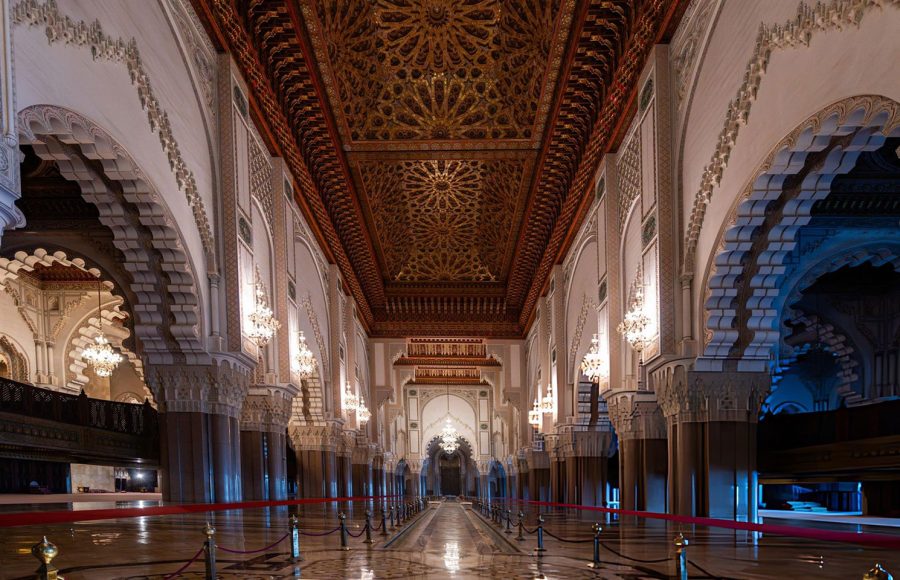
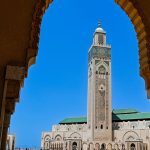
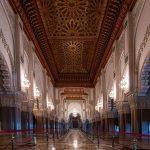
Begin at the spectacular Hassan II Mosque, dramatically positioned beside the Atlantic Ocean. Its monumental scale, intricate Moroccan craftsmanship, and oceanfront setting make it one of Casablanca's defining landmarks. The location itself creates a memorable contrast with the temples and tombs you explored along the Nile only days earlier.
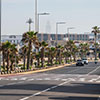
Continue along the Casablanca Corniche, where the city meets the Atlantic. The waterfront reveals a more contemporary side of Morocco, with promenades, cafés, beaches, and ocean views creating a completely different travel atmosphere from the historic medinas you will encounter later in the journey.
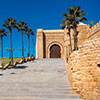
Leave Casablanca and travel by private vehicle to Rabat, Morocco's capital. As the scenery changes, the journey shifts from Casablanca's modern coastal character toward a city shaped by royal history, fortified neighborhoods, and monumental architecture. Before exploring Morocco's historic cities, travelers may also find our guide to Morocco's culture and customs useful for understanding local etiquette, dress, greetings, dining behavior, and everyday social norms.
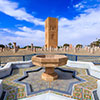
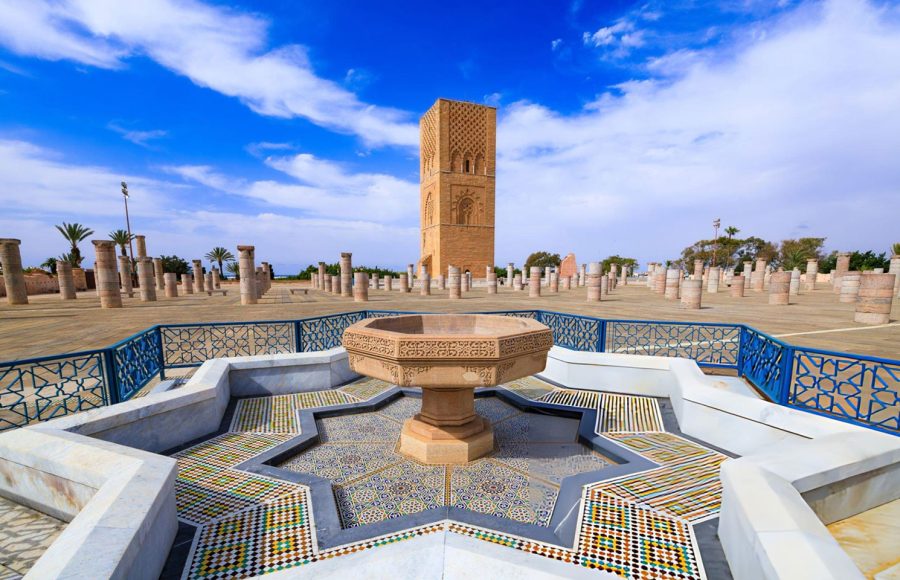
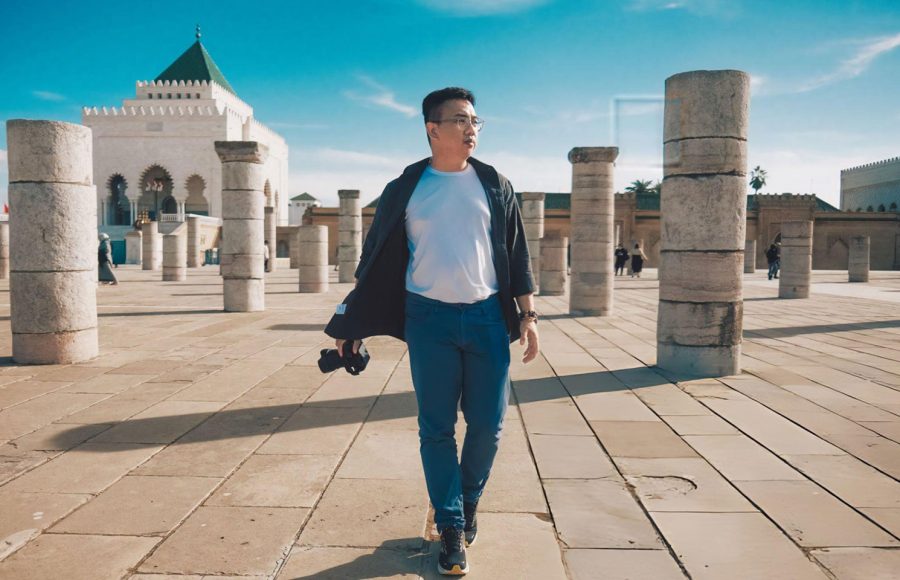
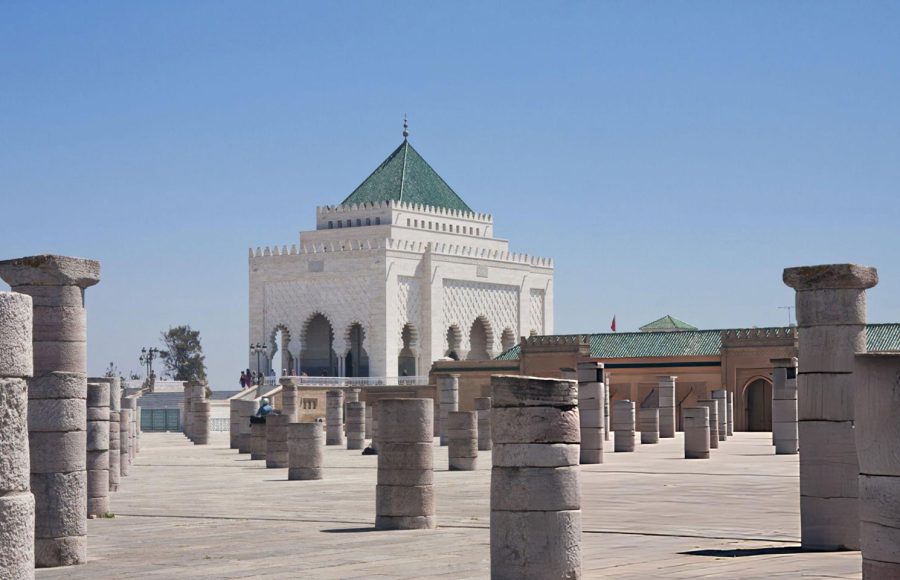
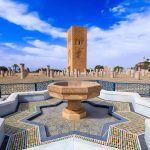
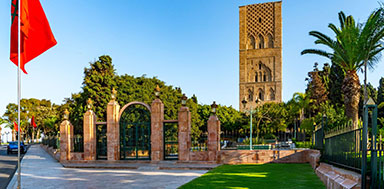
Visit Hassan Tower, the famous unfinished minaret of an ambitious 12th-century mosque project. The tower and the surrounding columns give you a clear impression of the scale originally envisioned for the complex.
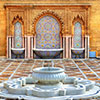
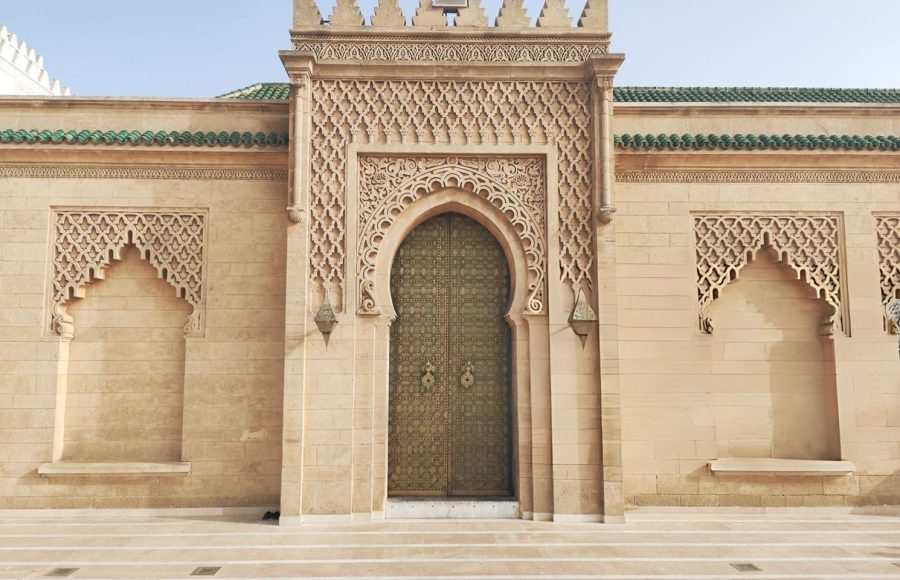
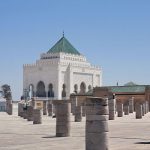
Nearby, visit the Mausoleum of Mohammed V, an elegant monument combining traditional Moroccan craftsmanship with a formal ceremonial setting.
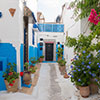
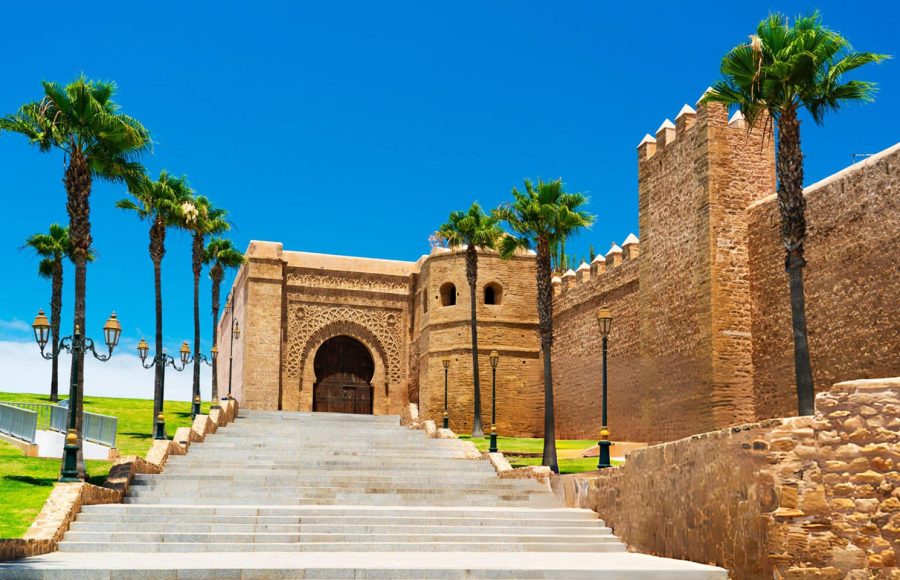
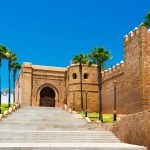
Continue to the Kasbah of the Udayas, a historic fortified neighborhood overlooking the Bou Regreg River and Atlantic. Walk through its narrow lanes and enjoy the contrast between its quiet residential character and the monumental landmarks of central Rabat.
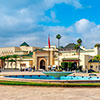
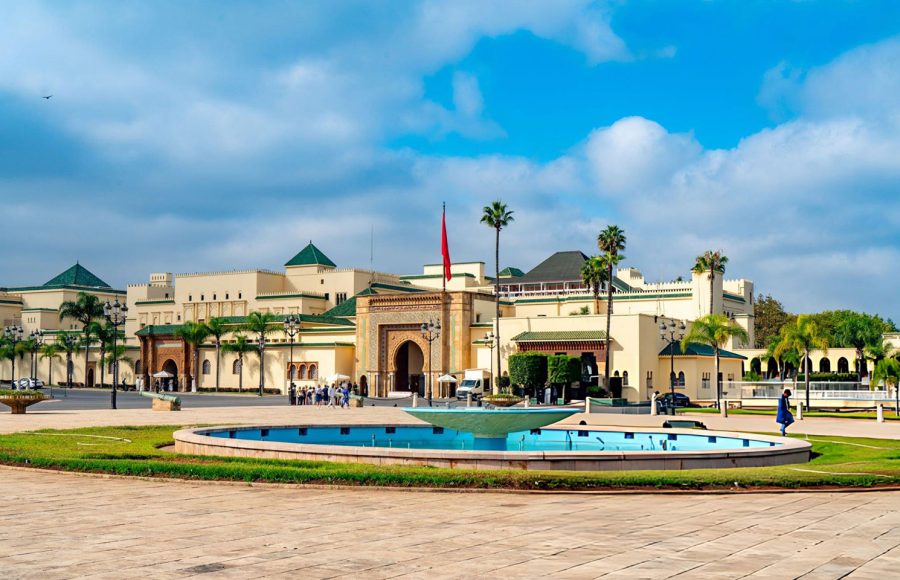
Conclude your sightseeing near the Royal Palace of Rabat, also known as Dar al-Makhzen. The palace remains a working royal complex, so visitors generally experience its formal exterior and gates rather than the private interior.
Breakfast, Lunch
Arc IV · Meknes to Marrakech
Volubilis, Fez and Marrakech complete Morocco’s imperial cities journey
After breakfast, leave Rabat for Meknes, one of Morocco's historic imperial cities. Continue to the Roman ruins of Volubilis before arriving in Fez, where you spend the night surrounded by the atmosphere of Morocco's spiritual and cultural capital.
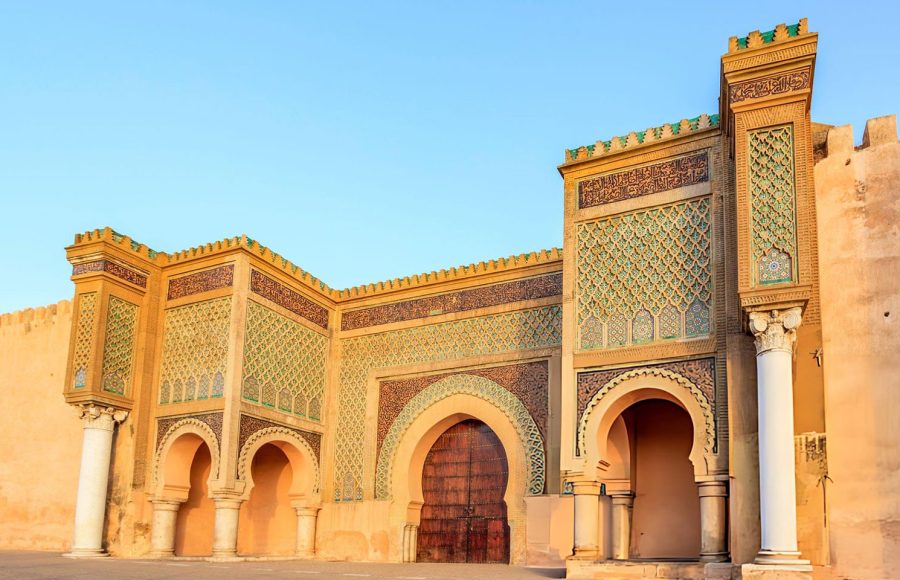
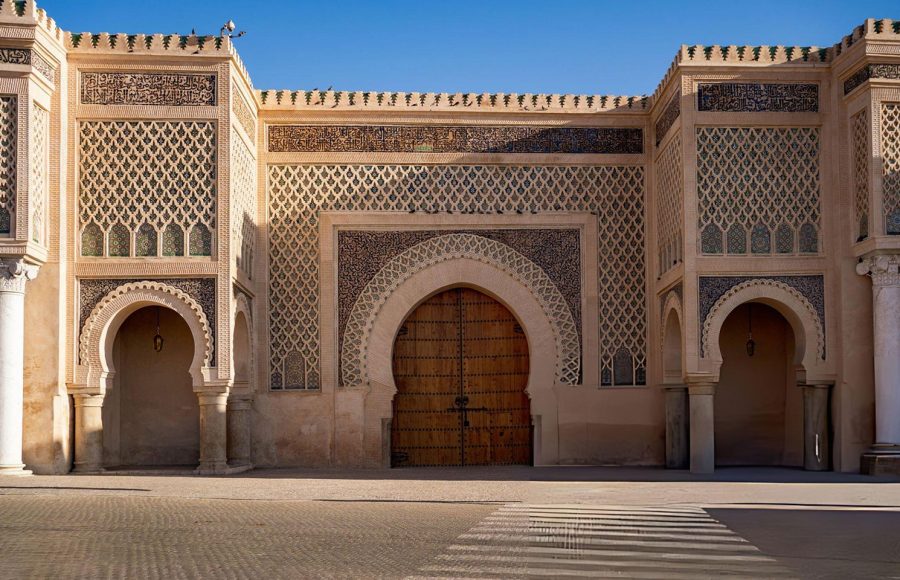
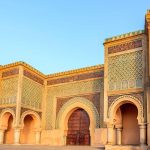
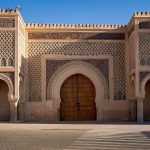
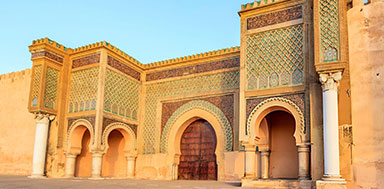
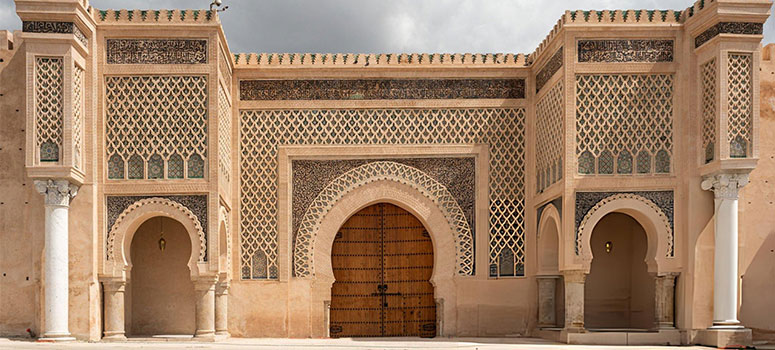
Begin exploring Meknes at Bab Mansour, the city's monumental gateway and one of its most recognizable architectural landmarks. The intricate tilework, inscriptions, columns, and imposing scale reflect the ambitions of Sultan Moulay Ismail, who transformed Meknes into an imperial capital.
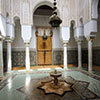
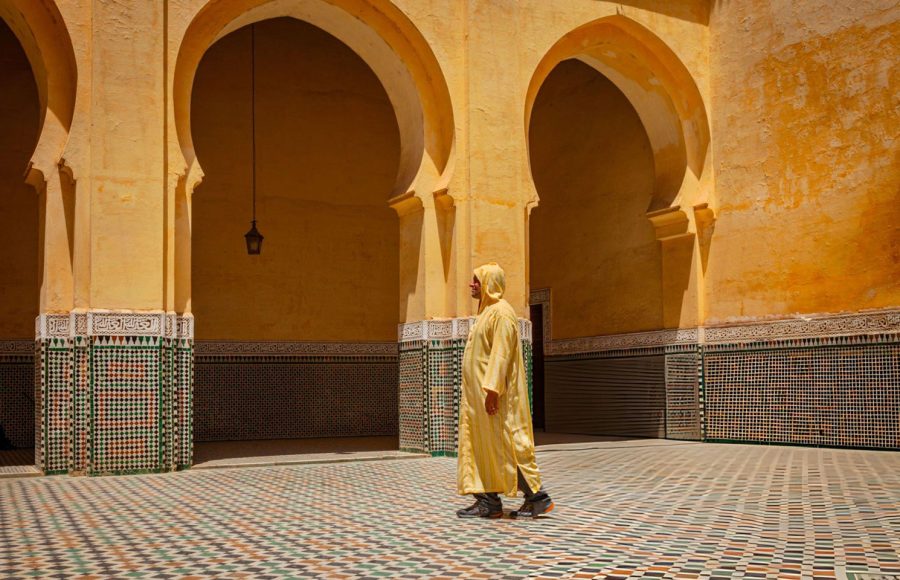
Continue to the Mausoleum of Moulay Ismail, associated with the sultan who made Meknes a center of royal power. The site provides an opportunity to understand the ruler and dynasty behind the city's monumental architecture.
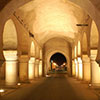
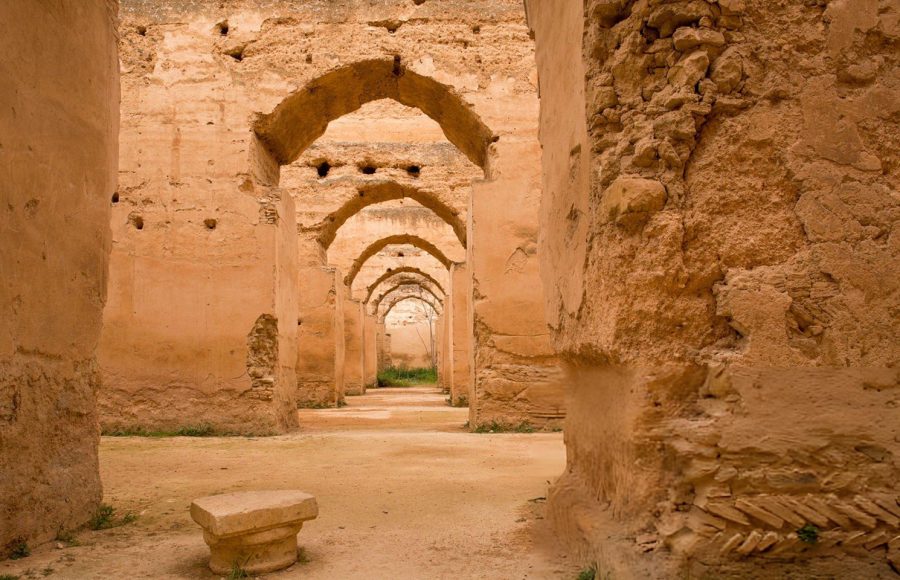
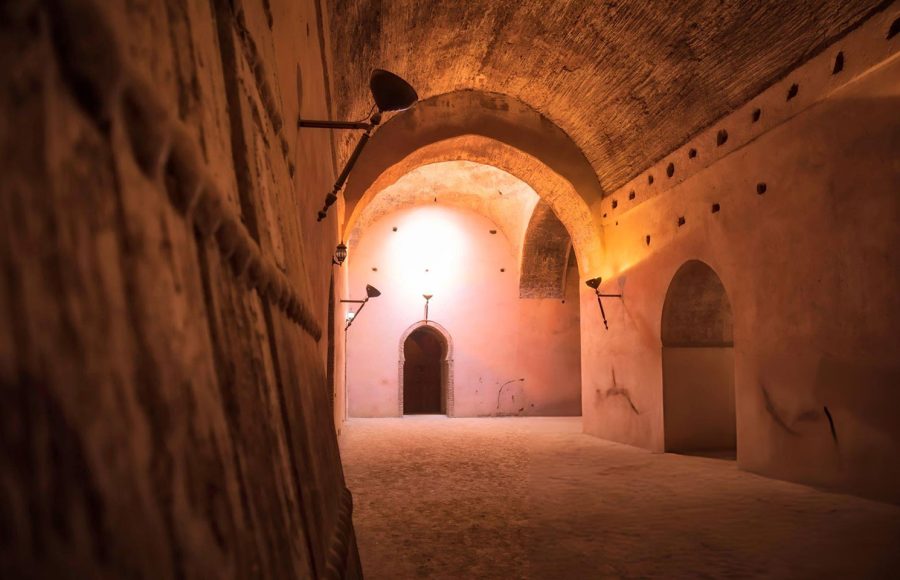
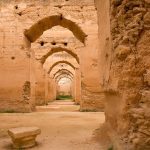
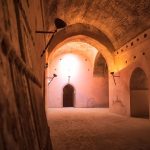
Visit Heri es-Souani, the vast complex of granaries and royal stables built during Moulay Ismail's reign. Its enormous vaulted spaces demonstrate the logistical scale required to support an imperial capital and its royal court.
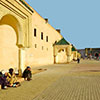
Continue to Place el-Hedim, the broad square opposite Bab Mansour. Take in the atmosphere before leaving Meknes and continuing toward one of Morocco's most important archaeological sites.
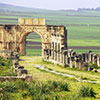
Step further back in time at Volubilis, the remarkable Roman archaeological site near Meknes. Walk among ancient streets, columns, public buildings, and beautifully preserved mosaics that reveal how Roman life developed in North Africa. The Basilica, Capitoline Temple, Triumphal Arch, forum, and private villas create a fascinating connection between Morocco's Roman past and the imperial history of its later cities.
Breakfast, Lunch
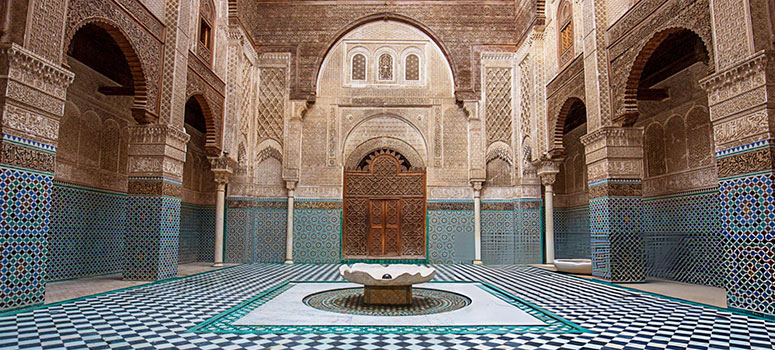
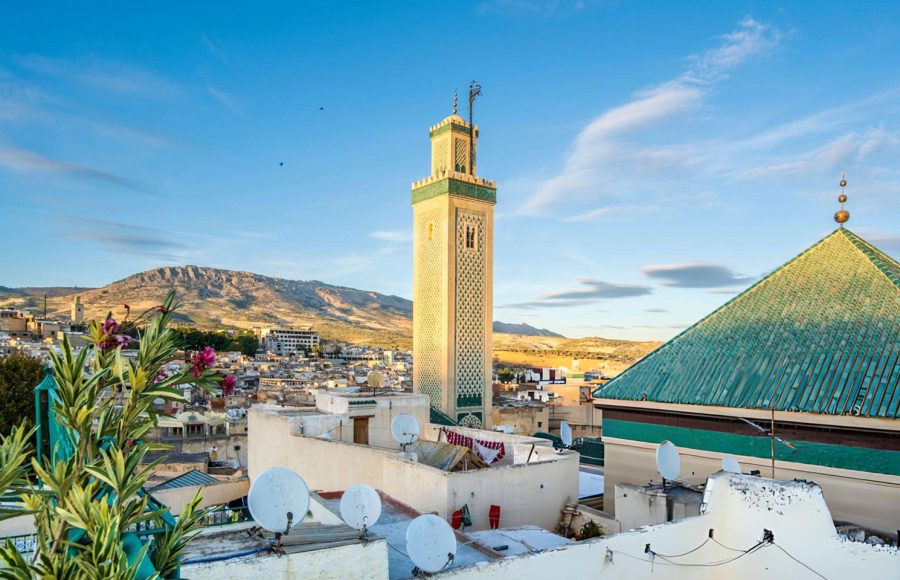
After breakfast, spend a full day exploring Fez, where centuries-old religious institutions, artisan traditions, and the labyrinthine medina create one of the most immersive experiences of this Egypt & Morocco imperial cities tour.
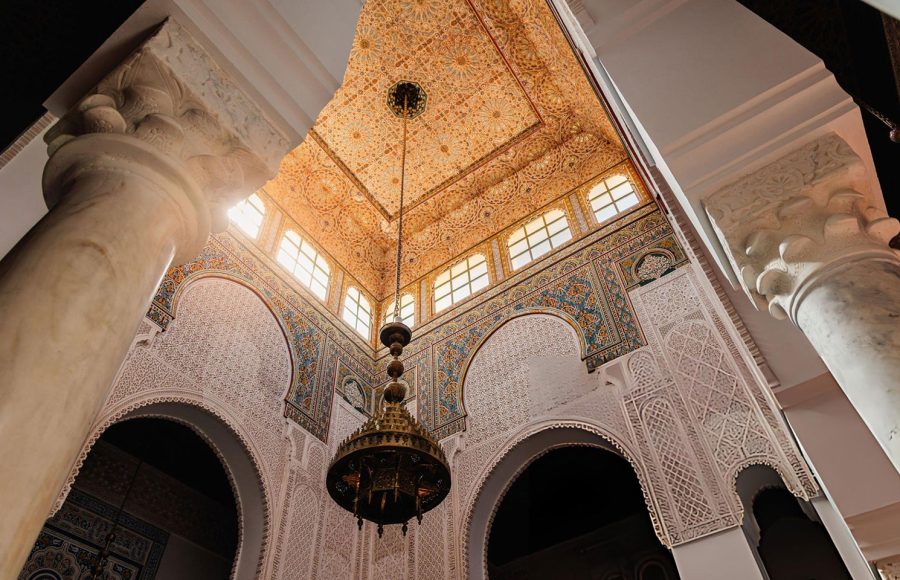
Begin with Al-Qarawiyyin, the historic center of learning associated with Fez's long intellectual tradition. Founded in the 9th century, the institution became an important center of Islamic scholarship and remains closely connected with the city's identity as a spiritual and educational capital.
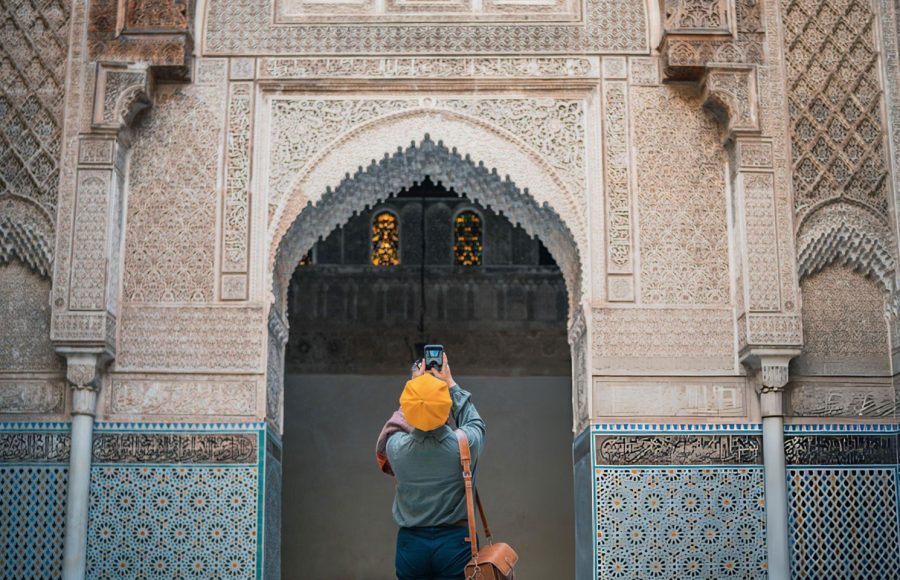
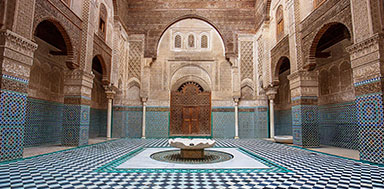
Continue to the Bou Inania Madrasa, a remarkable example of Marinid architecture. Look closely at the carved cedar, zellij tilework, stucco decoration, and carefully proportioned courtyards to appreciate the craftsmanship that defines historic Fez.
Visit the famous Chouara Tanneries, where traditional leather production remains an important part of Fez's artisan heritage. From the surrounding terraces, the colorful dyeing vats create one of the city's most recognizable views and offer a glimpse into crafts that have been practiced in Fez for generations.
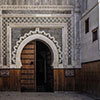
Continue to Nejjarine Fountain, a beautifully decorated example of Moroccan craftsmanship in the heart of the medina. The surrounding square and historic caravanserai reflect Fez's role as a meeting point for merchants, craftsmen, scholars, and travelers.
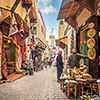
End your exploration inside Fes el-Bali, the historic medina and one of the defining experiences of any Egypt and Morocco to Volubilis & Fez tour. For travelers interested in understanding the flavors they encounter along the way, our Moroccan food guide explains traditional dishes, drinks, dining experiences, and what to look for when eating across Morocco.
Breakfast, Lunch
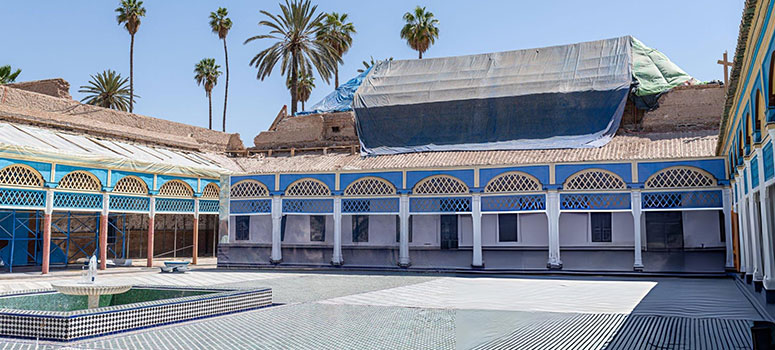
After breakfast, leave Fez behind and travel toward Marrakech. Spend your final full day exploring Marrakech, from the elegant Bahia Palace and iconic Koutoubia Mosque to the winding Medina and colorful souks. As evening approaches, experience the lively atmosphere of Jemaa el-Fna before returning to your hotel for your final night in Morocco.
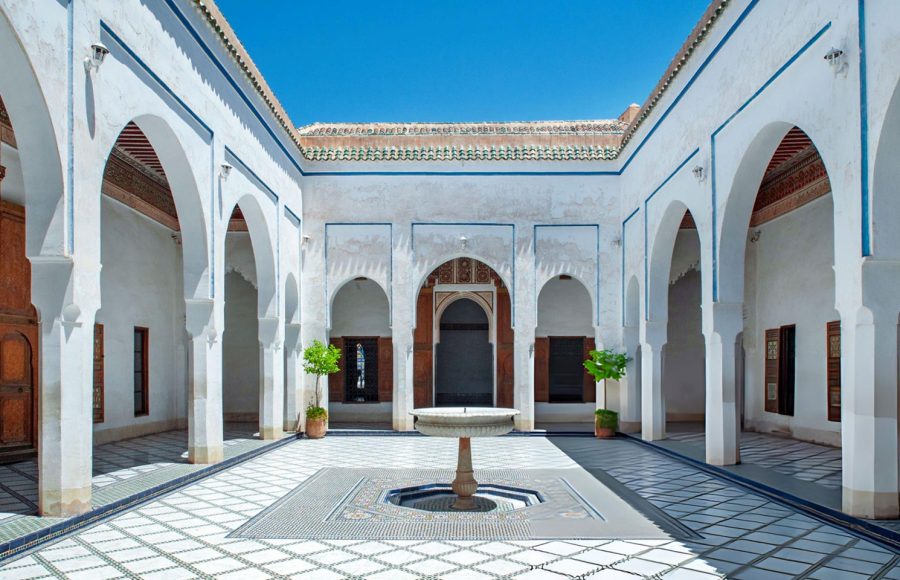
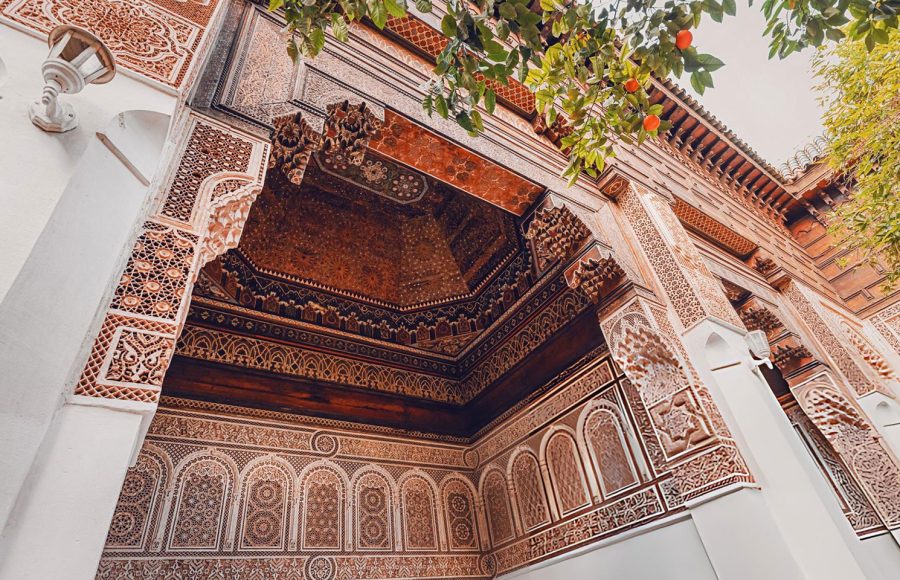
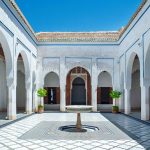
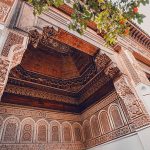
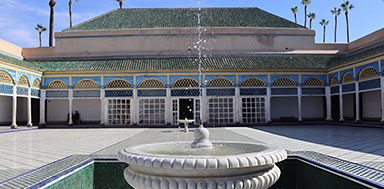
Begin at Bahia Palace, one of Marrakech's most beautiful historic residences. Walk through its courtyards, gardens, carved cedar ceilings, painted details, zellij tilework, and intricate stucco decoration as you discover the craftsmanship of 19th-century Morocco.
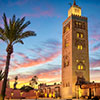
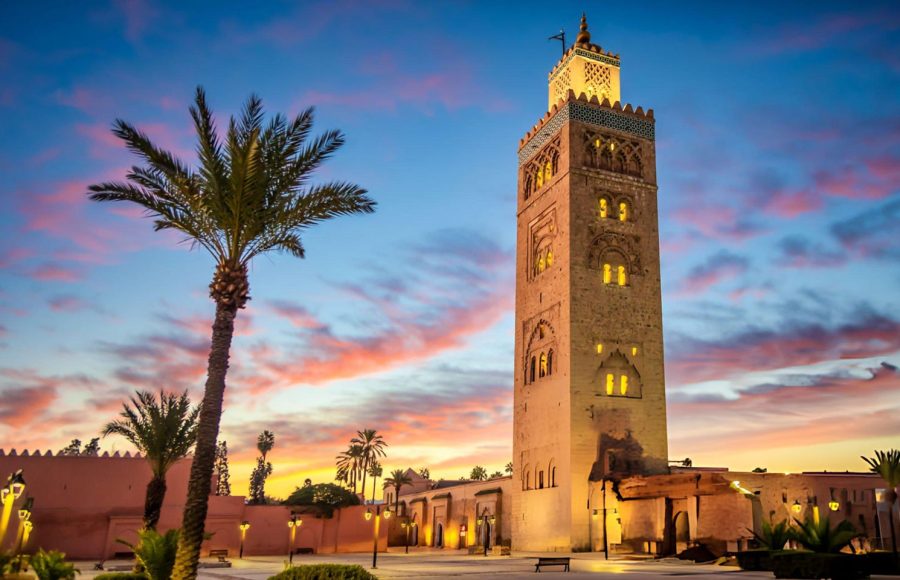
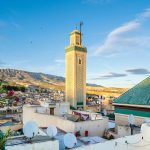
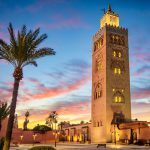
Continue to the Koutoubia Mosque, whose distinctive minaret has become one of the defining symbols of Marrakech. Although non-Muslim visitors cannot enter the mosque for worship, the exterior and surrounding gardens provide an excellent setting to appreciate its architecture and its prominent place in the city's historic skyline.
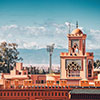
Enter the Marrakech Medina, where narrow lanes lead between traditional houses, workshops, cafés, historic gateways, and centuries-old architecture.
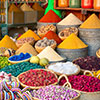
Continue through the traditional Marrakech souks, where artisans and merchants display leather goods, textiles, lanterns, metalwork, spices, carpets, and other Moroccan crafts.
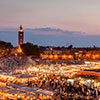
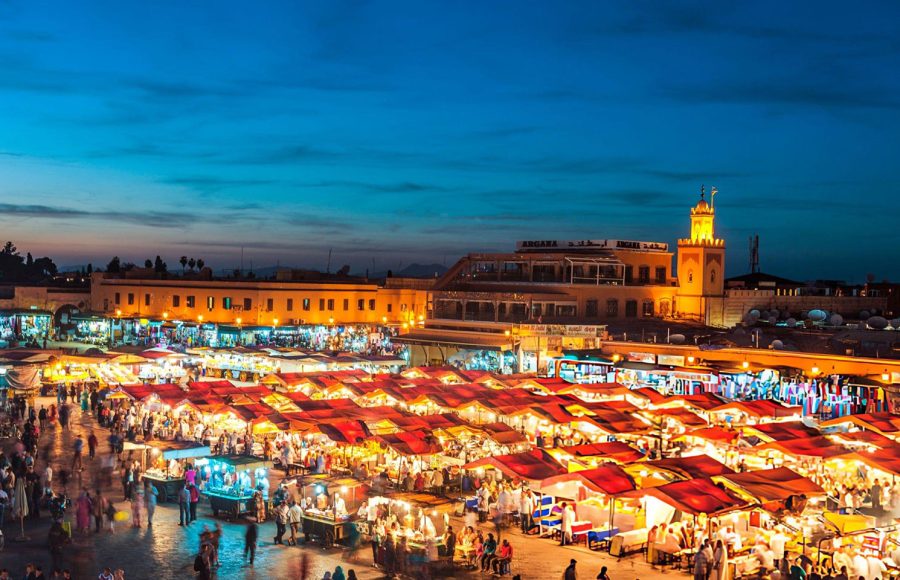
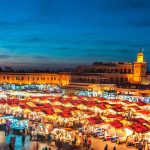
As afternoon turns toward evening, arrive at Jemaa el-Fna, the famous central square of Marrakech. If you are looking for a longer version of this North Africa journey, you can also explore a more comprehensive Egypt and Morocco itinerary with Chefchaouen, Fez and Marrakech, adding more time in Egypt as well as Chefchaouen and additional Moroccan landscapes.
Breakfast, Lunch
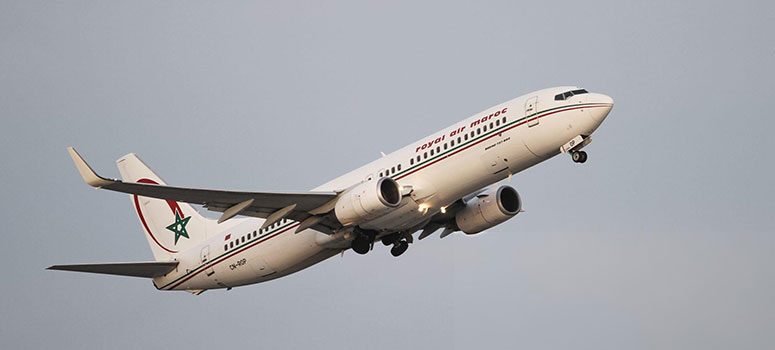
After breakfast, check out from your hotel and transfer by private vehicle to Marrakech Menara Airport for your departure flight. Your 13 day Egypt and Morocco tour comes to an end after a journey connecting Cairo, the Nile Valley, Morocco's imperial cities, Fez, and Marrakech. Travelers looking for a longer North Africa experience can explore an Egypt and Morocco adventure combining the Nile, Hurghada, and Morocco's Sahara, with additional time for the Red Sea, Atlas Mountains, Aït Ben Haddou, and Merzouga.
Breakfast
* You can let us know if you'd like to customize your tour itinerary to meet your needs. We value your input and aim to accommodate your requirements.
The tour package includes the services specified in the confirmed itinerary, such as accommodation, scheduled sightseeing, Egyptologist and local guiding services, transportation within the tour, domestic flights required by the itinerary, the Nile Cruise, meals listed in the daily program, and airport transfers.
No. International flights are not included in this 13 day Egypt and Morocco tour, including the flight between Cairo and Casablanca. Tripidays can arrange the tour services and airport transfers included in the itinerary, while travelers remain responsible for booking their international airfare.
The tour combines several forms of transportation because of the distance between Egypt's Nile Valley and Morocco's cities. Domestic flights are used for the Cairo–Luxor and Aswan–Cairo sections, while the Egypt–Morocco connection requires an international flight. Private vehicles are used for sightseeing and overland journeys within Morocco, including the routes connecting Casablanca, Rabat, Meknes, Volubilis, Fez, and Marrakech.
The Nile Cruise travels from Luxor to Aswan. This direction allows you to visit Luxor's major East and West Bank sites before sailing south through Upper Egypt, with stops at Edfu and Kom Ombo before reaching Aswan.
Yes, the itinerary is designed around major first-time highlights while also going beyond the most common city combinations. In Egypt, it combines Cairo with Luxor, Aswan, and a multi-day Nile Cruise. In Morocco, it moves through Casablanca, Rabat, Meknes, Volubilis, Fez, and Marrakech, giving travelers exposure to Atlantic, imperial, Roman, and historic medina experiences in one trip.





13 Days / 12 Nights
Cairo Airport or Istanbul Airport
Cairo / Giza / Aswan / Abu Simbel / Luxor / Istanbul / Cappadocia / Ephesus / Pamukkale
13 Days / 12 Nights
Cairo Airport or Amman Airport
Cairo / Luxor / Aswan / Abu Simbel / Amman / Jerash / Madaba / Petra
13 Days / 12 Nights
Cairo Airport
Cairo / Luxor / Aswan / Alexandria / Sharm El Sheikh
13 Days / 12 Nights
Cairo Airport
Cairo / Alexandria / Luxor / Abu Simbel / Bahariya Oasis
13 Days / 12 Nights
Cairo Airport
Cairo / Alexandria / Aswan / Luxor / Hurghada
13 Days / 12 Nights
Cairo Airport
Cairo / Fayoum / Aswan / Abu Simbel / Luxor / Marsa Alam
13 Days / 12 Nights
Cairo Airport
Cairo / Alexandria / Luxor / Aswan / Abu Simbel / Lake Nasser
13 Days / 12 Nights
Cairo Airport
Cairo / Luxor / Aswan / Abu Simbel / Lake Nasser / Alexandria
13 Days / 12 Nighs
Cairo Airport
Cairo / Aswan / Abu Simbel / Luxor / Hurghada
All things you should know before visiting Egypt & Beyond


Tripidays Egypt Tours has been offering an exceptional range of Egypt tours, vacation packages, Nile cruises, day trips, and shore excursions tailored to meet the diverse interests of travelers worldwide for over 45 years.