Moroccan food is known for slow-cooked stews, fragrant spices, fresh bread, hearty soups, delicate pastries, and sweet mint tea. Its cuisine draws on Amazigh (Berber), Arab-Andalusian, Mediterranean, and other regional traditions, creating a variety of dishes that go well beyond the familiar tagine.
For travelers visiting Morocco for the first time, knowing what to order can make meals more enjoyable. You might encounter chicken with preserved lemons, couscous topped with vegetables, crisp pastilla filled with spiced meat and almonds, or freshly prepared msemen served with honey. The flavors can be savory, tangy, earthy, or sweet, and many dishes rely more on aromatic seasoning than intense heat.
This Moroccan food guide from Tripidays introduces the dishes worth trying, what to drink, and how to find options that suit different tastes and dietary preferences.
What Are the Most Famous Moroccan Dishes?
Moroccan cuisine includes slow-cooked stews, steamed grains, savory pastries, soups, and grilled meats. These are some of the traditional dishes travelers are most likely to encounter.
1. Tagine: Morocco’s Signature Slow Cooked Dish
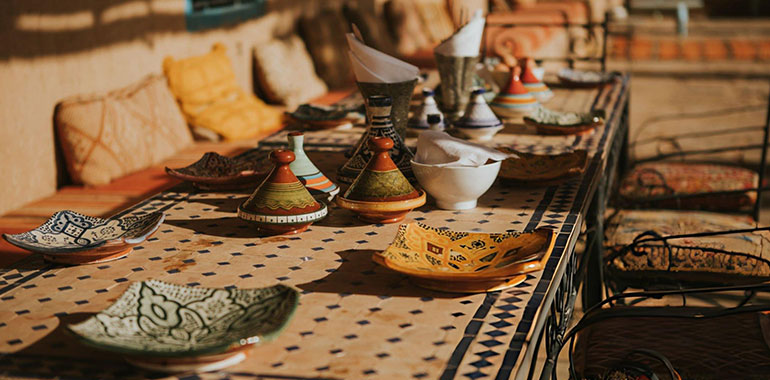
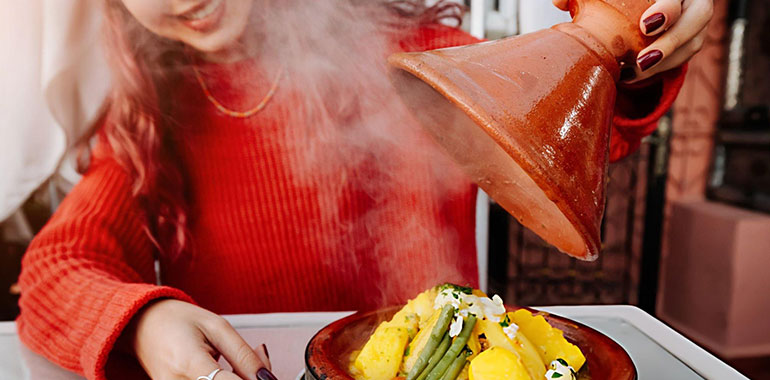
Tagine is one of the best-known Moroccan dishes. The name refers both to the cooking vessel, traditionally made from clay with a distinctive conical lid, and to the food prepared in it.
Ingredients cook slowly, allowing meat, vegetables, spices and sauces to develop flavor. Common versions include:
- Chicken tagine with preserved lemon and olives: A savory combination of tender chicken, citrusy preserved lemon and briny olives.
- Lamb tagine with prunes: A sweet-savory dish that combines slow-cooked meat with fruit and warm spices.
- Vegetable tagine: A meat-free option featuring vegetables cooked with herbs and seasoning. Ask whether the sauce or stock contains meat if you follow a vegetarian diet.
- Kefta tagine: Seasoned minced-meat balls cooked in tomato sauce, sometimes with eggs.
Tagine is a good first choice if you want a filling meal with plenty of flavor. If you prefer mild food, ask about the seasoning before ordering; Moroccan dishes can be aromatic without necessarily being hot.
2. Couscous: A Traditional Moroccan Staple
Couscous consists of small steamed grains of semolina, traditionally served with vegetables, broth, and, depending on the recipe, meat or chicken. Some versions include chickpeas and onions, while others feature regional combinations of vegetables and seasonings.
Couscous is closely associated with Amazigh culinary traditions and is commonly served as a family meal on Fridays. You may also find it on restaurant menus at other times.
For a first taste, try couscous with vegetables and broth, or choose a meat-based version if that suits your preferences. The dish is usually satisfying without being particularly spicy.
3. Pastilla: A Sweet-and-Savory Moroccan Pie
Pastilla, also spelled bastilla or b’stilla, is a layered pastry with a delicate, crisp exterior and a richly seasoned filling.
Traditional versions may contain chicken or pigeon, almonds, and warm spices, with some recipes adding cinnamon and a light dusting of sugar. Seafood versions are also available.
The contrast between savory filling and sweet notes makes pastilla distinctive. It is an excellent choice for travelers who enjoy dishes that combine flavors not usually paired together in their home cuisine.
4. Harira: A Hearty Moroccan Soup
Harira is a nourishing soup commonly made with tomatoes, lentils, chickpeas, herbs, and spices. Some recipes include meat, while others are vegetarian.
It is particularly associated with Ramadan, when it is often served to break the daily fast, but you can find it at other times of the year too.
Harira makes a good starter or light meal, especially during cooler weather. If you do not eat meat, confirm that both the ingredients and the broth are meat-free.
5. Tanjia: A Marrakech Specialty
Tanjia is a traditional Marrakech dish usually prepared with lamb or veal, garlic, preserved lemon, spices, and other seasonings. The ingredients are cooked slowly in a distinctive terracotta vessel until the meat becomes tender.
Although its preparation resembles other slow-cooked Moroccan dishes, tanjia has its own identity and a strong association with Marrakech.
If your travels include the city, it is worth looking for an authentic preparation rather than assuming every tagine-style dish is the same.
6. Rfissa: Chicken, Lentils and Flaky Bread
Rfissa combines chicken, lentils and a fragrant broth with shredded msemen or another traditional thin bread. Fenugreek and aromatic spices contribute to its distinctive flavor.
It is a comforting, substantial dish often associated with home cooking and special family occasions. Because recipes vary, ask about the ingredients if you have dietary restrictions or are unfamiliar with its flavors.
7. Mechoui: Slow-Roasted Lamb
Mechoui is lamb or sheep roasted slowly until the meat becomes tender. It is often prepared for gatherings and celebrations, although you may encounter it at traditional eateries and food stalls.
The appeal is the contrast between tender meat and its seasoned exterior. It is a good option for travelers interested in Moroccan meat dishes beyond stews and tagines.
8. Moroccan Salads and Cooked Vegetable Starters
Moroccan meals may begin with several small vegetable dishes rather than one large starter. These are particularly useful for sampling different seasonings and textures.
Look out for:
- Zaalouk: A cooked eggplant and tomato salad or dip.
- Taktouka: A cooked mixture of peppers and tomatoes, usually seasoned with herbs and spices.
- Moroccan carrot salad: Carrots seasoned with ingredients such as cumin, lemon and herbs.
- Briouates: Small pastries that can be filled with meat, cheese, vegetables, or other ingredients.
Served with bread, these dishes can make a light meal or accompany a main course. They are also useful options for travelers who want to try several flavors without ordering multiple large dishes.
What Do Moroccan Food and Spices Taste Like?
Moroccan cuisine is generally defined by layered seasoning, aromatic herbs, slow cooking, and contrasts between savory and sweet ingredients. A dish may be fragrant and complex without being especially hot.
Common ingredients and seasonings include:
- Cumin: Earthy and warm, often used in vegetable dishes and salads.
- Ginger: Adds a gentle warmth to stews and meat dishes.
- Turmeric: Contributes color and a mild, earthy flavor.
- Cinnamon: Used in some savory dishes as well as pastries and desserts.
- Saffron: Adds a distinctive aroma to certain traditional recipes.
- Ras el hanout: A spice blend whose composition varies by maker and recipe.
- Fresh herbs: Parsley and coriander feature in many sauces, salads and cooked dishes.
- Preserved lemons and olives: Bring a salty, tangy flavor to dishes such as chicken tagine.
One of the most interesting features of Moroccan cooking is its use of sweet and savory ingredients together. Meat may be paired with prunes, apricots, raisins, or almonds, while cinnamon can appear in dishes that are not desserts.
If you prefer simple flavors, start with a chicken tagine, grilled meat, or vegetable dish. If you enjoy more complex combinations, try pastilla or a slow-cooked lamb dish with dried fruit.
What Do People Eat for Breakfast in Morocco?
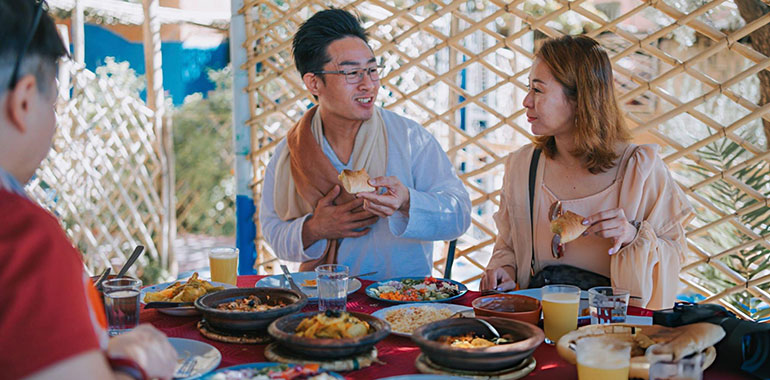
A traditional Moroccan breakfast often features bread or pancakes, olives, honey, olive oil, cheese, eggs or other simple accompaniments. The exact selection varies by household, region and accommodation.
Popular breakfast foods include:
- Msemen: A layered, pan-cooked flatbread with a soft interior and lightly crisp exterior.
- Baghrir: A soft semolina pancake recognized by its many small holes, often served with honey or butter.
- Khobz: Everyday Moroccan bread, commonly served alongside other foods.
- Bissara: A thick soup or purée made from dried broad beans or split peas, often seasoned with cumin and olive oil.
- Amlou: A spread traditionally made with almonds, argan oil and honey.
- Olives, cheese and eggs: Simple accompaniments that can turn bread into a more substantial breakfast.
Mint tea, coffee or fresh juice may accompany the meal.
If you are staying in a riad or traditional guesthouse, breakfast can be an opportunity to sample several foods in one sitting. Ask what is prepared fresh that morning, especially if you want to try local breads and pancakes.

What Moroccan Street Food and Snacks Should You Try?
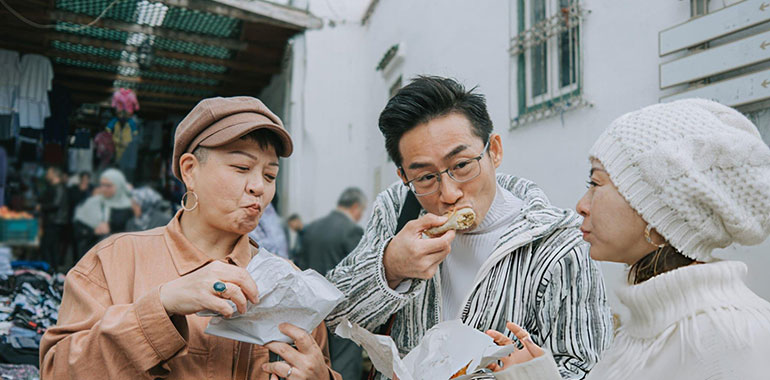
Street food offers a different side of Moroccan cuisine. It can be a convenient way to sample small dishes between sightseeing stops without committing to a full restaurant meal.
Here are several foods worth looking for:
Msemen and other flatbreads: These are sold at bakeries and food stalls and can be eaten plain or with sweet or savory accompaniments.
Briouates: Small pastries filled with ingredients such as minced meat, cheese or vegetables. Sweet versions may contain almonds and honey.
Maakouda: Fried potato patties that may be eaten on their own or served in bread.
Bissara: A filling bean soup often enjoyed as an inexpensive everyday meal, particularly at breakfast.
Grilled skewers: Meat skewers seasoned with spices and cooked over charcoal are common in traditional eateries and market food areas.
Fresh fruit and juice: Fruit stands and juice vendors offer a refreshing alternative to heavier snacks, particularly in warm weather.
How to Choose Street Food
Choose food that is prepared and handled carefully. When ordering cooked dishes, look for food that is freshly prepared and served hot. For chilled items, consider whether they have been stored appropriately.
If you have food allergies, ask about ingredients before ordering. A pastry may contain nuts, for example, while a sauce or filling may include ingredients that are not immediately obvious.
Street food varies by vendor, so no single dish is automatically a better choice than another. Use the same judgment you would when choosing food anywhere unfamiliar.
What Moroccan Desserts and Sweets Are Worth Trying?
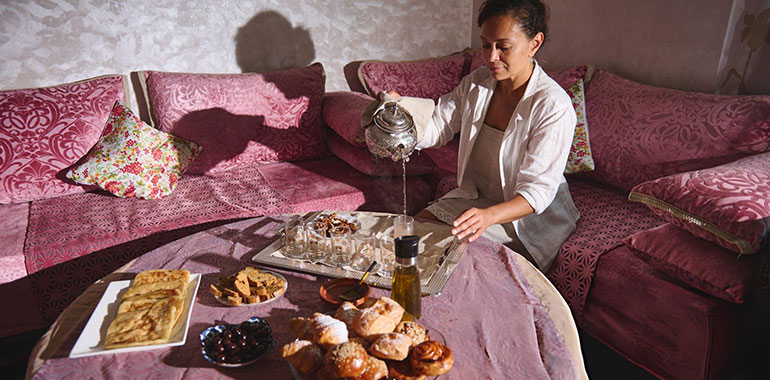
Moroccan sweets often feature almonds, sesame seeds, honey, cinnamon, and orange blossom water. Many are served with mint tea, making them a natural choice for an afternoon break or after a meal.
Chebakia
Chebakia is a shaped, fried pastry coated in honey and often finished with sesame seeds. It is strongly associated with Ramadan, when it is commonly served alongside harira, though it can also be found at other times.
Its sweet, aromatic flavor makes it a good choice if you enjoy honey-based pastries.
Kaab el Ghazal: Gazelle Horns
Kaab el ghazal, often called gazelle horns in English, are crescent-shaped pastries filled with almond paste and flavored with ingredients such as orange blossom water.
They are delicate rather than heavily frosted and pair well with unsweetened or lightly sweetened tea.
Ghriba
Ghriba refers to a family of crumbly Moroccan cookies. Recipes vary, with versions made from almonds, semolina, coconut, or other ingredients.
Their texture and flavor depend on the recipe, so trying different versions from a bakery can be a simple way to explore Moroccan sweets.
Briouates with Almonds and Honey
Sweet briouates are small pastry parcels filled with almond paste and often coated with honey. They offer a crisp texture and rich, sweet filling.
Dates and Dried Fruit
Dates, figs, raisins, and other dried fruits are common snacks and accompaniments. They are easy to enjoy between meals and provide a less elaborate alternative to pastries.
For travelers who prefer desserts that are not overly rich, fresh fruit or a small selection of dried fruit can be a satisfying finish to a meal.
What Should You Drink in Morocco?
Moroccan drinks range from traditional mint tea to coffee, fresh juices and simple refreshing beverages. What you choose will depend on the meal, the weather and your own preferences.
Moroccan Mint Tea
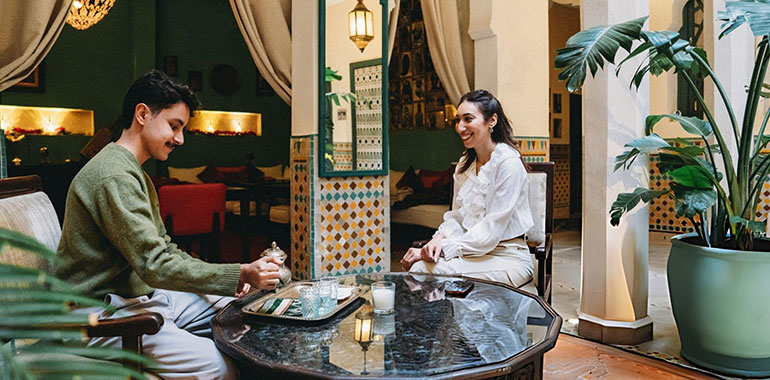
Mint tea is one of Morocco’s best-known drinks. It is typically prepared with green tea and fresh mint, often with a generous amount of sugar.
It is served in homes, cafés, guesthouses and restaurants, and may accompany breakfast, snacks or a full meal. The flavor is refreshing, sweet and aromatic.
If you prefer less sugar, ask whether the tea can be prepared with less or served without added sugar.
Fresh Orange Juice
Freshly squeezed orange juice is widely associated with Moroccan cafés and market areas. It is a popular option when you want something fruity and refreshing.
If you have a sensitive stomach or specific health concerns, use your own judgment about preparation and handling, particularly at busy outdoor stalls.
Moroccan Coffee
Coffee is also widely available, including espresso-style drinks and café au lait. It is a convenient option for travelers who prefer coffee to tea, especially at breakfast or during a break between activities.
Lben and Other Dairy Drinks
Lben is a traditional fermented milk drink that may accompany meals, including some couscous dishes. Its tangy flavor differs from that of ordinary milk.
Availability varies, so ask about the drink before ordering if you are unfamiliar with fermented dairy products or need to avoid lactose.

Can Vegetarians and Vegans Eat Moroccan Food?
Yes. Moroccan cuisine includes many vegetable-, grain-, and legume-based dishes, so vegetarians can find satisfying meals. Vegan travelers can also find suitable foods, but they need to check ingredients more carefully.
Vegetarian Dishes to Look For
- Vegetable tagine
- Couscous with vegetables
- Zaalouk and taktouka
- Bissara
- Lentil dishes
- Bread, olives and vegetable salads
- Msemen or baghrir, depending on how they are prepared
However, a dish described as vegetable-based is not necessarily vegetarian. The broth may contain meat stock, and recipes can vary between kitchens.
What Should Vegan Travelers Check?
Vegan travelers should ask whether a dish contains meat stock, butter, milk, eggs or honey. Bread, pastries and sauces may contain animal-derived ingredients even when their main ingredients appear plant-based.
It is worth communicating your requirements clearly before ordering rather than relying on the dish name alone.
What About Gluten, Nuts and Other Allergens?
Moroccan food frequently includes wheat-based bread and couscous, while almonds, sesame and other nuts or seeds feature in many pastries and recipes. Sauces and spice blends may also contain ingredients that are not obvious from the menu.
If you have a food allergy or a medically necessary dietary restriction, explain it clearly and confirm the ingredients and preparation method. When an allergy is severe, do not rely solely on a general description of a dish.
How Does Moroccan Food Vary by Region?
Moroccan cuisine has regional variation, influenced by local ingredients, geography, and culinary traditions. You do not need to visit every region to experience its variety, but knowing a few distinctions can help you decide what to try.
Marrakech: Traditional Dishes and Tanjia
Marrakech is a useful place to look for tanjia, along with tagines, grilled meats, breads, and market snacks. Its food scene ranges from traditional eateries to contemporary restaurants.
If you enjoy slow-cooked meat and hearty dishes, look beyond the familiar tagine and try a local specialty.
Fez: Pastilla and Elaborate Cooking
Fez is particularly associated with traditional Moroccan cooking and pastilla. Its culinary reputation makes it a good place to look for layered savory pastries and dishes that combine sweet and savory flavors.
Atlantic Coast: Fish and Seafood
Coastal areas offer more opportunities to try fish and seafood, including grilled preparations and regional dishes seasoned with herbs, spices, or chermoula, a marinade often made with herbs, garlic, spices, and other flavorings.
If seafood is a priority, consider how your route includes coastal destinations rather than assuming every Moroccan city has the same selection.
Northern Morocco: Regional Variety
Northern Morocco has its own mix of regional influences and local dishes. Bread, seafood, stews, and pastries vary across the region, so the most interesting food choices may depend on the towns you visit and the season.
For help deciding which destinations fit your interests, see Tripidays’ guide to the best places to visit in Morocco.
How Can You Choose Moroccan Dishes That Suit You?
The easiest way to enjoy Moroccan food is to begin with dishes that match your usual preferences, then try something new at each meal.
- If you prefer mild flavors: Start with a simple chicken tagine, grilled fish, or a vegetable dish. Ask about chili and seasoning before ordering.
- If you enjoy sweet-and-savory combinations: Try pastilla or a slow-cooked lamb dish with prunes or dried fruit.
- If you prefer vegetarian meals: Look for vegetable tagine, salads, lentils and bean dishes, while checking the broth and cooking ingredients.
- If you enjoy snacks: Try msemen, maakouda, briouates or local breads.
- If you have a sweet tooth: Sample chebakia, ghriba or gazelle horns with mint tea.
- If you want a regional specialty: Ask what the kitchen is known for instead of ordering the same familiar dish everywhere.
A little variety is often more rewarding than trying to eat every famous dish in one day. Choose a main course you recognize, add a small local starter, and leave room for a sweet or a traditional drink when you feel like it.
Food is also one way to understand the country beyond its landmarks. If you want more context about dining etiquette, hospitality, and everyday traditions, read Tripidays’ guide to Moroccan culture and customs.
Explore Morocco and Egypt with Tripidays
Moroccan cuisine can be one of the most enjoyable parts of discovering the country, whether you are sampling a slow-cooked tagine, trying local pastries or discovering a regional specialty.
If Morocco is part of a wider trip through North Africa, explore Tripidays’ Egypt and Morocco tour options to see how the two countries can be combined in one holiday.
Choose your route according to the places and experiences that matter most to you, and leave room for local food along the way.