The Morocco Sahara Desert offers travelers the chance to explore vast sand dunes, ride camels across desert landscapes, and spend a night in a camp beneath the stars. However, Morocco’s desert experiences vary significantly by location. Merzouga is known for the golden dunes of Erg Chebbi, Zagora offers a different desert experience in southern Morocco, and Agafay features rocky, arid landscapes within easier reach of Marrakech. For a more remote adventure, Erg Chigaga provides access to less-developed areas of the Sahara.
Choosing the right desert experience depends on your available time, preferred landscape, comfort level, and interest in activities such as camel trekking or overnight camping. This Morocco Sahara Desert guide from Tripidays explains the differences between Merzouga, Zagora, Agafay, and Erg Chigaga, compares desert camp experiences, and covers the best time to visit, how many days to allow, and what to pack. Unlike a general guide to Morocco’s destinations, it focuses specifically on helping you understand the desert experience and choose the option that best fits your trip.
Which Moroccan Desert Should You Choose?
The best desert for your trip depends on three things: the landscape you want to see, the time you can spare, and how remote you want the experience to feel.
| Destination | Main appeal | Time and access | Best suited to |
| Merzouga and Erg Chebbi | Extensive golden sand dunes | A long overland journey from Marrakech; allow several days | Travelers seeking the classic Sahara experience |
| Zagora and the Draa Valley | Southern desert landscapes, palm groves and overnight excursions | Often considered for a shorter desert trip, although road travel remains significant | Travelers with tighter schedules |
| Agafay | Rocky hills and open desert-style scenery | Relatively close to Marrakech | Short excursions, sunset outings and overnight stays |
| Erg Chigaga | Remote dunes and a less-developed setting | Requires additional travel and off-road access | Travelers seeking a more adventurous experience |
These destinations are not interchangeable. Agafay is a rocky desert landscape rather than a field of Sahara sand dunes, while Merzouga is particularly well known for the dunes of Erg Chebbi. Zagora offers a different landscape and style of excursion, and Erg Chigaga appeals to those prepared for a more remote journey.
Merzouga and Erg Chebbi: For the Classic Sahara Experience
Merzouga is one of Morocco’s best-known gateways to the Sahara. Nearby Erg Chebbi features sweeping sand dunes whose colors and shadows change throughout the day.
The landscape is the main attraction. Visitors can walk across the dunes, arrange camel trekking, watch the sunset, and spend the night at a desert camp. Different accommodation options allow travelers to choose between simpler camping arrangements and more comfortable stays.
The main consideration is access. Reaching Merzouga from Marrakech takes substantial overland travel, so the journey should be treated as part of the trip rather than a quick excursion. A rushed schedule can leave little time to enjoy the dunes themselves.
Choose Merzouga if: Large golden dunes, an overnight camp and the classic Sahara landscape are your priorities.
Zagora and the Draa Valley: For a Different Southern Morocco Experience
Zagora is often considered by travelers who want a desert overnight without committing to the same route as a Merzouga visit. The surrounding Draa Valley is known for palm groves, dry landscapes, and traditional settlements.
An excursion may combine scenic driving with a camp stay, a camel ride or time outdoors. However, the experience depends on the exact route and desert area visited. Zagora should not be presented as an identical alternative to Erg Chebbi: the scenery and scale of the dunes differ.
Although it can be suitable for a shorter itinerary, travelers should still consider the time spent driving. A shorter trip does not necessarily mean a short or effortless journey.
Choose Zagora if: You want a southern Morocco excursion and an overnight desert experience, with a tighter schedule than a longer Merzouga journey might require.
Agafay: For a Desert Escape Near Marrakech
Agafay offers rocky hills, dry terrain and open views within relatively easy reach of Marrakech. It is popular for short excursions, sunset experiences, outdoor dining and overnight stays at desert-style camps.
Some camps offer activities such as camel rides or quad biking, but facilities and activities vary by property. The experience is generally about the landscape, relaxation and convenience rather than reaching remote Sahara dunes.
The distinction matters. If you imagine walking across extensive golden sand dunes, Agafay is not the right substitute for Merzouga or Erg Chigaga. If you have limited time and want a desert-style experience without a lengthy journey, it can be a practical choice.
Choose Agafay if: You are staying in Marrakech and want a short outing or overnight escape without dedicating several days to the Sahara.
Erg Chigaga: For a More Remote Desert Setting
Erg Chigaga lies in the Sahara near M’Hamid El Ghizlane, at the southern end of the Draa Valley. Reaching the dunes generally involves overland travel followed by an off-road journey in a suitable vehicle.
Its appeal is the more remote setting and the opportunity to experience a less-developed desert landscape. The journey and facilities may be less convenient than those around more established visitor areas, so planning is important.
Before choosing this option, confirm how the transfer works, how much time you will spend traveling, what facilities are available at camp, and whether the overall level of comfort suits you.
Choose Erg Chigaga if: You value a remote Sahara setting and are comfortable with a more involved journey.
If you are still deciding which regions belong in your wider holiday, our best places to visit in Morocco guide covers destination selection beyond the desert.
What Is a Moroccan Sahara Experience Really Like?
A desert visit is not only about the dunes. It combines changing landscapes, outdoor activities, periods of travel, and an overnight setting that may be very different from a city hotel.
Camel Trekking and Walking on Sand
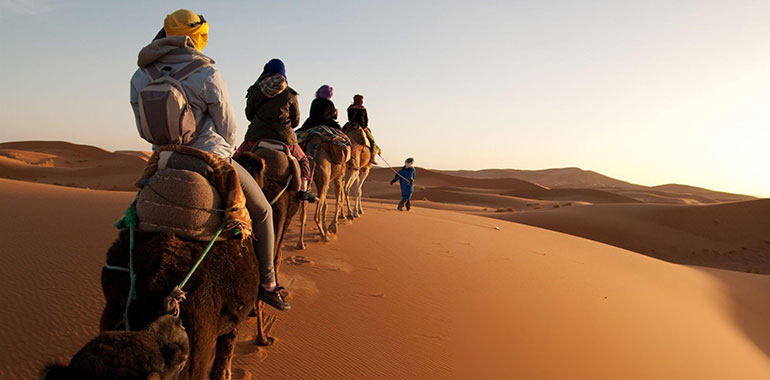
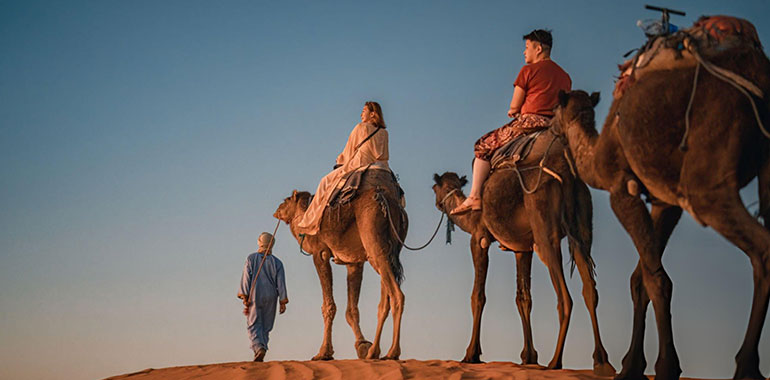
Camel trekking is a familiar part of many Moroccan desert excursions. Depending on the location and arrangement, a ride may take you toward a camp or provide a shorter journey across the dunes.
The experience involves mounting and dismounting, and the movement may feel unfamiliar. Follow the handler’s instructions and ask about the ride’s duration before setting off. A short camel ride is not the same as a longer trek.
You do not necessarily have to ride a camel to enjoy the desert. Ask whether a vehicle transfer or another suitable arrangement is available if you prefer not to ride or find walking on sand difficult.
Walking on dunes can also be more tiring than walking on firm ground. The surface shifts underfoot, and climbing a steep dune requires more effort than the distance alone suggests. Allow time, carry water, and avoid strenuous activity during the hottest part of the day.
Sunset, Sunrise and Stargazing
The light changes noticeably across sandy landscapes, making sunrise and sunset popular times to experience the dunes. Lower sunlight reveals the shapes of the sand, while temperatures may be more comfortable for walking than during the middle of the day.
Your exact experience depends on the camp’s location and access to the dunes. Ask whether you can reach the sand directly from the camp or whether a transfer is needed.
Stargazing can also be rewarding when skies are clear, and artificial light is limited. Cloud cover, moonlight and local conditions affect visibility, so a completely dark sky cannot be guaranteed.
The Quiet Between Activities
One of the main differences between a desert overnight and a city stay is the pace. There may be long stretches without shops, entertainment, or easy access to additional services.
Some travelers enjoy the opportunity to sit outdoors and take in the surroundings. Others prefer a more activity-focused excursion or the facilities of a larger camp.
Consider what you want from the experience before booking. You do not need a packed activity schedule to enjoy the desert, but you should understand how much free time, comfort, and independence your chosen camp provides.
What Should You Expect From a Sahara Desert Camp?
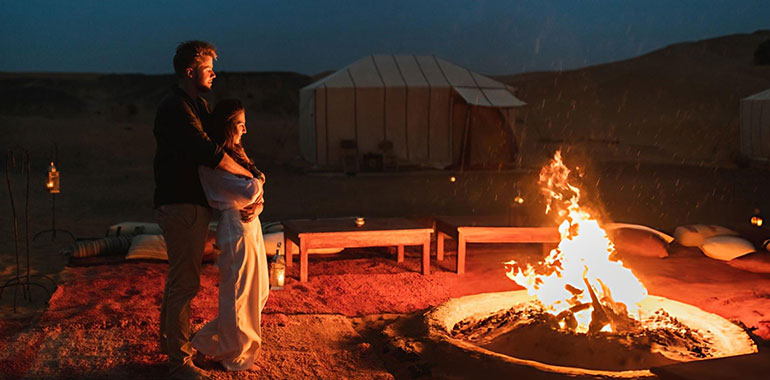
Desert camps range from simple overnight accommodation to more comfortable properties with private facilities. The term desert camp alone does not tell you what the sleeping arrangements, bathrooms, or services will be like.
Luxury Desert Camps
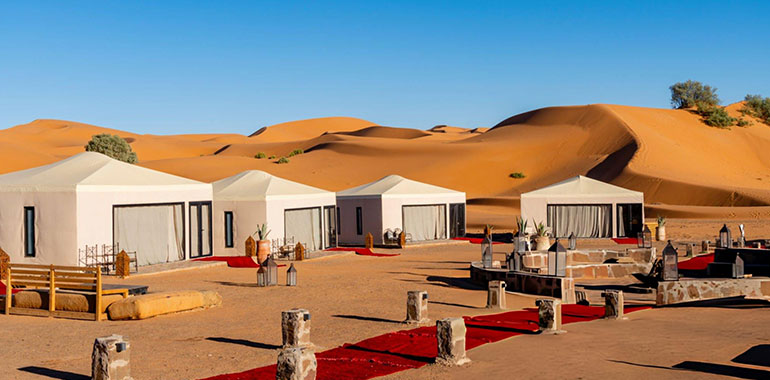
Luxury camps generally focus on privacy, comfortable bedding and more extensive facilities. Depending on the property, accommodation may include a private tent or suite, an en-suite bathroom, furnished interiors and dedicated dining arrangements.
These features are not universal. Electricity, hot water, heating and other services can vary, particularly in remote locations. Check the actual facilities rather than relying on labels such as luxury or glamping.
A higher level of comfort can make an overnight stay more convenient, but it does not remove the effects of sand, wind, temperature changes or distance from towns.
Traditional and Simpler Camps
Simpler camps may appeal to travelers who want a straightforward overnight experience focused on the surrounding landscape. Facilities can be more basic, with shared bathrooms, simpler furnishings or fewer amenities.
There is no single standard for a traditional camp. Ask what is provided, what you need to bring, and whether any facilities have limited availability.
Neither a luxury nor a simpler camp is automatically the better choice. The right option is the one that matches your comfort expectations and the experience you want.
What to Confirm Before Choosing a Camp
Before booking, ask the operator:
- Accommodation: Is the tent private or shared, and what type of bed is provided?
- Bathroom: Is it private, shared, or located outside the tent?
- Meals: Which meals are included, and are drinking water arrangements clear?
- Location: Is the camp beside the dunes or farther away?
- Transfers: Will you arrive by vehicle, camel or on foot?
- Temperature: What bedding and seasonal facilities are provided for cold nights?
- Electricity: Are charging facilities available, and are there limitations?
- Accessibility: Are the walking distances, terrain and bathroom arrangements suitable for your needs?
Clear answers help you choose a camp based on what you will actually receive rather than photographs or marketing descriptions.
How Many Days Should You Allow for the Morocco Sahara?
The time needed depends on the destination and your starting point. A short Agafay excursion is very different from traveling across Morocco to reach Merzouga or Erg Chigaga.
Use these guidelines when planning:
- A few hours or one evening: Agafay is a practical choice for travelers based in Marrakech who want a desert-style outing.
- An overnight excursion: Zagora may suit travelers seeking a shorter southern Morocco desert experience. However, the road journey can still take a substantial part of the trip.
- Several days: Merzouga is better approached as a multi-day journey when traveling from Marrakech. Allow time for the drive, the dunes and an overnight camp rather than treating it as a quick stop.
- A remote desert journey: Erg Chigaga requires additional planning for access and transfers. Allow enough time to make the journey worthwhile.
These are planning guidelines, not fixed travel schedules. Departure points, road conditions, stops, and the precise route all affect the time required.
The most common planning mistake is to focus on the number of nights at camp while ignoring the travel needed to reach it. Before committing, check how much time is spent driving, when you arrive at the dunes, and whether the schedule leaves enough time to enjoy the landscape.
When Is the Best Time to Visit the Morocco Sahara Desert?
Spring and autumn are generally useful starting points for planning a Moroccan desert visit. Conditions vary by destination and year, however, and daytime heat, nighttime temperatures, and wind can affect the experience in every season.
Spring: March to May
Spring is worth considering for outdoor activities and time on the dunes. Conditions vary as the season progresses, so prepare for both warm daytime weather and cooler evenings.
Light clothing, sun protection and an extra layer are sensible choices.
Summer: June to August
Summer can bring intense daytime heat. If you travel during this period, check how the operator schedules outdoor activities and what arrangements are available at camp.
Avoid assuming that the desert becomes comfortable as soon as the sun sets. Temperature changes depend on the location and conditions, and the daytime heat can still affect the overall experience.
Autumn: September to November
Autumn is another popular planning window. Conditions often become more manageable after the hottest part of the year, although early autumn can still be very warm.
Check the forecast for your travel dates and ask about the facilities available at your chosen camp.
Winter: December to February
Winter can bring pleasant daytime conditions, but nights may be cold. Warm sleepwear, layered clothing and suitable bedding are particularly important for overnight stays.
Ask the camp about its winter arrangements instead of assuming that the desert remains warm throughout the night.
Practical advice: Choose your travel period according to your heat tolerance, planned activities and accommodation. Spring and autumn are useful starting points, but no month guarantees ideal conditions.
What Should You Pack for a Desert Trip?
Pack for sun exposure, sand, temperature changes and the facilities available at your camp. You generally do not need specialist expedition equipment for a standard excursion, but a few essentials make the experience more comfortable.
Clothing
- Lightweight, breathable clothing for daytime.
- A warm layer or jacket for evenings and winter nights.
- Comfortable shoes suitable for walking on sand.
- A hat and sunglasses.
- A scarf or other covering for sun, dust and wind.
Personal essentials
- Sunscreen and lip balm.
- Drinking water for the journey and activities, with adequate supplies confirmed by the operator.
- Personal medication and basic toiletries.
- A small day bag for essentials.
Useful extras
- A phone or camera and a power bank.
- A small torch if lighting is limited.
- Extra cash for optional purchases or tips where appropriate.
- Warm sleepwear for cooler nights.
For an overnight stay, ask what bedding and toiletries are supplied before packing. For summer travel, prioritize sun protection and check how activities are adapted to hot conditions.
For broader advice on transport, money, connectivity and general preparation, see our practical Morocco travel tips.
Is a Moroccan Desert Trip Suitable for You?
A desert excursion can suit many travelers, but the right choice depends on the journey, facilities and activities involved.
A Sahara experience may suit you if you:
- Want to see large sand dunes and landscapes unlike Morocco’s cities.
- Enjoy outdoor scenery, photography and quiet evenings.
- Are comfortable spending time on the road to reach a remote destination.
- Can adapt to changing temperatures and simpler facilities.
- Would enjoy an overnight stay away from urban services.
Consider a shorter or more accessible option if you:
- Have very limited time in Morocco.
- Prefer to avoid long drives.
- Find heat, uneven ground or walking on sand difficult.
- Need specific accessibility facilities that remote camps may not provide.
- Prefer the convenience of staying close to a city.
Families and travelers with mobility needs should check transfer arrangements, walking distances, bathroom access and sleeping facilities before choosing an excursion. Availability varies by location and operator, so confirm the arrangements rather than assuming every camp offers the same level of accessibility.
If you are concerned about desert-specific risks, ask the operator about heat management, drinking water, transfers and what happens if weather or road conditions disrupt access. For wider concerns about theft, scams or general travel precautions, consult our dedicated Morocco safety guidance.
Plan Your Morocco Desert Experience
The right Moroccan desert experience depends on what you want from the landscape and how much time you can devote to it. Merzouga is a strong choice for travelers seeking the classic golden dunes of Erg Chebbi, Zagora offers a different southern Morocco excursion, Agafay is convenient for a short desert-style escape from Marrakech, and Erg Chigaga suits travelers seeking a more remote setting.
Choose your desert destination before finalizing the rest of your route, then allow enough time for the journey, the camp stay and the activities that matter most to you.
If you are planning your first visit, our Morocco travel guide for first-time visitors can help you understand the wider country and plan the rest of your trip.
Travelers considering a combined holiday can also explore Egypt and Morocco tour packages from Tripidays. Review each itinerary’s destinations, transport arrangements and inclusions before booking, and confirm any international flights separately.